
Last updated November 24, 2026
 Wrought iron
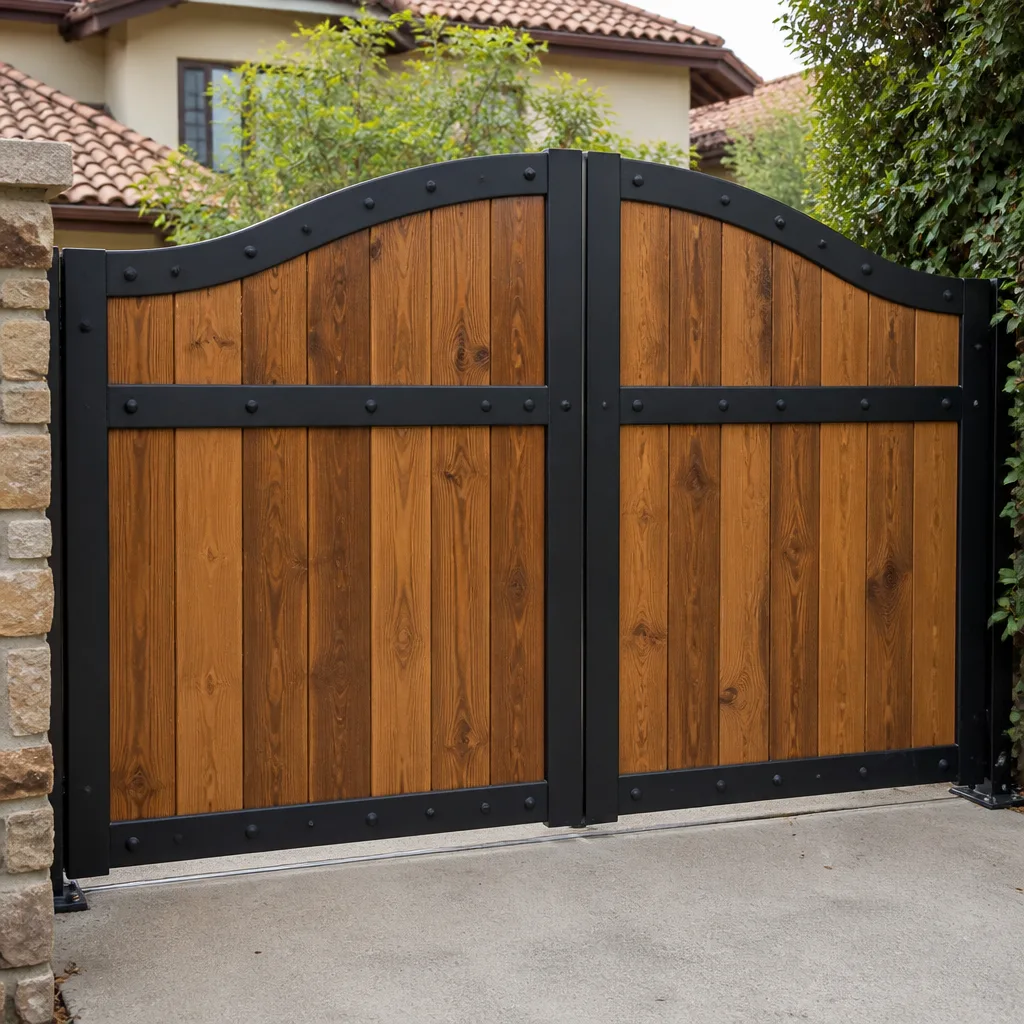 Wood & steel frame
 Farm & ranch
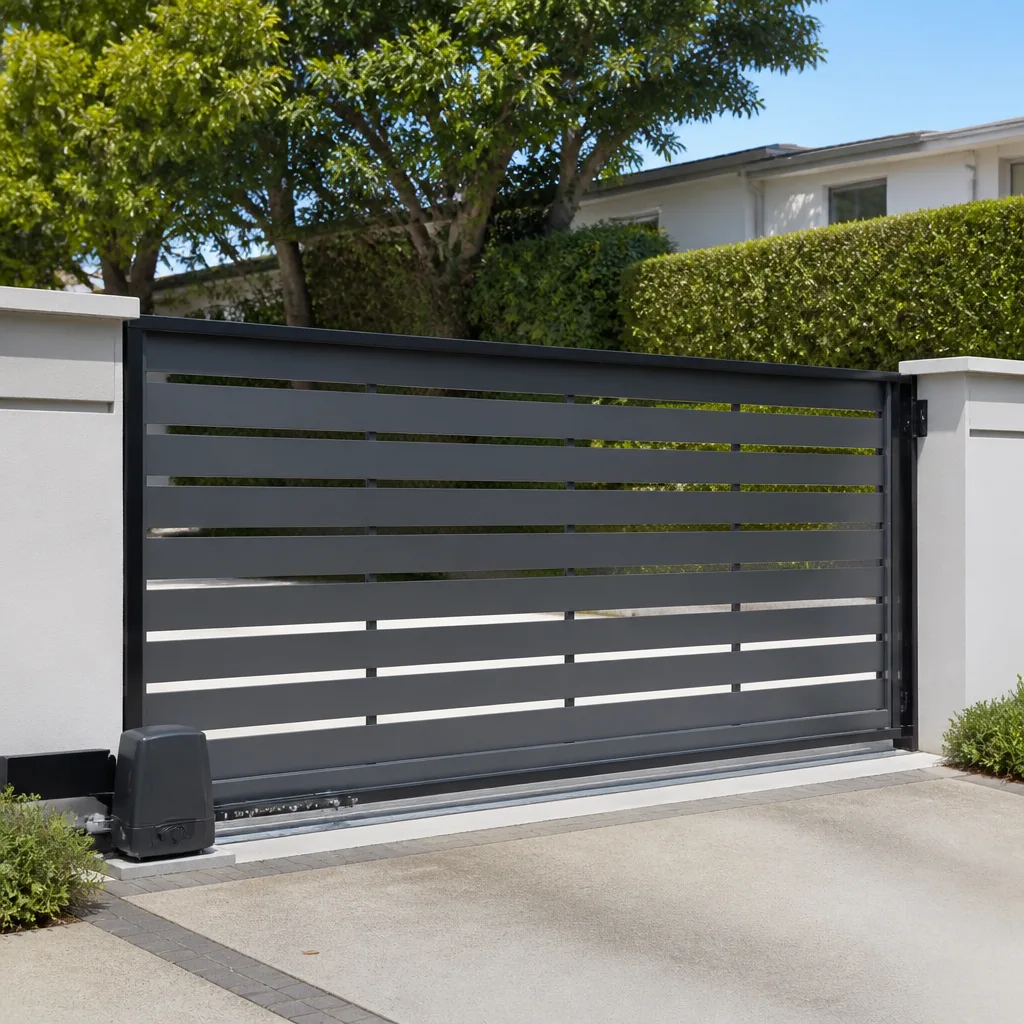 Sliding driveway gates
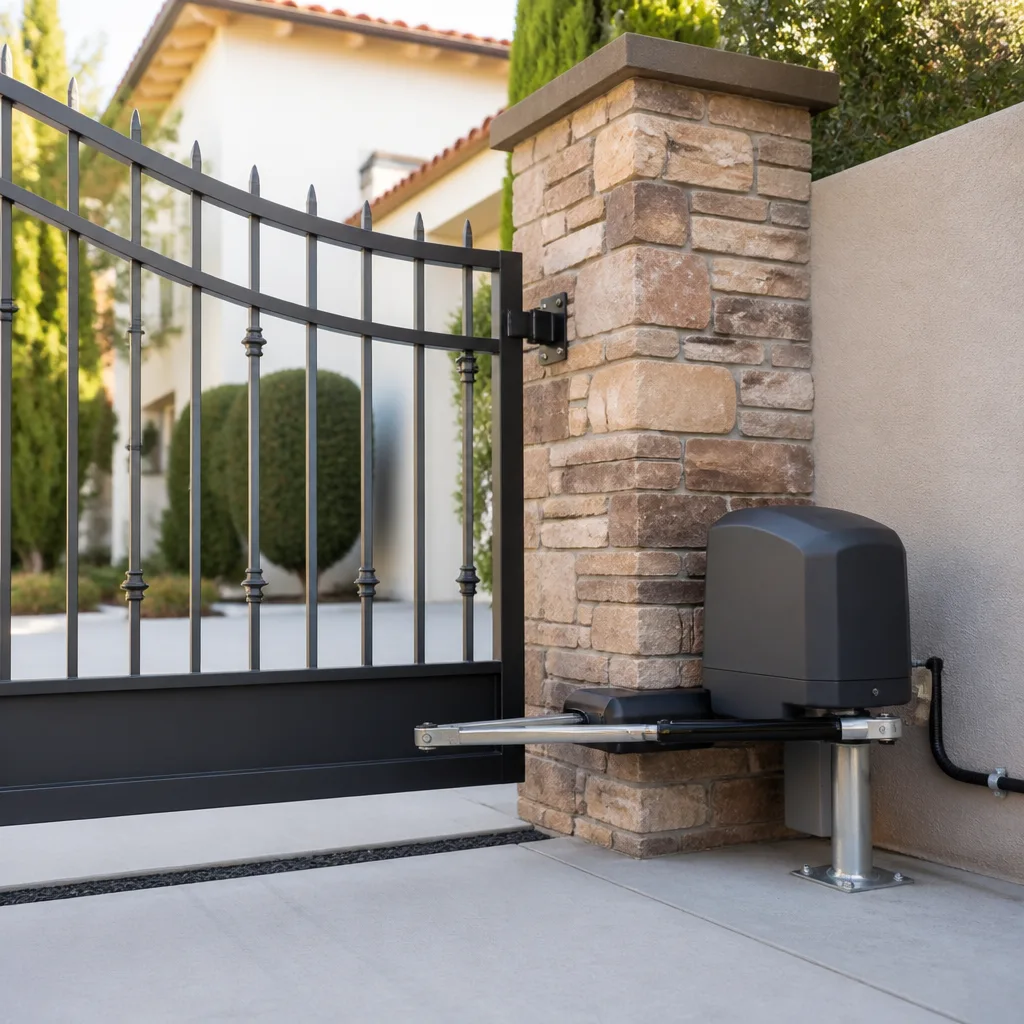 LiftMaster operators
Free on-site gate assessment - hinges, posts, and your LiftMaster or Nice gate operator checked before anything is quoted
The assessment is free and the quote is the invoice.
Get your free estimateGate Repair Troubleshooting in Irvington: Common Problems and How to Fix Them
The gate that “just stopped working” almost never just stopped working. A specific component failed first, and misidentifying which one is how a small fix turns into a full replacement. We see this constantly on automated gates around Irvington, where an owner swaps a battery, then a board, then a whole operator before anyone checks the limit switches. This guide maps symptoms directly to root causes the way a technician actually diagnoses them: slow movement, no movement, partial movement, and erratic movement each point somewhere different. You’ll learn what to test safely, what to leave alone, and when it’s time to call.
Quick Answer
Gate repair troubleshooting starts with the symptom, not the brand. Slow travel usually means a binding hinge, a sagging post, or a failing battery; no movement at all usually means power, a tripped breaker, or a safety device holding the gate open; partial or erratic movement usually means a control board fault, a loose terminal, or a misaligned limit. In Irvington’s wet, freeze-thaw climate, the hard part is that mechanical problems from shifting posts and corroded hinges look exactly like electrical faults, so you have to rule out the mechanical side first.
Styles & brands we work with
- Wrought iron
- Wood & steel frame
- Farm & ranch
- Sliding driveway gates
- LiftMaster operators
Table of Contents
- The Six Failure Categories Every Gate Problem Falls Into
- The Symptom-to-Cause Diagnostic Tree
- Testing the Operator, the Control Board, and the Loop Detector Safely
- Why Intermittent Failures Are Almost Always Electrical
- How Portland-Area Weather and Irvington’s Older Lots Age a Gate
- What You Should Not Adjust Yourself
- Common Mistakes to Avoid
- When to Call a Professional
The Six Failure Categories Every Gate Problem Falls Into
Before you touch anything, know which category you’re in. Every gate fault we diagnose on automated gates in Irvington lands in one of six buckets, and the bucket narrows the likely culprit fast.
- Power and supply faults. No power at the operator, a tripped breaker, a dead transformer, or a backup battery that won’t hold. The gate is fine; the electricity isn’t reaching it.
- Operator and motor faults. The motor hums, stalls, overheats, or the arm moves weakly. This is inside the operator itself: brushes, gearbox, or the drive.
- Control board and logic faults. The board receives power but won’t command the motor: a fault code, a stuck relay, or a safety input stuck open. Brands like LiftMaster, FAAC, and Elite each report this differently.
- Safety and access device faults. Photo eyes, loop detectors, keypads, and intercoms. A safety edge or loop that never clears tells the gate to stay open or reverse.
- Mechanical hardware faults. Hinges, rollers, tracks, and the gate leaf itself. The gate binds, sags, or drags, and the operator fights it.
- Foundation and post faults. A shifted or leaning post, a settled footing, or a bent anchor that throws the whole geometry out of line.
The mistake we see most often in Irvington is jumping to category two, the operator, when the real problem is category five or six, the hardware or the post. When a gate leans in the ground, the operator strains against a bind it can’t beat, and the operator takes the blame. Fix the bind and the “failing motor” often runs clean again. If you suspect the operator itself, that’s where our gate motor & opener work begins, but we don’t replace an operator until we’ve ruled out the post and the hardware.
The Symptom-to-Cause Diagnostic Tree
Symptoms point somewhere specific. Here’s how each one narrows the search before we ever open a control box.
The Symptom-to-Cause Diagnostic Tree
The gate moves slowly or strains
Slow, labored travel almost always traces to friction, not the motor. Worn hinges, a dragging roller, debris in the track, or a post that has moved a fraction of an inch can make a healthy operator look tired. Check the leaf by hand with the operator in manual release: if it swings heavy, the problem is mechanical, and no motor change will fix it.
The gate doesn’t move at all
Total silence points to power: a tripped breaker, a dead low-voltage transformer, a blown fuse on the board, or a battery that won’t take a charge. If the operator clicks but the arm doesn’t budge, you’re likely in a board logic or safety-input fault instead.
The gate moves partway and stops
Stopping mid-travel is the classic signature of a limit setting or a safety input. A photo eye knocked out of alignment stops the cycle in the same spot every time. A limit switch that has drifted stops the gate short of fully open or fully closed. Note whether it always stops in the same place, because a consistent stop point is a diagnostic clue worth its weight.
The gate moves erratically or reverses at random
Random behavior points to a loose connection, a failing control board, or a loop detector with an intermittent fault. Erratic movement is the most frustrating to chase because the fault hides, which is why a systematic check of terminals and safety devices matters more than guesswork.
Testing the Operator, the Control Board, and the Loop Detector Safely
You can safely do a few checks before you call anyone. The key is to work from the outside in: power, then inputs, then the board, then the motor. Do these with the power off where noted, and don’t open the operator housing.
- Confirm power. Check the breaker and any fused disconnect feeding the operator. If the keypad or status lights are dark, the fault is upstream of the gate.
- Release the operator and move the gate by hand. Put the operator in manual release and push the leaf through its full travel. A leaf that drags or binds tells you the fault is mechanical before you blame the electronics.
- Check the safety devices. Walk the photo eyes and the safety edges. A dirty lens, a bumped sensor, or a loop detector that won’t clear keeps the gate from closing. Many brands show this with a specific light patter or fault code on the board.
- Look for a fault code. Operators from DoorKing, Elite, and others display or blink error codes. A code is a map, and knowing the brand’s code language is the difference between a five-minute diagnosis and an hour of hunting.
- Stop at the board. If power, inputs, and hardware all check out and the gate still won’t run, the fault is likely in the control board or the operator itself. That’s the point to bring in a technician.
We work on these systems brand by brand, so a LiftMaster board or a Ghost Controls arm gets the right diagnostic the first time, not a guess. If you’re weighing a new gate rather than a repair, our gate installation page covers how we approach fresh builds and what a free measure involves.
Why Intermittent Failures Are Almost Always Electrical
When a gate works one day and fails the next, the fault is nearly always electrical: a loose wire terminal, a corroded connection, or a safety device making intermittent contact. Mechanical problems fail consistently, because a worn hinge doesn’t heal overnight. Electrical problems fail when a connection heats, cools, or gets wet.
Finding the loose link means following the wiring from end to end. The usual suspects in an Irvington yard:
- Loose screw terminals on the control board, loosened by vibration from a leaf that has started to bind.
- Corroded connections where outdoor cabling meets the operator or the keypad, common after a stretch of wet weather.
- Chafed low-voltage wire run through a gate pillar or along a hinge point where the leaf flexes.
- Moisture in a junction box, which turns a solid connection into an unreliable one.
- A backup battery that’s on its way out, which can cause a gate to behave oddly on a power dip and fine the rest of the time.
Start at the operator and work outward, tightening and inspecting each connection. If you find a terminal that’s warm to the touch or a wire with green corrosion, that’s your intermittent fault. If the gate runs reliably after you clean and re-seat the connections, you’ve likely found it. If it fails again, the fault is hiding deeper in the control wiring, and that’s a job for a technician who knows the brand.
How Portland-Area Weather and Irvington’s Older Lots Age a Gate
Irvington’s wet seasons and freeze-thaw cycles accelerate specific failures, and they don’t all look like the weather. Water is the enemy of gate hardware, and the temperature swing is the enemy of the post.
Here’s what the climate actually does to a gate in Irvington:
- Post shifting. When soil freezes and thaws, a footing can lift or settle slightly. A post that’s moved even a little throws the gate out of alignment, and a misaligned gate binds, sags, and drags. In a swing gate, that binding gets blamed on the operator almost every time.
- Hinge corrosion. Constant damp rusts and stiffens hinges and rollers. A corroded hinge adds friction, the operator works harder, and the gate either slows or trips a safety. This looks electrical because the symptom is a stalled cycle.
- Corroded connections. Wet metal oxidizes, and every outdoor terminal and splice is a candidate. A corroded connection fails intermittently, which is why winter is when the “it works sometimes” calls spike.
- Warped or swollen wood gates. On older properties, a timber leaf can take on moisture and swell, dragging against the ground or the stop. That’s a mechanical fault that mimics a weak motor.
If your gate only misbehaves in the wet months or right after a hard freeze, suspect post movement or hinge corrosion before you suspect the board. We’ve seen plenty of gates in Irvington diagnosed as electrical failures that turned out to be a footing that had shifted a quarter inch. Correct the mechanical fault and the electrical “failure” disappears. For the wider picture of what we handle, start with Gate Repair Irvington and go from there.
What You Should Not Adjust Yourself
Some settings are for the technician, not the homeowner, and the two biggest are gate travel limits and force settings. Both are on the control board, and both cause secondary damage when they’re wrong.
Travel limits tell the operator where to stop. Nudge them too far and the gate drives into the post or the stop, stressing the arm, the hinges, and the board. Force settings tell the operator how hard to push before it treats an obstruction as a safety event. Raise the force to get a binding gate to close and you’ve defeated the safety feature that protects people and vehicles. The gate then forces through an obstruction instead of reversing, and the motor strains against a bind it can’t fix. The right sequence is to fix the bind, then leave the force where the board set it.
Leave low-voltage wiring and any work on live electrical components to a trained technician. A gate operator runs on mains power on the supply side, and that’s not a place to experiment. If a safety edge or loop detector is involved, don’t bypass it to get the gate moving. A bypassed safety device is how a gate becomes dangerous. These settings belong to gate repair, not to a quick fix on a Sunday.
Common Mistakes to Avoid
- Replacing the operator before checking the post. A leaning or shifted post makes a healthy operator look broken. Check the footing and the leaf travel before you price a motor.
- Turning up the force to fix a bind. Raising the force to close a dragging gate hides the symptom and defeats the safety reversal. Fix the friction, keep the safety working.
- Bypassing a safety edge or loop detector. Jumping out a safety device gets the gate moving and removes the one feature that stops it harming someone. Never leave a safety device bypassed.
- Chasing an intermittent fault with parts. If a gate fails only sometimes, it’s likely a loose terminal or corroded connection. Tighten and clean the connections before you buy a board.
- Ignoring a fault code on the board. Brands like DoorKing and Elite blink or display codes for a reason. A code points to the circuit and saves hours of guessing.
- Using a general handyman for an automated gate. A generalist has to look up the brand’s board and part quirks. An automated gate specialist recognizes the fault and carries the right part.
- Forgetting the keypad and access side. A gate that “won’t open” is sometimes an access-control fault, a dead keypad, or an app connection, not a mechanical one. Check the entry device too.
When to Call a Professional
Call a technician when the fault sits inside the control board, the low-voltage wiring, the operator, or a safety device you can’t safely diagnose. That includes a gate that trips the breaker repeatedly, a board throwing a fault code you can’t clear, a safety edge or loop detector that won’t reset, an operator that hums and won’t move, and any intermittent fault that survives a round of tightening connections. Also call if you suspect a post has shifted, because correcting a footing is a structural job, not a setting. We know the brands: Ghost Controls, DoorKing, Elite, Mighty Mule, and the rest, and we carry parts for the brands we service. Gate Repair Irvington offers free estimates in Irvington. Call (855) 658-5296. We answer 24/7. Fast dispatch from 7am to 7pm, Sunday through Friday.
See the difference
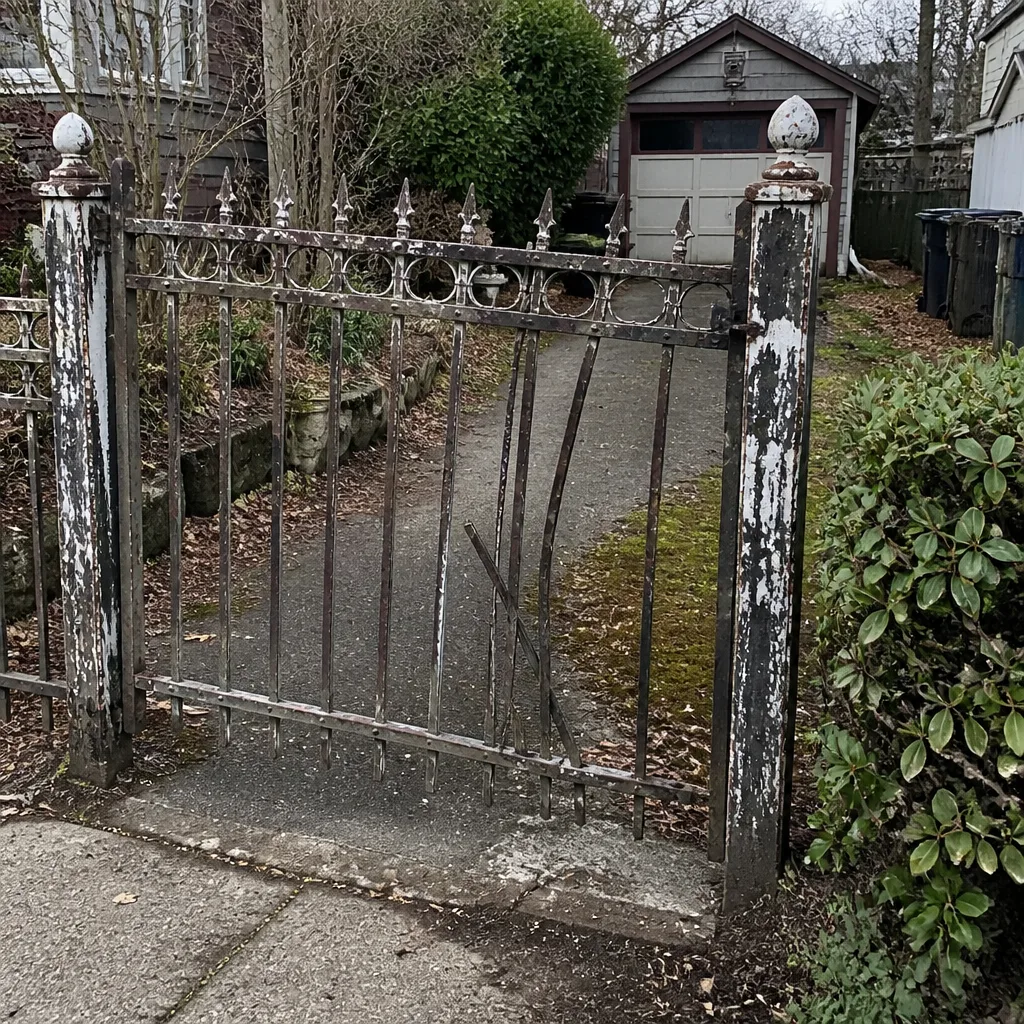 Before
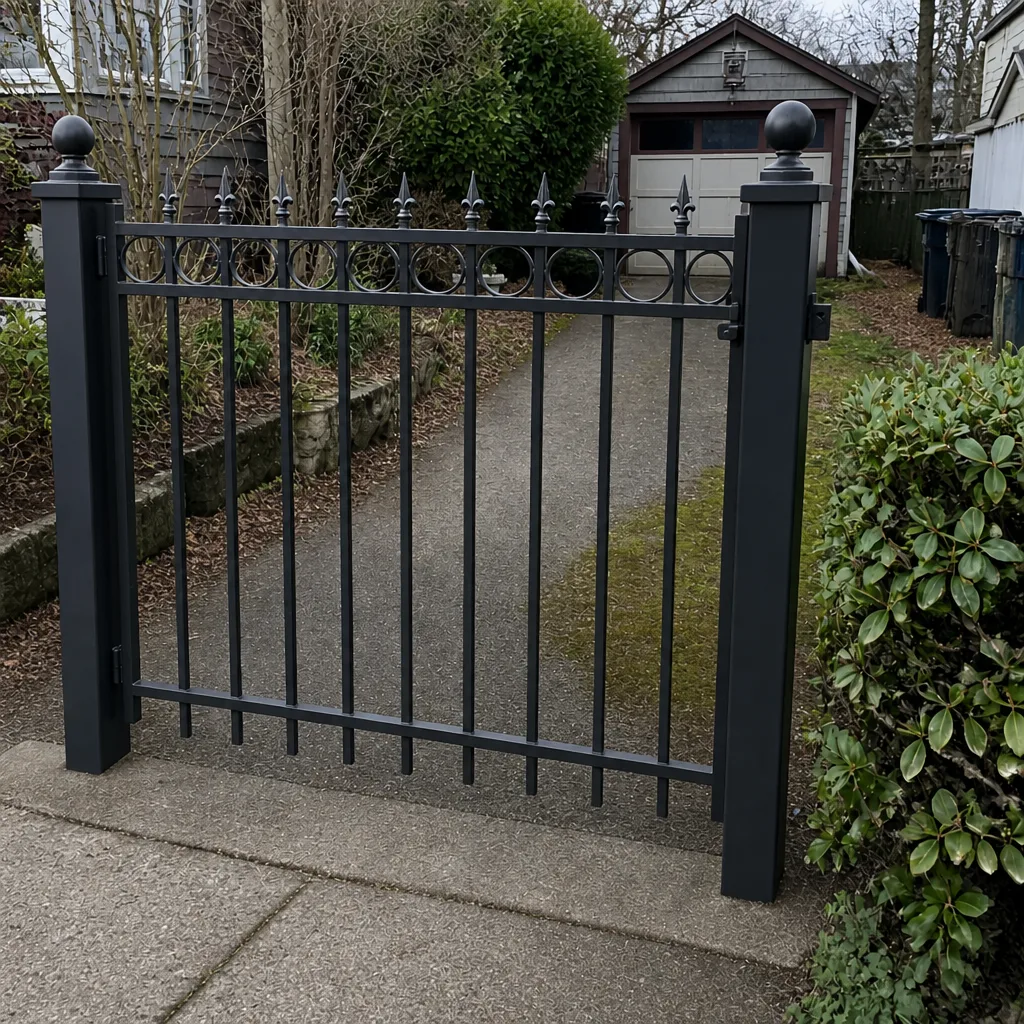 After
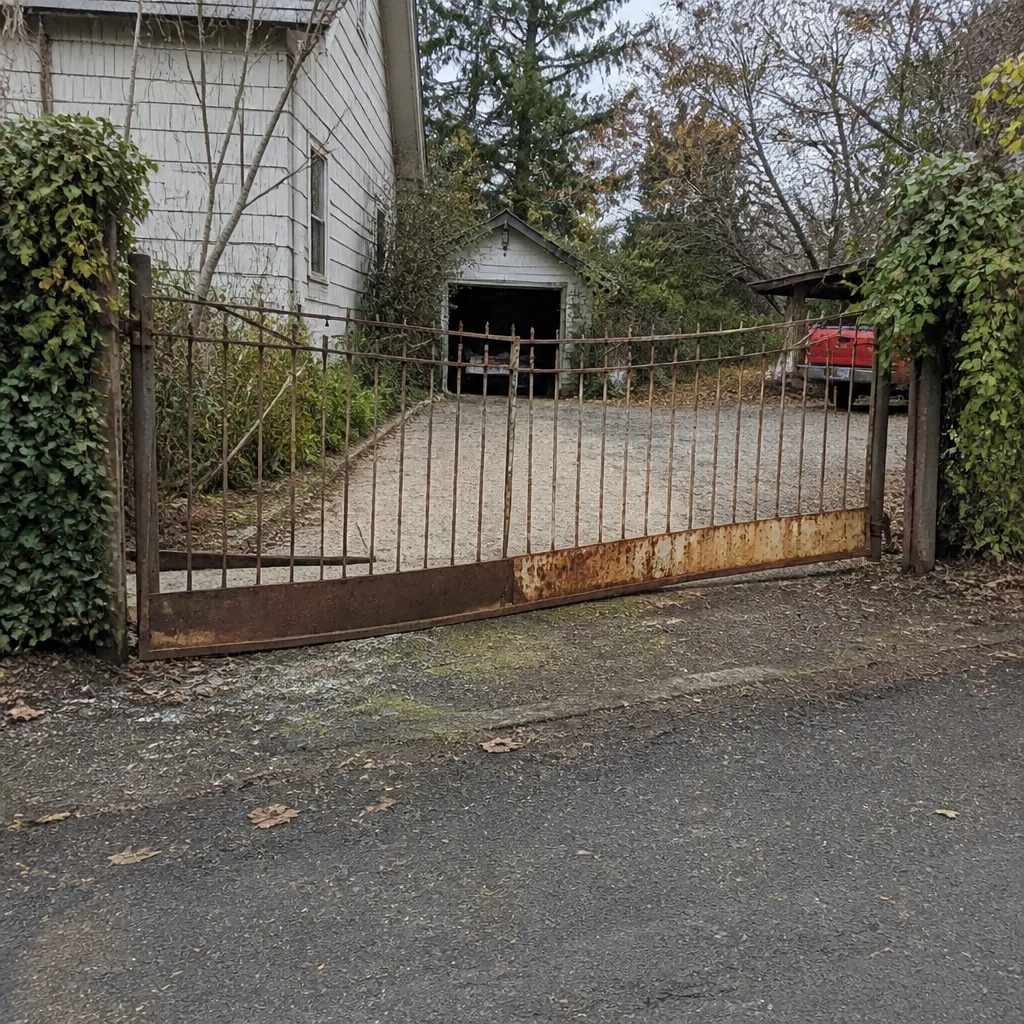 Before
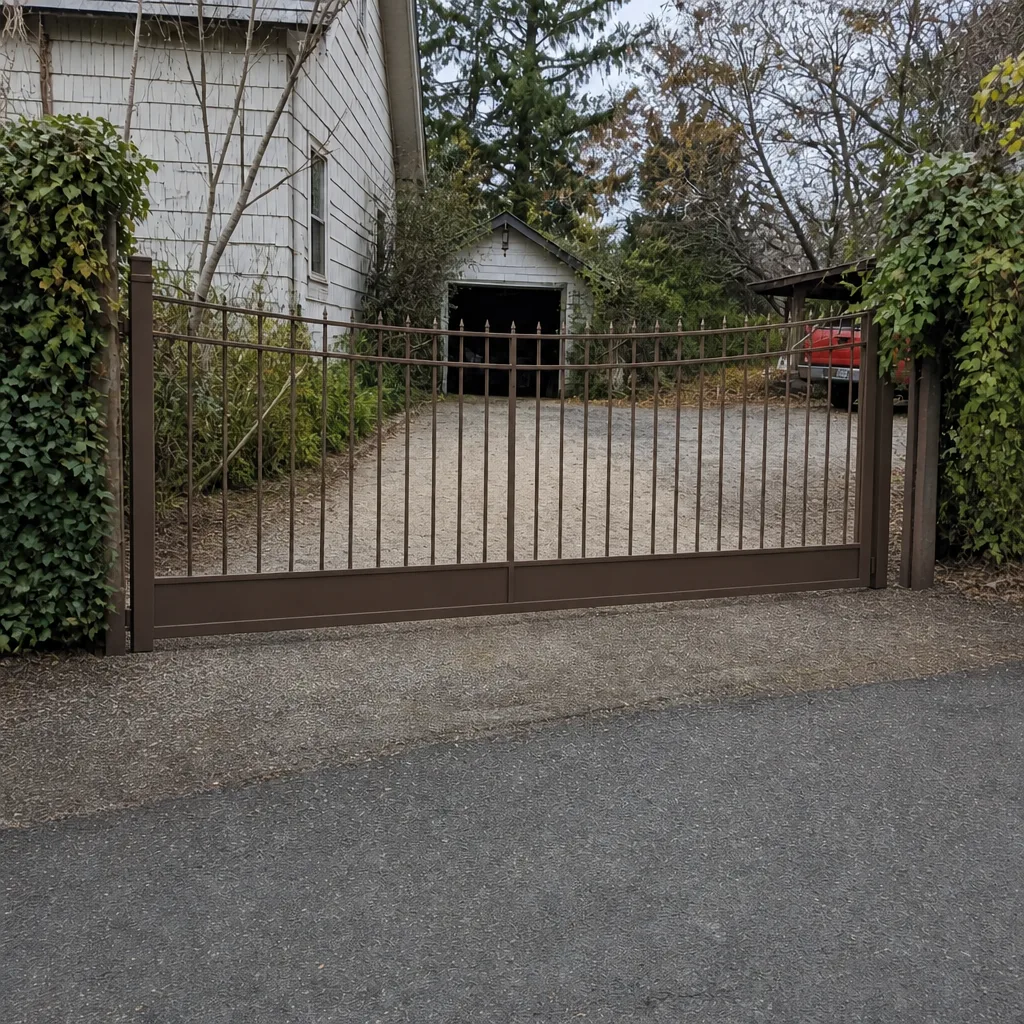 After
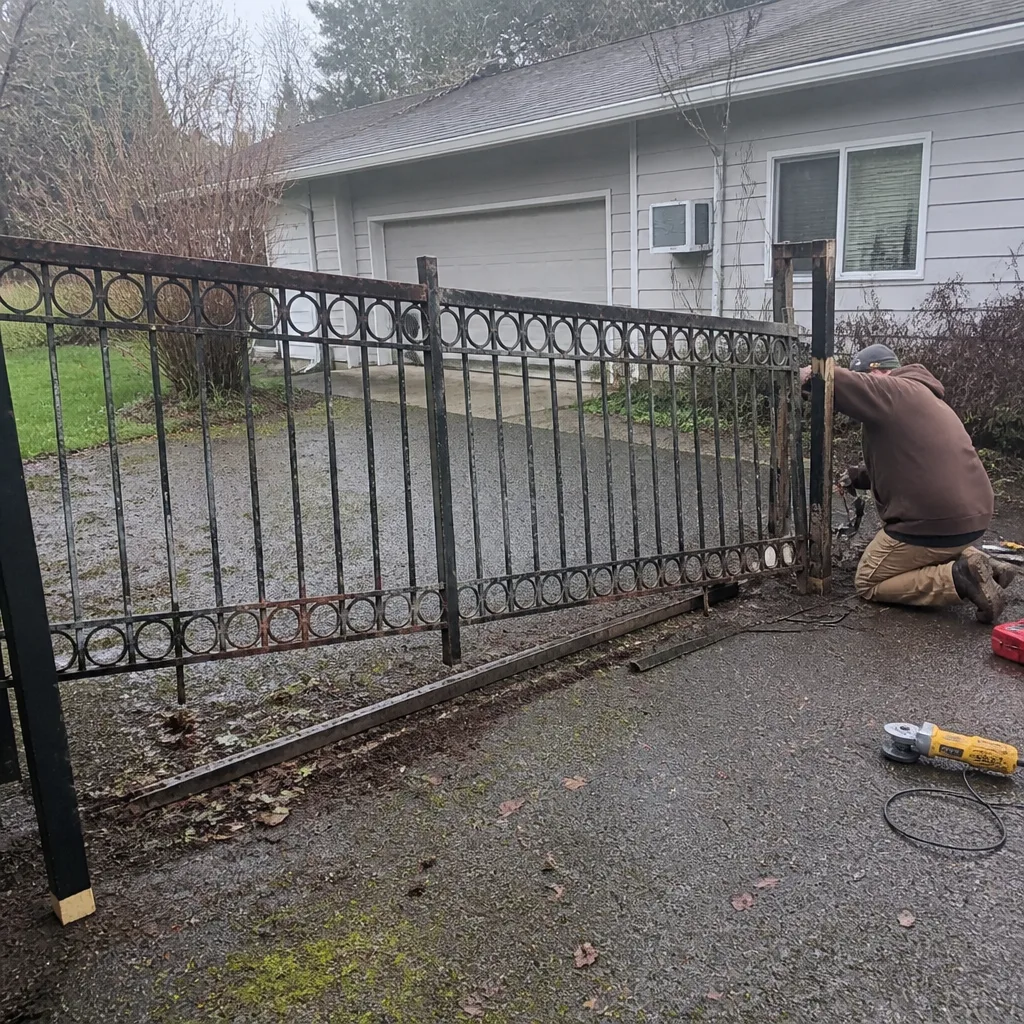 Before
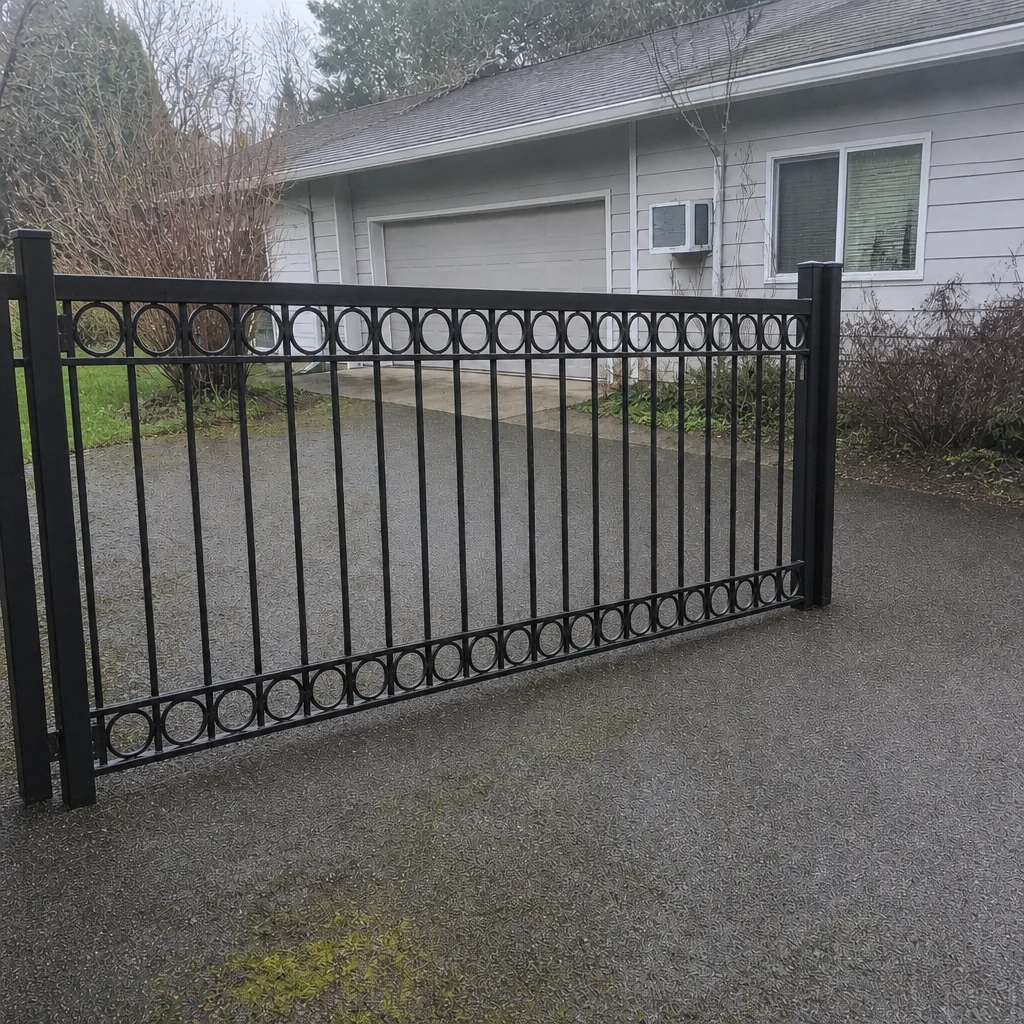 After
Frequently Asked Questions
Slow movement in wet weather usually means friction, not a failing motor. Hinge corrosion and a swollen timber leaf add drag, and a post that has shifted in the freeze-thaw can make the gate bind. Check the leaf by hand in manual release; if it’s stiff, the problem is mechanical. Call (855) 658-5296 for an exact quote, because estimates are free.
Intermittent failures are almost always electrical: a loose terminal, a corroded connection, or a safety device making unreliable contact. Follow the wiring from the operator outward and look for corrosion or a warm terminal. If it keeps failing after you clean and tighten the connections, call (855) 658-5296 and we’ll trace it.
No, leave travel limits and force settings to a technician. Wrong limits drive the gate into its stops and stress the arm and hinges. Raising the force defeats the safety reversal, which is a serious risk. Call (855) 658-5296 and let a specialist set them correctly.
Confirm power, then release the operator and move the gate by hand. If it moves freely and the operator still won’t run, the fault is likely in the board or the operator. A fault code on the board usually tells you which. Call (855) 658-5296 if you get to that point; estimates are free.
Yes. Our access-control work covers keypads, intercoms, loop detectors, and app-based entry, not just motors. A gate that won’t open is sometimes an entry-device fault rather than a mechanical one. Call (855) 658-5296 for a free estimate.
Usually yes, if the fault is a board, a hinge, or a safety device; those are more affordable fixes than a full replacement. A shifted post can also be corrected without a new gate. We’ll give you a written estimate so you can compare repair against replacement. Call (855) 658-5296.
The Bottom Line
Gate troubleshooting is a matter of matching the symptom to the right category before anyone touches a part. Slow movement means friction; no movement means power; partial movement means limits or safety devices; erratic movement means a loose connection or a board. In Irvington, rule out the post and the hinge corrosion from freeze-thaw before you blame the electronics, because the climate turns mechanical faults into electrical-looking ones. Leave travel limits, force settings, and live wiring to a specialist, and when the fault sits inside the board or the operator, call. Your gate repaired right the first time starts with the right diagnosis.
From the motor to the keypad, our full-cycle gate specialist team handles repair, installation, and access control. Call (855) 658-5296 for a free estimate. We answer 24/7. Fast dispatch from 7am to 7pm, Sunday through Friday.
Written by the team at Gate Repair Irvington.