
Last updated November 24, 2026
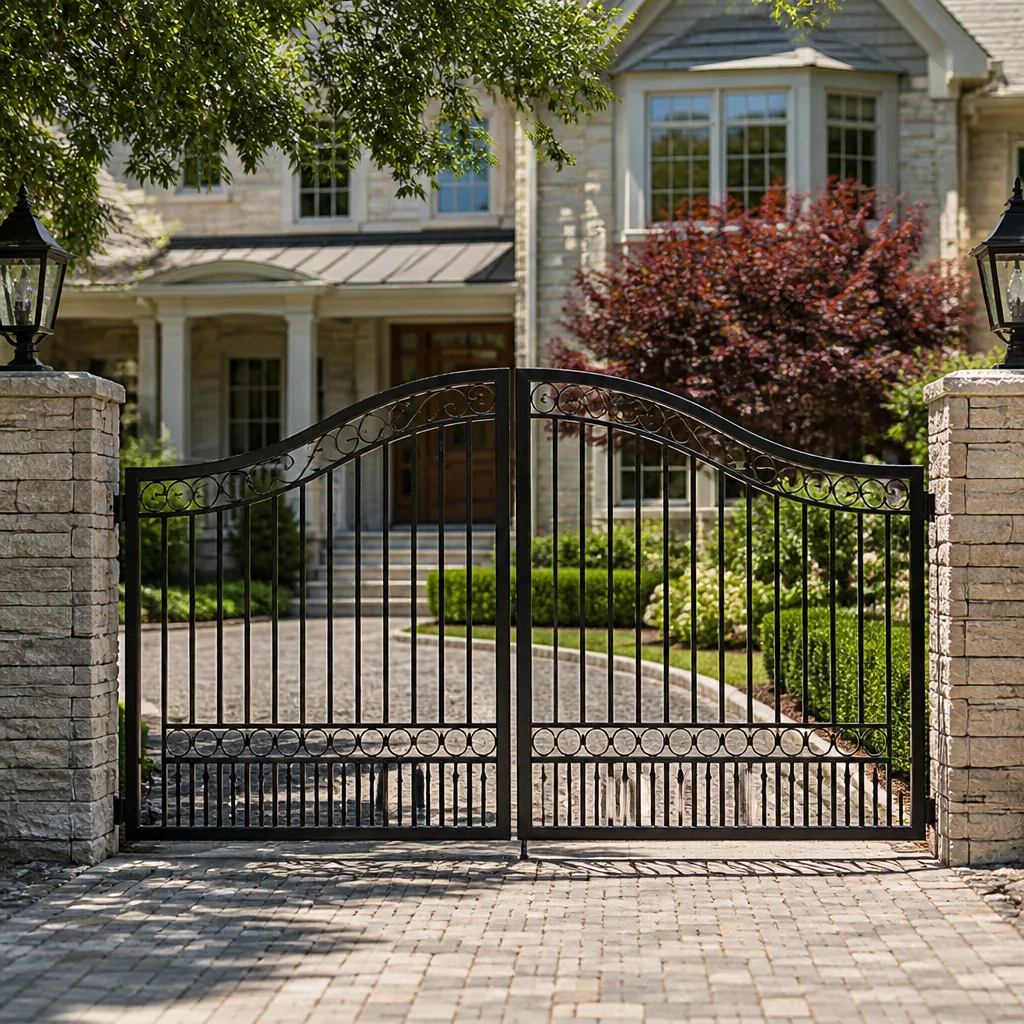 Wrought iron
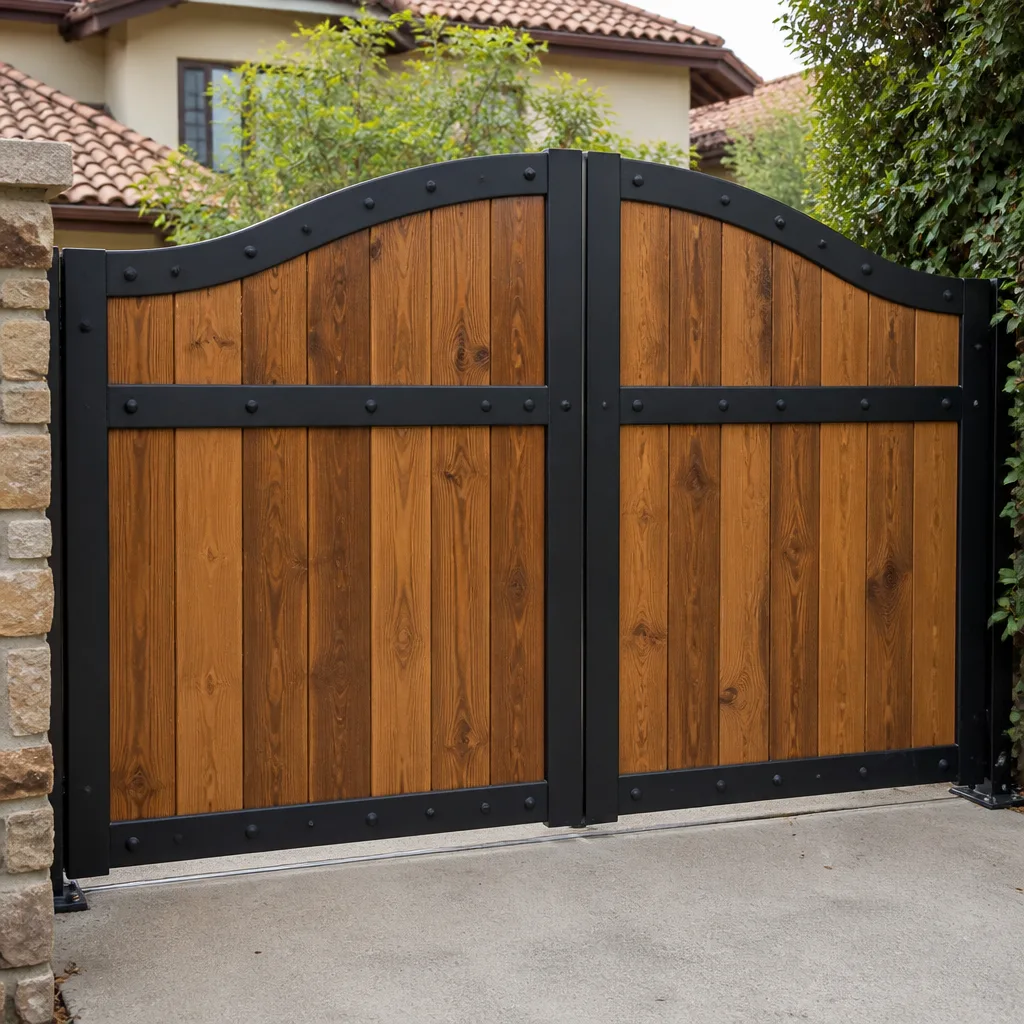 Wood & steel frame
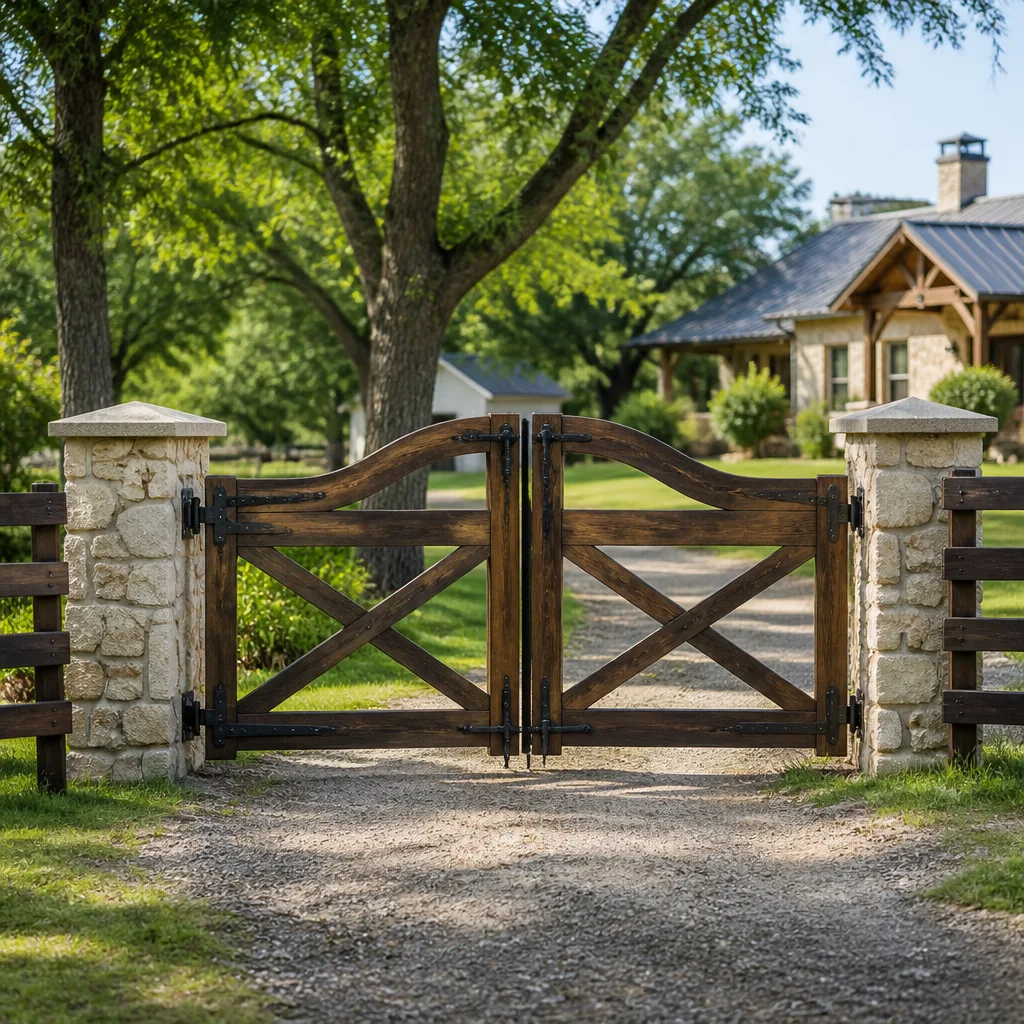 Farm & ranch
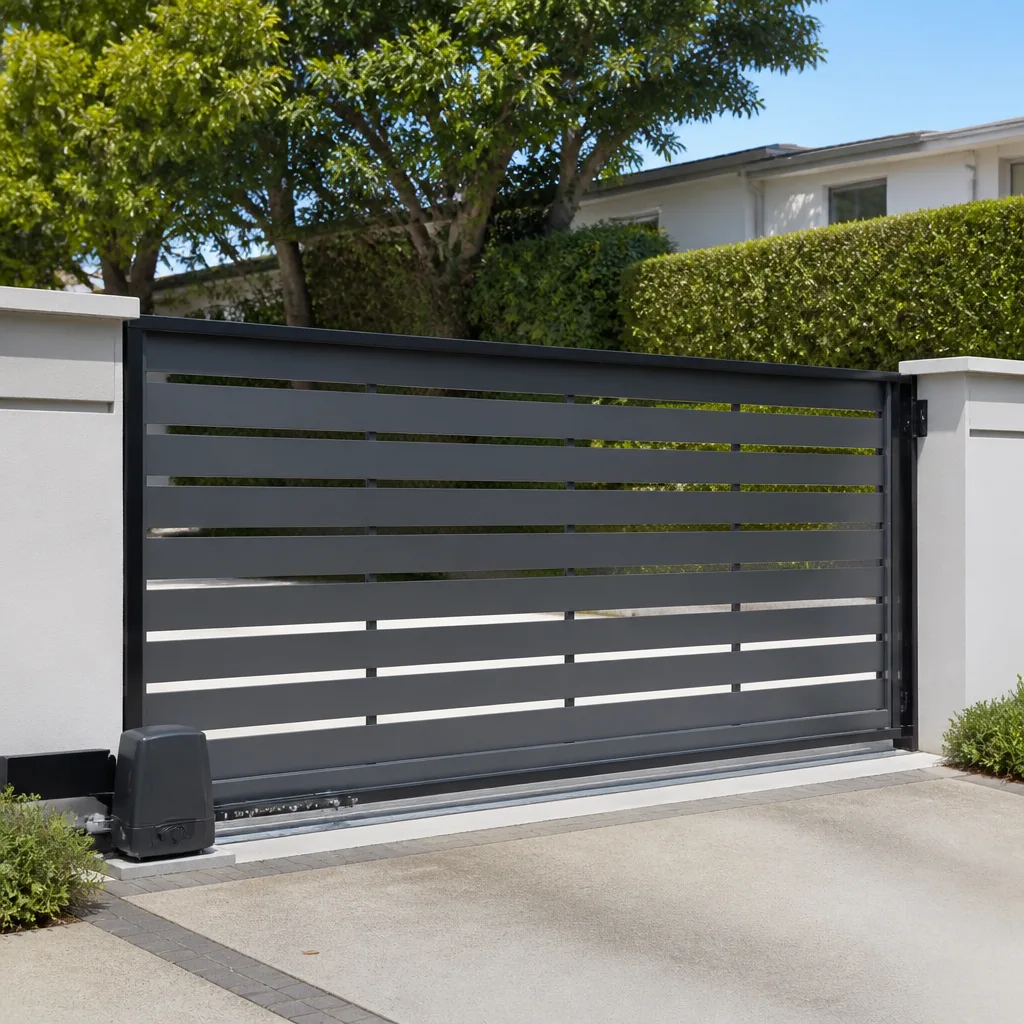 Sliding driveway gates
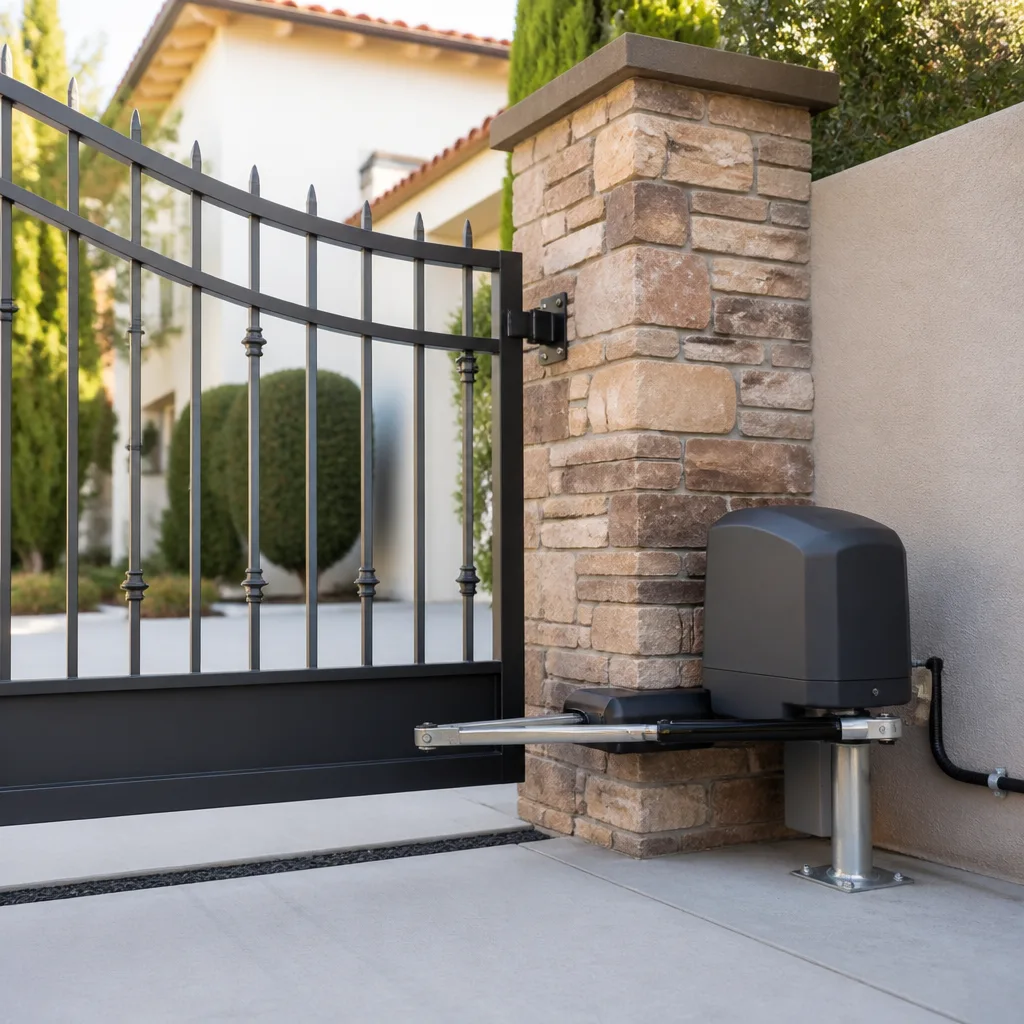 LiftMaster operators
Free on-site gate assessment - hinges, posts, and your LiftMaster or Nice gate operator checked before anything is quoted
The assessment is free and the quote is the invoice.
Get your free estimateThe Complete Guide to Gate Repair in Irvington
A sagging gate isn’t a hinge problem, a post problem, or a latch problem. It’s usually a foundation-shift problem, and Irvington’s clay-heavy soil makes it more common here than in most Portland-area neighborhoods. That single fact changes how you should think about gate repair. A gate that drags, sticks, or swings out of alignment is telling you something about the ground beneath it, not just the metal above it. Most homeowners replace hardware when the real culprit is soil movement, then watch the same problem return within a season. This guide maps every common failure back to its actual source, shows you which repairs reset a gate’s lifespan and which are cosmetic patches, and explains why the type of gate you own changes the entire diagnostic approach. By the end, you’ll know what you’re actually dealing with before you spend a dollar on it.
Quick Answer
Gate repair in Irvington almost always traces back to one of four root causes: structural movement (posts and footings shifting in expansive clay), mechanical wear (hinges, rollers, tracks, latches, and operators), electrical faults (motors, control boards, wiring, and access control), or surface problems (rust, paint, and finish). Identifying which category you’re facing determines whether a modest adjustment solves it or whether you’re looking at replacement. Most issues we see in Irvington are structural or mechanical, and the two frequently overlap.
Styles & brands we work with
- Wrought iron
- Wood & steel frame
- Farm & ranch
- Sliding driveway gates
- LiftMaster operators
Table of Contents
- Why Irvington’s Expansive Clay Soil Causes More Gate Problems
- The Four Root Causes of Gate Failure
- How to Identify Which Root Cause You’re Dealing With
- Repairs That Reset a Gate’s Lifespan vs. Cosmetic Patches
- Why Gate Type Changes the Entire Diagnostic Approach
- Electric and Automated Gate Failures
- Historic District Considerations in Irvington
- What Actually Prevents Gate Failure
Why Irvington’s Expansive Clay Soil Causes More Gate Problems
Irvington sits on some of the most active expansive clay in the Portland area. That clay swells when it absorbs winter rain and shrinks through the dry summer months. The movement is slow enough that you won’t notice it day to day, but it’s relentless, and it transfers directly into anything anchored in the ground. Gate posts are anchored in the ground. That’s the whole story in one sentence.
What that means in practice is that a gate post set two or three seasons ago can gradually heave, tilt, or rotate a fraction of an inch at a time. The gate hangs off that post, so the gate follows the post. A swing gate that once cleared its latch by a comfortable margin starts catching. A slide gate that once rolled true starts binding against its track. Homeowners notice the symptom at the gate and assume the gate is the problem, when the post-and-footing assembly is what shifted.
Contrast this with yards built on sand or loam. Sandy soil drains fast and moves very little season to season. A gate post set in sand tends to stay where you put it for a long time. In Irvington, the same post needs a deeper footing, better drainage around it, and periodic checking. If you’re comparing quotes for a repair, ask whether the technician is planning to address the soil conditions under the post or just re-hang the gate on the existing footing. Those are very different repairs, and only one of them holds. This is the single biggest reason we tell Irvington homeowners that their gate problems aren’t random. The ground is doing this on a schedule.
The Four Root Causes of Gate Failure
Every gate failure we encounter falls into one of four categories. Sorting your problem into the right category is the most useful thing you can do before calling anyone. It tells you what kind of technician you need and roughly what kind of repair you’re facing. Here they are, with the symptoms that point to each.
- Structural failures. Post movement, footing heave, frame sag, and racking (where the gate frame twists out of square). Symptoms: the gate drags on the ground, won’t latch without lifting, or the gap at the latch changes with the seasons. This is the most common root cause in Irvington because of the clay, and it’s the one most often misdiagnosed as a hardware problem.
- Mechanical failures. Hinges, rollers, tracks, latches, catches, and the moving parts of the operator arm. Symptoms: grinding, squealing, a gate that swings freely one way and binds the other, or hardware that visibly wobbles. These wear out with use.
- Electrical failures. Motors, control boards, wiring, sensors, and any access control you have on the gate. Symptoms: the gate won’t move when commanded, moves partway and stops, reverses unexpectedly, or the keypad and intercom stop responding. We cover these in their own section below.
- Surface failures. Rust, corrosion, peeling paint, and moisture damage. Symptoms: visible rust at joints and welds, bubbling paint, or wood that’s soft to the touch. Surface problems are rarely the reason a gate stops working, but they accelerate the mechanical and structural categories if left alone.
Most real-world gate problems in Irvington are a combination of the first two. A post moves a little (structural), which throws the gate out of square, which wears the hinges prematurely (mechanical). Treat only the hinges, and you’ve spent money on a repair that fails again next season. The diagnostic question is always which cause came first.
How to Identify Which Root Cause You’re Dealing With
You can narrow down your root cause in about ten minutes without any tools. This isn’t a repair procedure; it’s observation. Work through these steps and note what you see, then bring those notes to whoever you call.
- Watch the gate swing without touching the latch. If it swings smoothly until it contacts the latch or the ground, suspect alignment or post movement. If it binds throughout its travel, suspect hinge or track wear.
- Look at the post from two angles. Sight down the post with one eye, once from the front and once from the side. A post that leans even slightly toward or away from the gate is a structural issue, and no amount of hinge adjustment will fix it.
- Check the gap at the latch. Open the gate and look at how the latch sits. If the gate has to be lifted or pushed to latch, that’s a sign of racking or post shift, not a worn latch.
- Operate the gate by hand first. On an automated gate, disengage the operator (there’s usually a manual release, and your manual shows where it is). If the gate moves easily by hand, your problem is electrical. If it drags by hand, the problem is mechanical or structural, and the motor is fine.
- Note when the problem shows up. A gate that’s fine in spring and sticks in late summer is telling you about soil movement. A gate that gets progressively worse regardless of season is usually a wear item.
Bring those observations to the conversation. A specialist will confirm them quickly, but they also help you ask the right questions about the repair plan. If you’re ready to have someone look at it, we handle gate repair with exactly this diagnostic approach in mind.
Repairs That Reset a Gate’s Lifespan vs. Cosmetic Patches
This is the distinction that saves Irvington homeowners the most money over time. Some repairs genuinely reset the clock on a gate’s service life. Others buy you a season or two before the same problem comes back, usually worse. Here’s how to tell them apart.
Repairs that reset the lifespan:
- Resetting or replacing a footing that has heaved or rotated. This addresses the cause in Irvington’s clay soil. It’s the most involved structural repair, and it’s the one that prevents the recurrence cycle.
- Re-squaring a racked frame. If a gate has twisted out of square, correcting the frame and re-bracing it restores correct geometry. Hanging fresh hinges on a racked frame just moves the wear to a different part.
- Replacing worn rollers and tracks on a slide gate. Rollers are consumable parts, and a full set replacement plus a track inspection restores smooth travel.
- Repairing or replacing a failing control board or operator component. On automated gates, replacing the failing component properly (not bypassing it) restores reliable operation.
Repairs that are cosmetic patches:
- Adjusting a latch to compensate for a shifted post. It works for a while, then the post moves further and you’re adjusting again.
- Shimming a hinge to lift a dragging gate. Shims are a temporary crutch. They wear out, and the underlying sag remains.
- Painting over rust without addressing it. The rust continues underneath and comes back through the finish.
- Forcing a bent gate frame back into position without re-bracing. It bends back within a season.
The general rule: if a repair addresses the moving part of the gate but not the part that’s anchored to the ground, it’s probably a patch. Ask the technician directly whether the fix is structural or cosmetic. A good answer will be specific.
Why Gate Type Changes the Entire Diagnostic Approach
Swing gates, slide gates, bi-fold gates, and automated gates share almost no failure modes in common. A technician who’s strong on swing gates can be out of their depth on a slide gate’s track geometry, and a mechanical specialist may have no idea how to diagnose a control board fault. This is the practical reason specialization matters. The diagnostic path is different for each type.
Swing gates pivot on hinges, so the load concentrates at two points. Post lateral stability and hinge integrity are everything. A swing gate that binds is almost always telling you about the hinge-side post.
Slide gates ride on rollers or a cantilever, so the load distributes along a track or a base. A single failed roller causes drag that wears the rest of the system. Track alignment matters as much as the gate frame. Slide gates are also the type most often involved in crushing and entrapment risk from heavy panels, so safety device condition gets checked as part of the diagnostic.
Bi-fold gates have more moving joints per opening than any other type, which means more wear points and a more complex failure tree. They also concentrate force at the folding pivot, and a single misaligned joint cascades through the whole gate.
Automated gates add the entire electrical and access control layer. The mechanical diagnostic is still the foundation, but you’re also checking the operator, wiring, sensors, and entry interface. If you want to commit to a specific repair, understanding gate repair Irvington as a category, not a provider, is the right starting point: the service you need depends on the gate type.
Electric and Automated Gate Failures
Electric gates fail in ways that mechanical gates don’t, and the failures are the ones most likely to send a generalist down the wrong path. Common automated and electric gate problems include:
- Motor runs but gate doesn’t move. Usually a failed clutch, a broken arm, or a disengaged manual release.
- Gate moves partway and reverses. Usually a sensor fault or a control board detecting an obstruction. Sometimes the sensor is dirty; sometimes it’s failing.
- Gate won’t respond to any command. Usually a power fault, a blown fuse, or a control board problem. On this one, we check the simplest things first (power, then connections, then the board).
- Keypad or intercom stops working but the gate still opens from the remote. Usually an access control wiring issue, not a gate operator issue.
- Intermittent function. These are the hardest to diagnose, and they’re usually loose connections, moisture intrusion, or a control board on its way out.
Automated gate systems range from residential swing-gate kits to commercial-grade operators, and the diagnostic approach differs by brand and model. We work on BFT, Linear, and Ghost Controls systems specifically, among others, and knowing the brand on your pillar means faster diagnosis of the exact fault codes and part quirks. We have gate motor & opener expertise that general repair shops just don’t have.
One important safety note: electric gates run on low-voltage wiring and control boards wired to mains power, and mistakes here can be dangerous. Heavy slide gate panels can crush, and an operator that fails unpredictably can strike a person or a vehicle. This is not a do-it-yourself category. If your gate is automated and behaving unpredictably, stop using it and have it checked by someone who works on your brand. Access control integration, from keypads to intercoms to app-based entry, is its own specialty, and we treat it as one.
Historic District Considerations in Irvington
Irvington’s historic district status is one of the things that makes the neighborhood distinctive, and it also affects what repair options are on the table. Historic district regulations can apply to visible alterations on street-facing features, and in some cases to gate replacement or major changes to the gate’s appearance. The rules exist to preserve the character of the neighborhood, and they interact directly with your repair decision.
In practice, this means a repair that keeps your existing gate and restores it is often more appropriate than a replacement, especially when the replacement would change the gate’s style or materials in a visible way. That works in your favor as a homeowner, because a good structural and mechanical repair is usually the more sensible choice anyway. Before you commit to anything that changes the gate’s appearance, confirm the current rules with the city. The specific requirements and how they’re applied can change, and we don’t want to give you a rule that no longer applies by the time you read this. Ask the city directly, and bring the answer to any contractor conversation.
Historic district or not, the practical approach on an Irvington gate is the same: repair the structure first, repair the mechanics second, preserve the gate’s appearance where it matters, and only replace when the gate is genuinely beyond repair.
What Actually Prevents Gate Failure
Gate repair prevention in Irvington isn’t a magical product. It’s a short, consistent list of habits that address the root causes we’ve covered.
- Check the posts every season. Look for tilt from two angles. A post that’s already leaning slightly is the earliest sign of a structural problem, and catching it early is the difference between a footing repair and a gate replacement.
- Keep water away from the footings. In expansive clay, drainage matters more than any other single thing. Make sure the ground around a gate post drains away from the post, not toward it.
- Lubricate hinges and rollers on a regular schedule. Moving parts left dry wear several times faster. This is the single cheapest thing you can do for your gate.
- Clear the track of debris on slide gates. Small stones and dirt accelerate roller wear. A quick sweep every few weeks makes rollers last longer.
- Check the safety devices on automated gates. Sensors and safety edges exist to prevent injury. If yours are damaged or bypassed, get them restored.
- Repair rust and finish damage early. Rust moves faster than most people expect once it starts.
None of these are complicated. The trick is doing them consistently, and knowing when a small problem needs a specialist. That’s the core of what we do: gate installation and repair from the motor to the keypad, so you never have to coordinate multiple contractors on a single gate.
Common Mistakes to Avoid
- Replacing hardware to fix what is actually a post problem. New hinges on a shifted post are a temporary patch. The post will keep moving and the new hardware will wear just like the old.
- Assuming every gate issue is a mechanical failure. In Irvington, structural issues are common, and skipping the post check means you’ll treat the symptom and not the cause.
- Ignoring small post tilt. A quarter-inch of lean today is an inch of movement by next year. Catch it early.
- Painting over rust. The rust continues underneath and returns worse. Treat the source first.
- Calling a general handyman for an automated gate fault. Fault codes and control boards are brand-specific. A generalist without brand fluency will guess, order the wrong part, and you’ll pay twice.
- Using a gate with damaged safety devices on an automated system. Sensors and safety edges are there for a reason. Bypassing them because the gate “works fine without them” is a real hazard.
- Letting a bent frame stay bent. A racked gate concentrates wear on the rest of the system. Re-squaring it early prevents the damage from spreading.
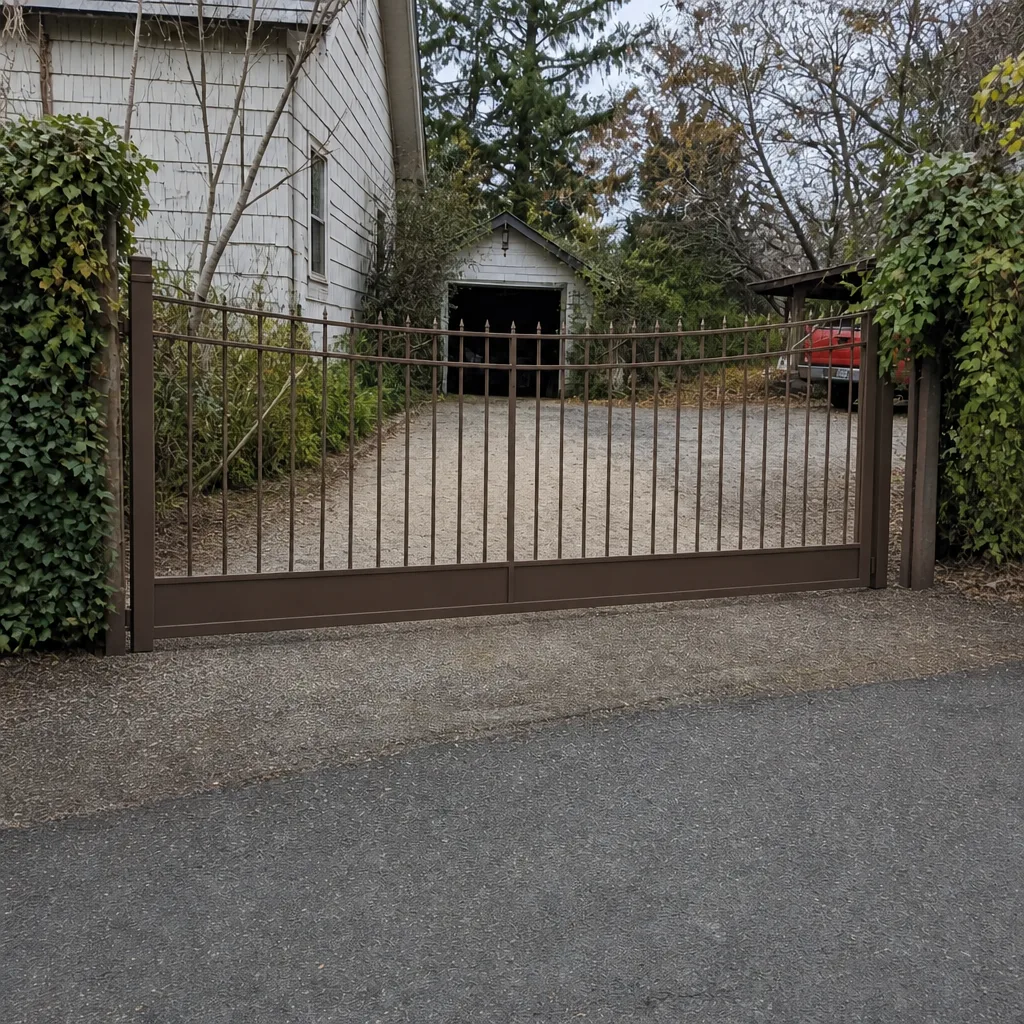
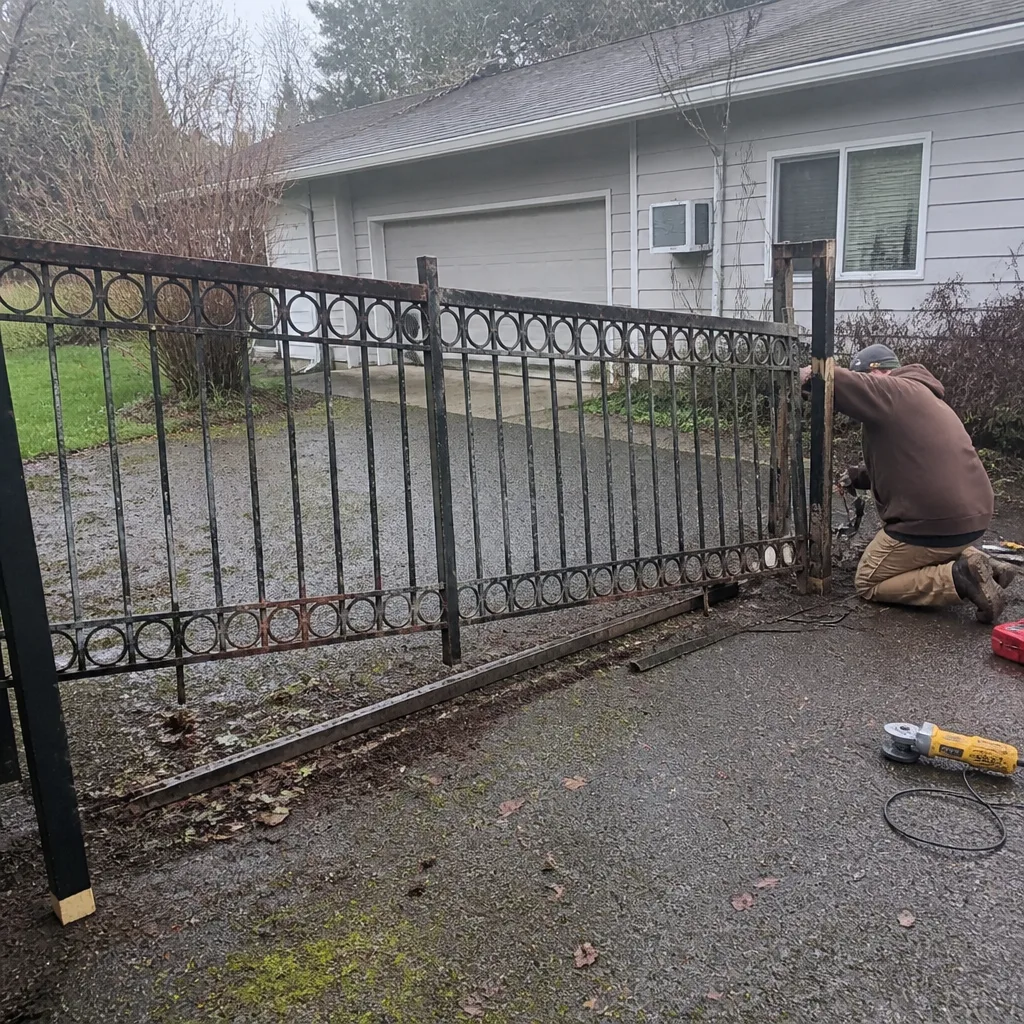
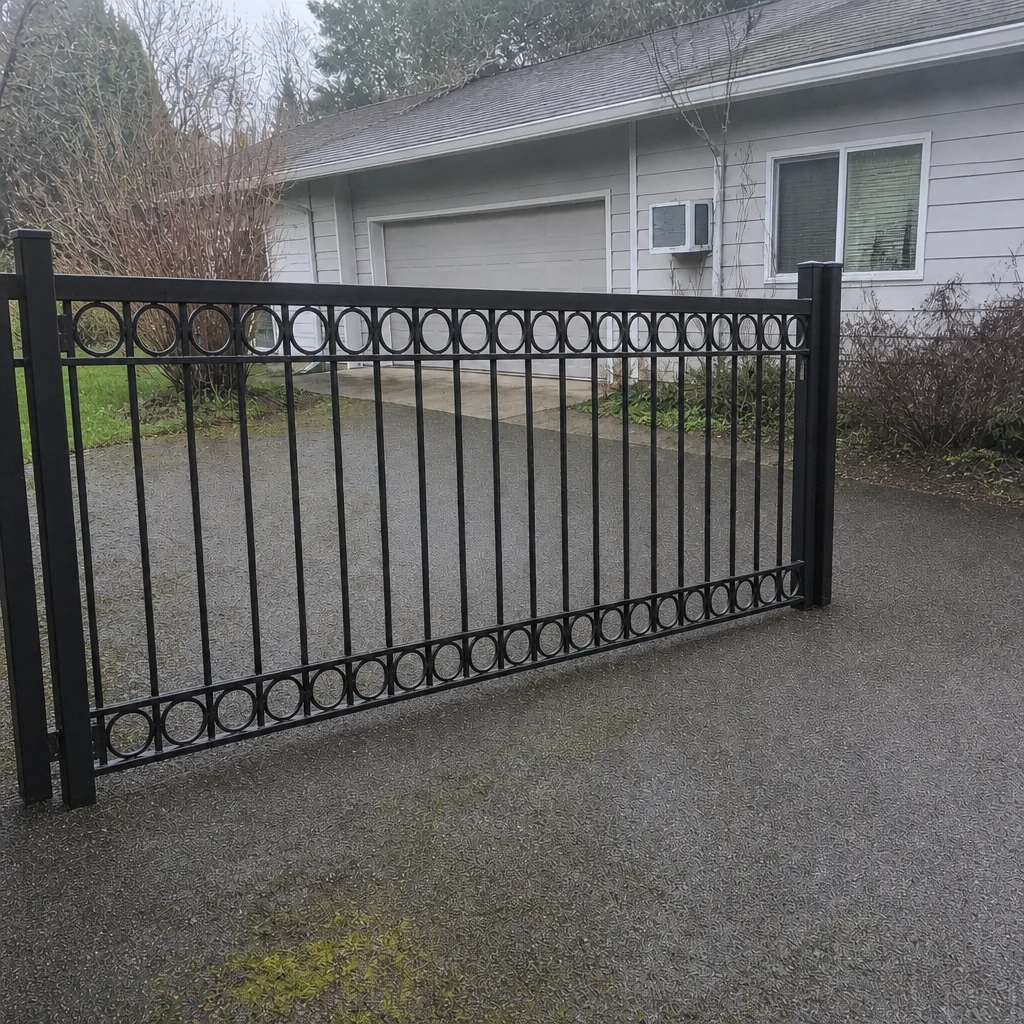
See the difference
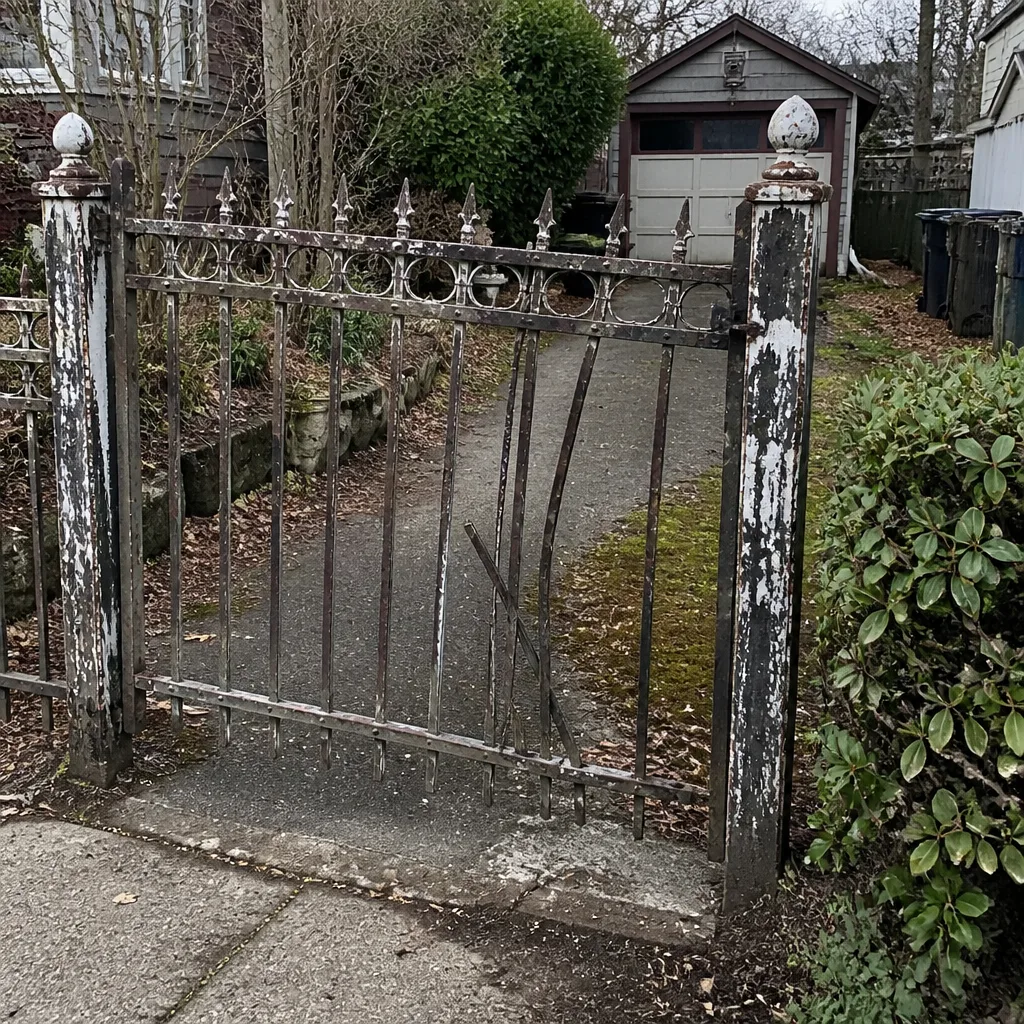 Before
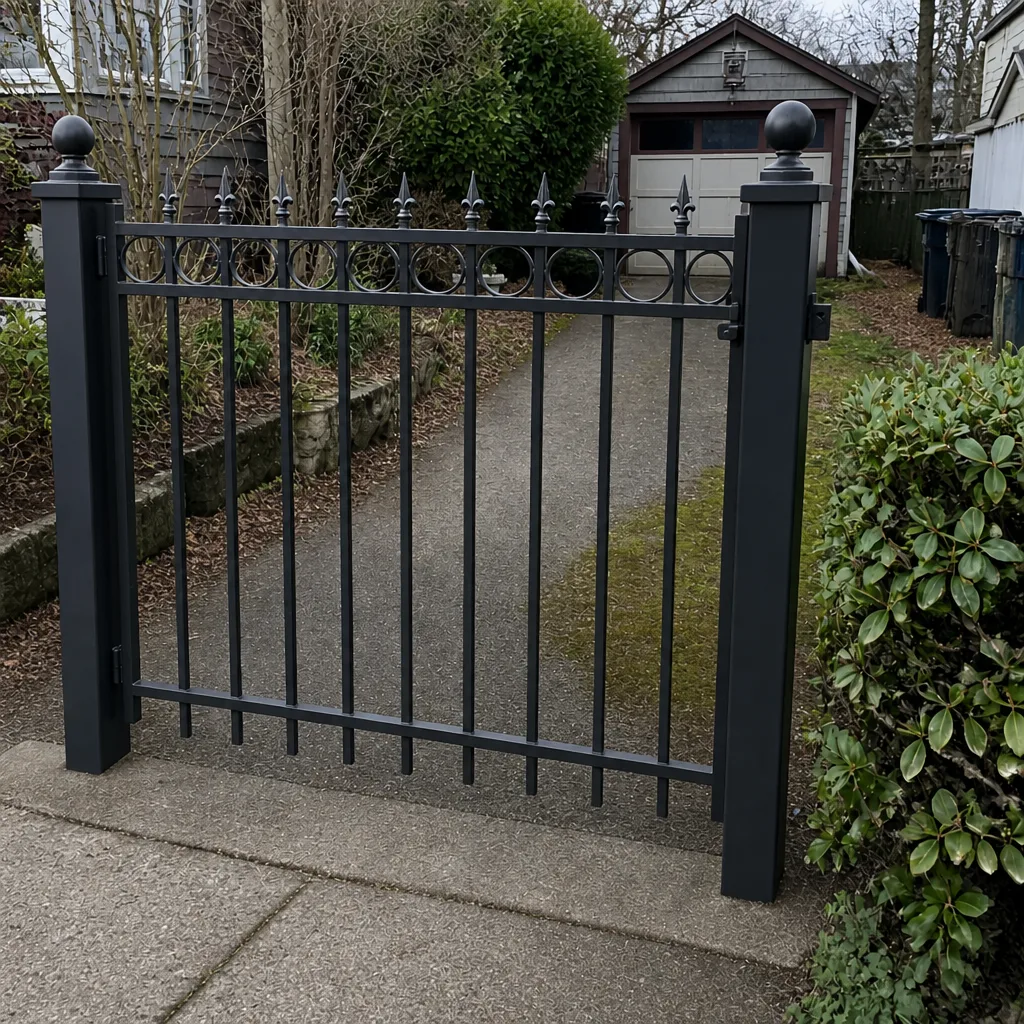 After
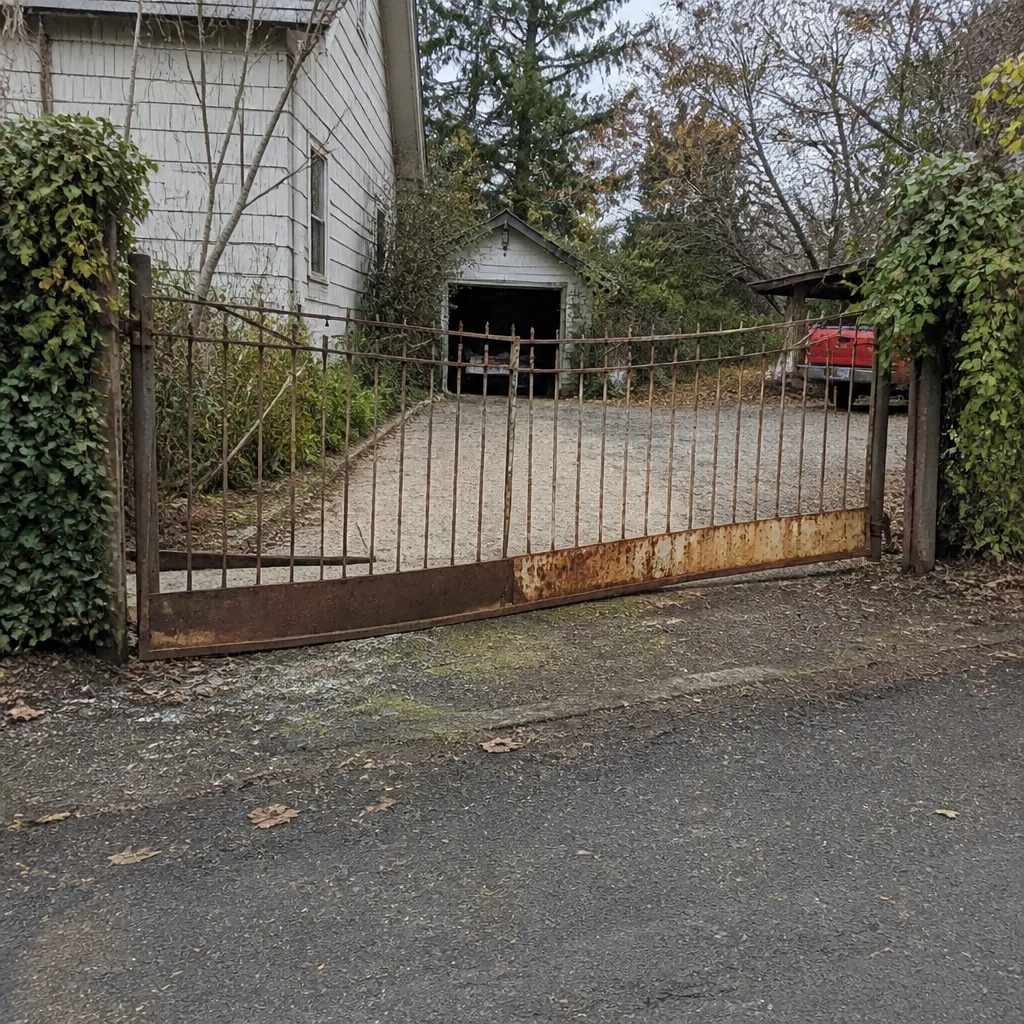 Before
 After
 Before
 After
When to Call a Professional
Some gate repairs are genuinely simple, and some are not. Here’s where the line is, in our experience. Call a professional when the gate has a post or footing problem you can’t diagnose with certainty, when an automated gate won’t operate reliably, when a gate is showing signs of frame racking or bending, when safety devices are damaged or bypassed, and when the repair you’re considering requires welding, cutting, or re-anchoring anything. Call before the problem spreads to the rest of the system. And if you’ve already tried a repair and it didn’t hold, call sooner, because the underlying problem is probably still there. Gate Repair Irvington offers free estimates in Irvington. Call (855) 658-5296. We answer 24/7. Fast dispatch from 7am to 7pm, Sunday through Friday.
Frequently Asked Questions
The cost depends on which root cause you’re dealing with. A mechanical repair like a hinge or roller replacement is at the low end, a structural footing repair is at the higher end, and an electrical fault is somewhere in between depending on which component failed. We set the price per job from a written estimate after we’ve looked at the gate. Call (855) 658-5296 for an exact quote, since estimates are free.
Because the post is moving with Irvington’s expansive clay soil, and re-aligning the gate without addressing the footing only holds until the next wet-dry cycle. The fix that lasts is to correct the footing, not just the gate. Call (855) 658-5296 and we’ll confirm what’s actually moving.
Often, yes. Mechanical and electrical repairs on automated gates are frequently same-day work, though the answer depends on whether we need a specific part for your brand. We answer 24/7. Fast dispatch from 7am to 7pm, Sunday through Friday. Call (855) 658-5296.
We work with nine major gate automation brands specifically, including BFT, Linear, Viking, and Ghost Controls, among others, at residential and commercial scale. Being brand-specific means faster diagnosis: we’re not looking up the fault codes from scratch. Tell us the brand on the pillar when you call, and we’ll tell you what to expect.
Almost everything, diagnostically. Slide gates ride on tracks and rollers and fail differently than swing gates, which hang on hinges and depend heavily on the hinge-side post. A technician skilled at one type isn’t automatically the right call for the other. If your gate is a slide type, mention it when you call so we can match the right approach.
It depends on what the repair involves. Like-for-like mechanical repairs usually don’t, but anything that changes the gate’s visible appearance or makes a major structural change can trigger historic district review. Ask the city’s building department and historic district office directly before committing to a repair that changes how the gate looks, and confirm your specific situation with them.
The Bottom Line
Gate problems in Irvington aren’t random. They come from four root causes, and the clay soil under the neighborhood makes the structural category common here. If you take one thing from this guide: match the repair to the actual cause, not to the symptom. Mechanical repairs that ignore a shifting post are temporary, and cosmetic patches that ignore rust and finish damage just delay the inevitable. The gate type matters, the brand on your automated gate matters, and the historic district guidance is worth checking before any visible change. If you’re ready for a diagnosis rather than a guess, call (855) 658-5296 for a free estimate. We answer 24/7. Fast dispatch from 7am to 7pm, Sunday through Friday.
Written by the team at Gate Repair Irvington.