
Last updated November 24, 2026
 Wrought iron
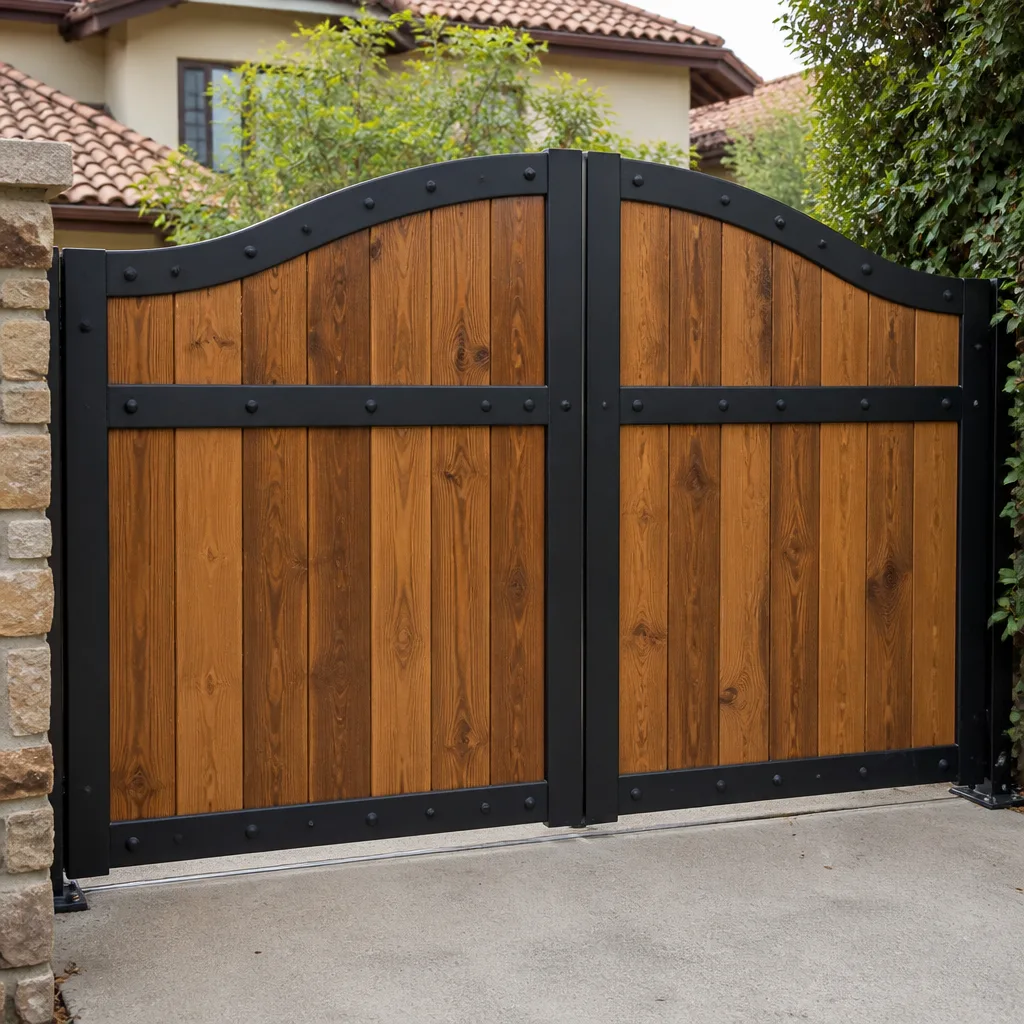 Wood & steel frame
 Farm & ranch
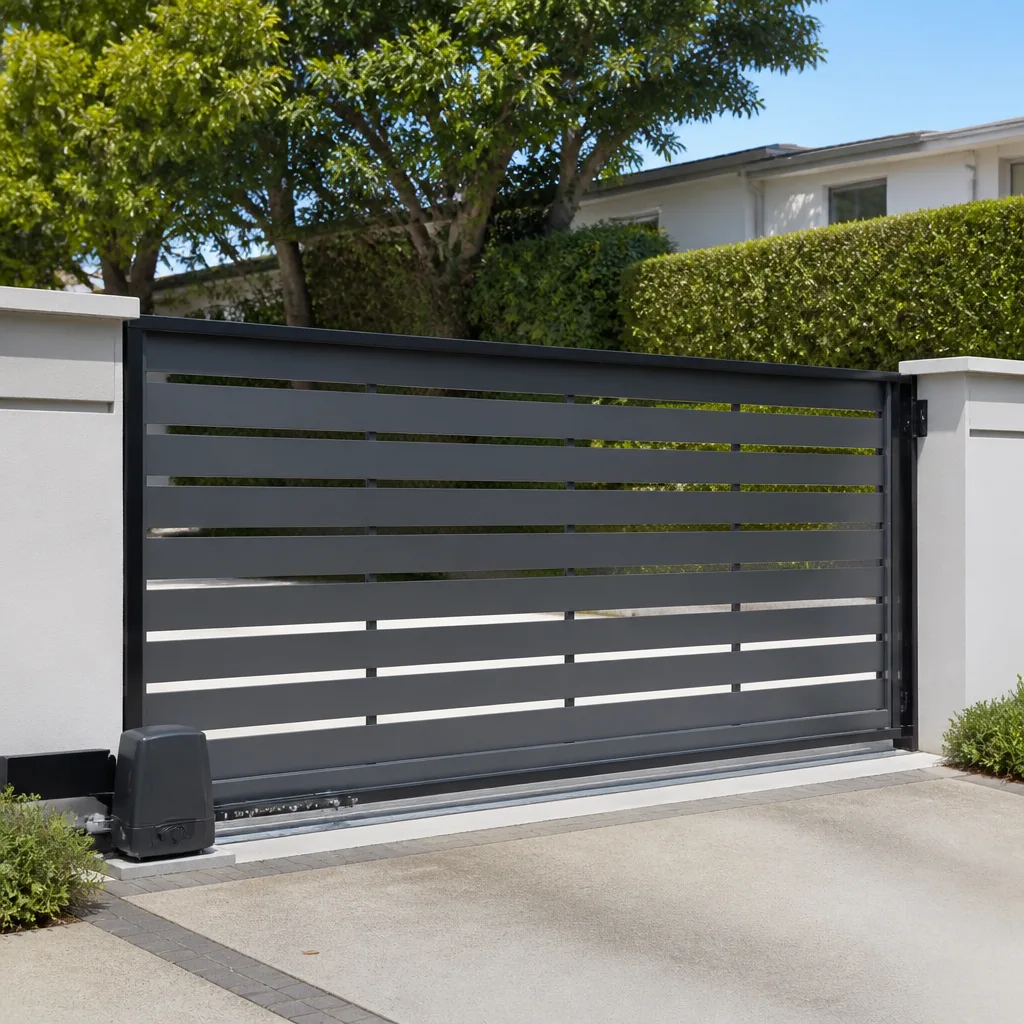 Sliding driveway gates
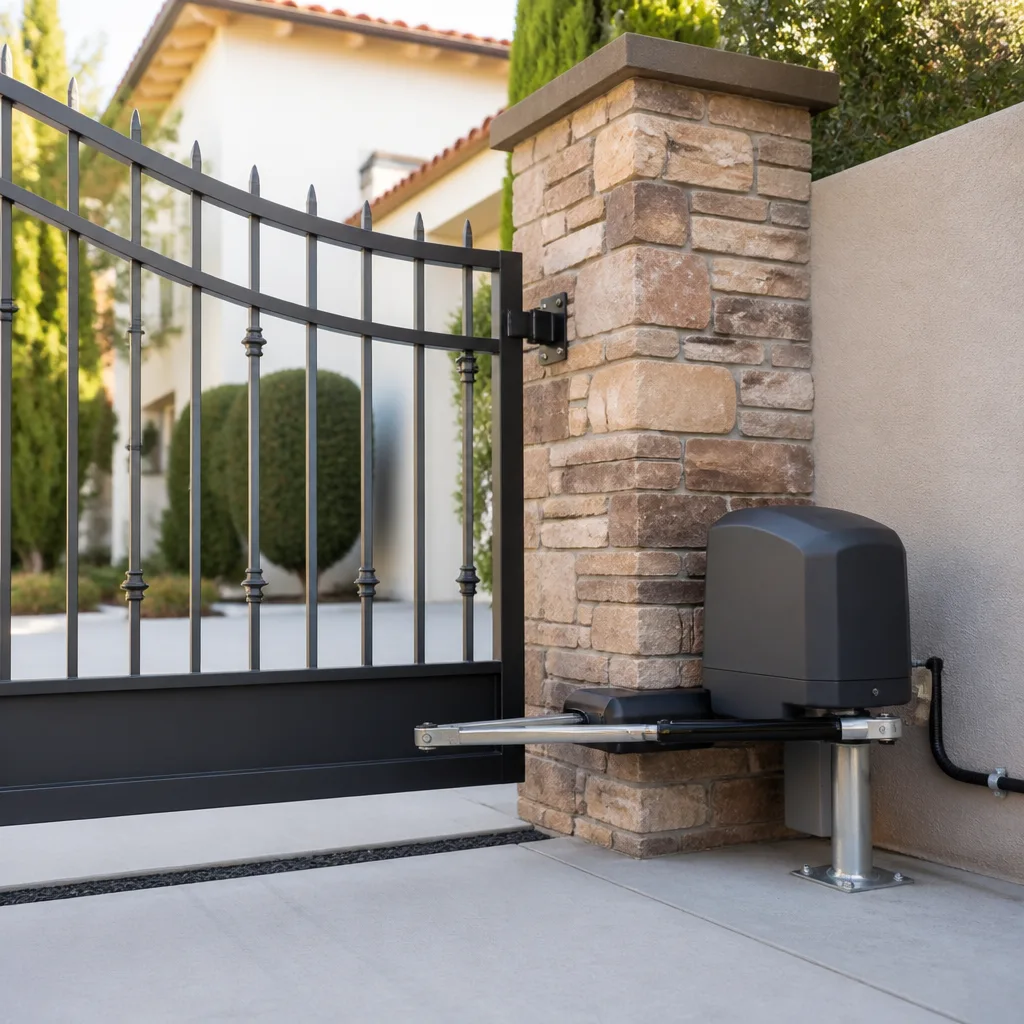 LiftMaster operators
Free on-site gate assessment - hinges, posts, and your LiftMaster or Nice gate operator checked before anything is quoted
The assessment is free and the quote is the invoice.
Get your free estimateGate Repair Maintenance Checklist for Irvington Homeowners
Most gate maintenance checklists tell you to “lubricate moving parts.” That’s like telling someone to “check the car.” Here’s what you’re actually looking for, and the specific measurements that separate a gate that’s fine from one that’s about to strand you in the driveway. This guide is built the way we actually inspect gates: pass or fail, no guesswork, no tool kit required beyond a tape measure and your own eyes and ears. We’ll cover the sag and drift tolerances that matter, the three sounds that announce a failing part, which tasks genuinely extend gate life in Irvington’s wet winters, and how to document a baseline so the next repair is faster to diagnose.
Quick Answer
A useful gate maintenance checklist measures four things every season: gate sag or drift (more than about half an inch of change means inspection), latch alignment, unusual sounds from the operator or hinges, and the condition of hinges, tracks, and photo-eye lenses. In Irvington, the wet winters make drainage, rust, and moisture in control enclosures the highest-priority checks. Most emergency gate service calls we see trace back to two components homeowners rarely touch: the safety photo-eye lenses and the operator’s control board enclosure.
Styles & brands we work with
- Wrought iron
- Wood & steel frame
- Farm & ranch
- Sliding driveway gates
- LiftMaster operators
Table of Contents
- What should you check on an automated gate every season?
- How much sag or drift is acceptable before a repair is overdue?
- What are the three sounds a gate makes before a component fails?
- Which maintenance tasks actually matter in Irvington’s wet winters?
- How do you document your gate’s baseline condition?
- The two components Irvington homeowners never check
- What changes when you service an Elite, Mighty Mule, or LiftMaster system?
- What should you never adjust yourself?
What should you check on an automated gate every season?
A seasonal walk-around takes about fifteen minutes and catches most problems before they become repair calls. The point isn’t to fix anything. It’s to notice what changed since last time. In Irvington, where the wet season runs long and the dry season stresses wood and metal in the opposite direction, two checks a year usually aren’t enough. We suggest a light inspection each season and a deeper one before the rains settle in.
Run through this sequence, in this order, because each step depends on the one before it:
- Look at the gate in its closed position from ten feet back. Is the top rail parallel to the ground? Does it meet the far pillar flush? This is your sight-line check and it comes before anything mechanical.
- Open and close the gate by hand if the operator allows manual release. Does it swing or slide smoothly for the full arc? Any binding, scraping, or sudden resistance is a mechanical fault, not an operator fault.
- Listen for the three sounds we describe further down, both at the gate and at the operator housing.
- Inspect hinges, rollers, and tracks for rust, loose bolts, and debris. On Irvington properties, wet leaves and moss in the slide track are a common cause of false obstructions.
- Check the photo-eye alignment by passing a hand through the beam and confirming the gate reverses.
- Walk the perimeter of the operator enclosure and look for water intrusion, insect nests, or a lid that no longer seats cleanly.
- Test the manual release and the keypad or intercom so you know they work before you need them.
If any step fails, don’t force it. Note what you saw and call for a gate repair visit. A gate that fails a hand test will often work for weeks under the operator, then surprise you at the worst possible moment.
How much sag or drift is acceptable before a repair is overdue?
Acceptable tolerances are smaller than most homeowners expect. On a swing gate, anything up to about a quarter inch of vertical sag at the latch post is normal wear. Between a quarter inch and half an inch is your warning window: schedule an inspection before the season turns. Over half an inch of sag, or any visible drift at the far post, means the hinge or post footing has already moved and a repair is overdue. On a slide gate, more than a sixteenth of an inch of lateral drift from the track centerline stops being cosmetic.
Latch alignment has its own simple test. Stand at the gate in the closed position and look at the gap between the latch and the catch. A quarter inch of gap in either direction is acceptable. When the latch has to be nudged by hand, or the gate grinds before it seats, that’s a fail. Latches wear from misalignment rather than from use, so a grinding latch is a symptom, not the problem.
Tape-measure checks to record each season:
- Vertical gap between the gate’s bottom rail and the ground at three points: hinge side, center, and latch side.
- Horizontal gap at the latch post, top and bottom.
- Vertical sag at the latch post, measured with a level across the top rail.
- On slide gates, gap between the gate edge and the track at the open end.
Write each measurement down. The number itself matters less than the change from last season. A gate creeping a sixteenth of an inch per season is behaving predictably. A gate that moved a half inch in one month has a structural problem.
What are the three sounds a gate makes before a component fails?
Gates talk before they fail. The three sounds that most reliably signal a coming repair are a rhythmic squeal, a low grind, and a sharp metallic click. Each points to a different wear point, and each has a window where a small repair is still possible. In our experience diagnosing automated gates across the brands we service, catching these sounds early separates a hinge job from a post replacement.
The rhythmic squeal
A high-pitched squeal that repeats in rhythm with the gate’s travel almost always means dry hinge pins or a dry roller bearing. It’s the friendliest of the three sounds because it means the part is still moving freely, just without lubrication. Catch it early and a proper greasing quiets it. Ignore it for months and the pin starts to wear the hinge plate instead, which is a replacement job.
The low grind
A grinding or dragging sound that grows louder near the end of the travel usually points to the operator’s drive mechanism or a track obstruction. On slide gates, Irvington’s wet-season leaf litter is a frequent cause. On swing gates, a grind can signal the operator arm binding against a hinge that’s sagged. The key detail is whether the sound comes from the gate or from the operator housing. Put your hand on the housing while the gate moves: if the grind is strongest there, look at the operator first.
The sharp metallic click
A click that happens once, at the same point in every cycle, usually indicates a loose fastener, a worn gear tooth, or a control board relay switching. It’s the sound we most often hear reported just before a LiftMaster or FAAC operator stops responding to the remote. A click from the operator housing is worth a technician visit; a click from the fence line is usually hardware.
Record the sound and when it happens. “Grinds at the last foot of closing” is a diagnosis. “It’s making noise” is a call we have to start from zero on, which slows everything down.
Which maintenance tasks actually matter in Irvington’s wet winters?
Irvington’s wet winters turn some checklist items into high-value work and others into busywork. The tasks that genuinely extend gate life here are the ones that address water, not the ones that address shine. A gate that looks polished but has water pooling at its base is on borrowed time. The tasks below are worth doing; the ones we skip are just as important to name.
Worth doing:
- Clear the seasonal drainage path at the gate base. Water sitting at the footing or track is the number one driver of rust and post movement. In Irvington, this often means clearing leaves and moss from the base after a storm.
- Inspect and reseal the operator enclosure. The lid gasket and cable entry are the two places water gets into a control board and shorts a low-voltage circuit. This is the single most cost-effective check we perform.
- Lubricate hinges and rollers properly. A quality gate lubricant, applied twice a year, keeps hinges and rollers moving freely through the damp season. Avoid heavy grease that traps grit.
- Dry and inspect the photo-eye lenses. Mist on the lenses is a common cause of phantom obstructions during Irvington’s foggy mornings.
- Check the manual release. If it’s stiff in summer, it will be seized by midwinter.
Busywork we skip:
- Polishing or painting a gate mid-season. It hides the rust you need to see, and paint over trapped moisture is worse than bare metal.
- Torque-checking every bolt. Loosening and retightening hardware you don’t need to touch accelerates wear on the threads.
- Applying silicone to every joint. A little at the cable entry is fine. Coat every joint and you’re trapping water against the metal.
- Testing the operator repeatedly for “feel.” Cycling a gate unnecessarily wears the drive.
For a full-cycle look at when installation or replacement makes more sense than repair, see our gate installation page. If you’ve already ruled out a mechanical problem, the issue may be in your gate motor & opener.
How do you document your gate’s baseline condition?
Documentation is the cheapest repair tool you own. A baseline record tells a technician what “normal” looked like for your specific gate, which means a diagnosis starts with a comparison rather than from zero. It also shortens the time between a problem appearing and a fix being scheduled. We ask homeowners to record a baseline once and update it each season.
Here’s what to capture, and it takes ten minutes with a phone and a tape measure:
- Photograph the gate from four angles in its closed position: straight on from the curb, from the inside, at the latch post, and at the hinge post. Date-stamp each photo.
- Photograph the operator nameplate and control board. The brand and any fault code on the board’s label let us order the right part before a technician visits, which is one reason a specialist visit often runs shorter than a generalist one. If your gate has an Elite or FAAC operator, that nameplate tells us exactly which arm or board we’re dealing with.
- Measure the numbers from the tolerance section and write them down. Seasonal comparisons start here.
- Note the sounds in one line: “slight squeal on opening,” “quiet,” “grind near closing.”
- Photograph the photo-eye lenses and their mounting brackets so alignment drift is easy to spot.
- Keep a single note file on your phone or a page in a drawer. Not three apps and a loose receipt.
A strong baseline is the difference between a five-minute diagnosis and an hour of phone tag. If you’re shopping for a new operator and want the baseline to start from scratch, we cover matching brands to gate types in our guides, and you can see how a full-cycle gate specialist approaches it at gate repair Irvington.
The two components Irvington homeowners never check
Two components account for the majority of the emergency gate service calls we run. Neither is mechanical, neither is obvious, and both cost far less to check than to fix on an emergency basis. Every checklist should put these at the top.
1. The safety photo-eye lenses
Photo-eye lenses are the small paired sensors mounted on either side of the gate opening. Their job is to reverse the gate if something or someone passes through the beam. When the lenses fog up, get coated in spider webs, or drift out of alignment, the operator either refuses to close or, worse, closes without protection. In Irvington’s wet climate, a misty morning is enough to trigger a fault on a lens that hasn’t been cleaned in a season. Test them by hand each season and wipe them down with a dry cloth. Never disable them to make a closing problem go away; that’s a safety issue, not a shortcut.
2. The operator’s control board enclosure
The control board lives in the operator housing beside the gate. It handles every low-voltage signal from your keypad, intercom, or app, and it’s where fault codes show up. Water intrusion, insects, and a lid that no longer seals are the three things we find most often on Irvington properties. If the control board is wet, stop cycling the gate and call a technician. Powering it through water damage is the fastest way to convert a small repair into a full board replacement.
These two components are where our specialist focus pays off. We work on the brands we service every day, and we know their fault codes and enclosure designs well enough to know what a wet control board looks like before we’ve opened the lid.
What changes when you service an Elite, Mighty Mule, or LiftMaster system?
Every automated gate brand has its own quirks, and they affect what you check and what you leave alone. A seasonal checklist looks similar across brands, but the details of where to look and what a fault means differ enough that a generalist will often have to look it up. We service LiftMaster, FAAC, BFT, Linear, Viking, Ghost Controls, DoorKing, Elite, and Mighty Mule, and we carry parts for the brands we service, which shortens the gap between diagnosis and repair.
What changes from brand to brand:
- LiftMaster operators put their control board in a location that rewards careful enclosure checks. Relay clicks are a common sound on a failing board.
- Mighty Mule kits are common on residential swing gates, and their drive arms benefit from a specific lubrication rhythm. Too much grease attracts grit that wears the arm faster than no grease at all.
- Elite operators are built for heavier residential and light commercial gates. Their control boards often reveal a fault code in the same way across models, which makes remote diagnosis easier.
- FAAC arms are sensitive to gate sag in a way that a homeowner may notice as a sluggish swing long before any error code appears.
The lesson isn’t to memorize the differences. It’s to have a baseline that includes the nameplate and any codes. That way a technician can prepare before the visit and work from specifics instead of guesswork.
What should you never adjust yourself?
A handful of things on an automated gate should never be adjusted or repaired by a homeowner, even a handy one. First is the low-voltage wiring at the control board: even small voltages can be dangerous if a fault exists, and miswiring a board can permanently damage an operator. Second is the operator’s mechanical drive, particularly the arm on a swing operator and the track on a slide gate; improper adjustment can cause the gate to swing uncontrolled, which is a serious crush risk on a heavy gate. Third is anything involving a 120-volt power run or a service panel: that’s licensed electrician territory.
If your gate has fallen off its track, if a hinge is cracked, or if the gate no longer moves freely by hand, stop using the operator and call for a technician. A trained professional can move a heavy panel safely; a homeowner often can’t. This is true for residential gates in Irvington and for commercial gates on a larger site.
The same discipline applies to access control. Adding or reprogramming keypads, intercoms, or app-based entry is a good task to hand to someone who knows the control board, because a misstep can lock out every user rather than one. We handle access control integration as part of our full-cycle gate service so a change to one entry method doesn’t disable the others.
Common Mistakes to Avoid
- Skipping the photo-eye test. The lenses are the single most common cause of a gate that “won’t close.” A homeowner who skips this check wastes a call on a sensor that needed a wipe.
- Overtightening loose bolts. Torquing a hinge bolt past spec cracks the hinge plate. Snug, not crushing, is the rule. In Irvington’s wet season, a slightly loose bolt is often a better starting point than a seized one.
- Greasing every joint on the gate. Heavy grease traps grit that wears moving parts faster. The right lubricant on hinges and rollers is enough.
- Disabling the safety beam to fix a closing problem. This is a safety issue and a code issue, not a repair. Fix the sensor, don’t bypass it.
- Painting over rust mid-season. A rust spot is information. Painting it hides what’s moving and traps moisture against the metal.
- Cycling the gate repeatedly to “see if it works.” Every cycle wears the drive. If a gate misbehaves, stop, note the behavior, and call.
- Not writing anything down. A memory of “it was sagging a bit” is worth far less than “the latch gap was a quarter inch in spring and three-eighths in fall.” Documentation turns a mood into a measurement.
See the difference
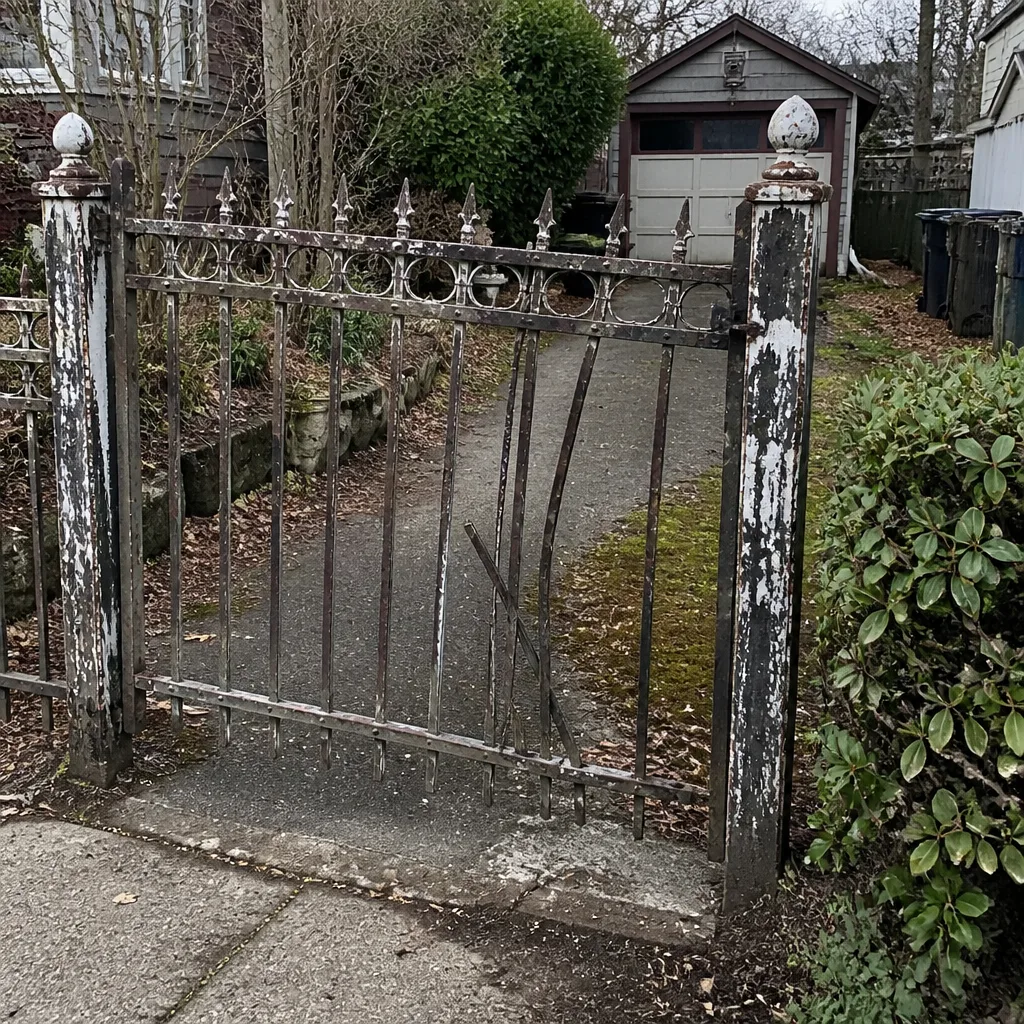 Before
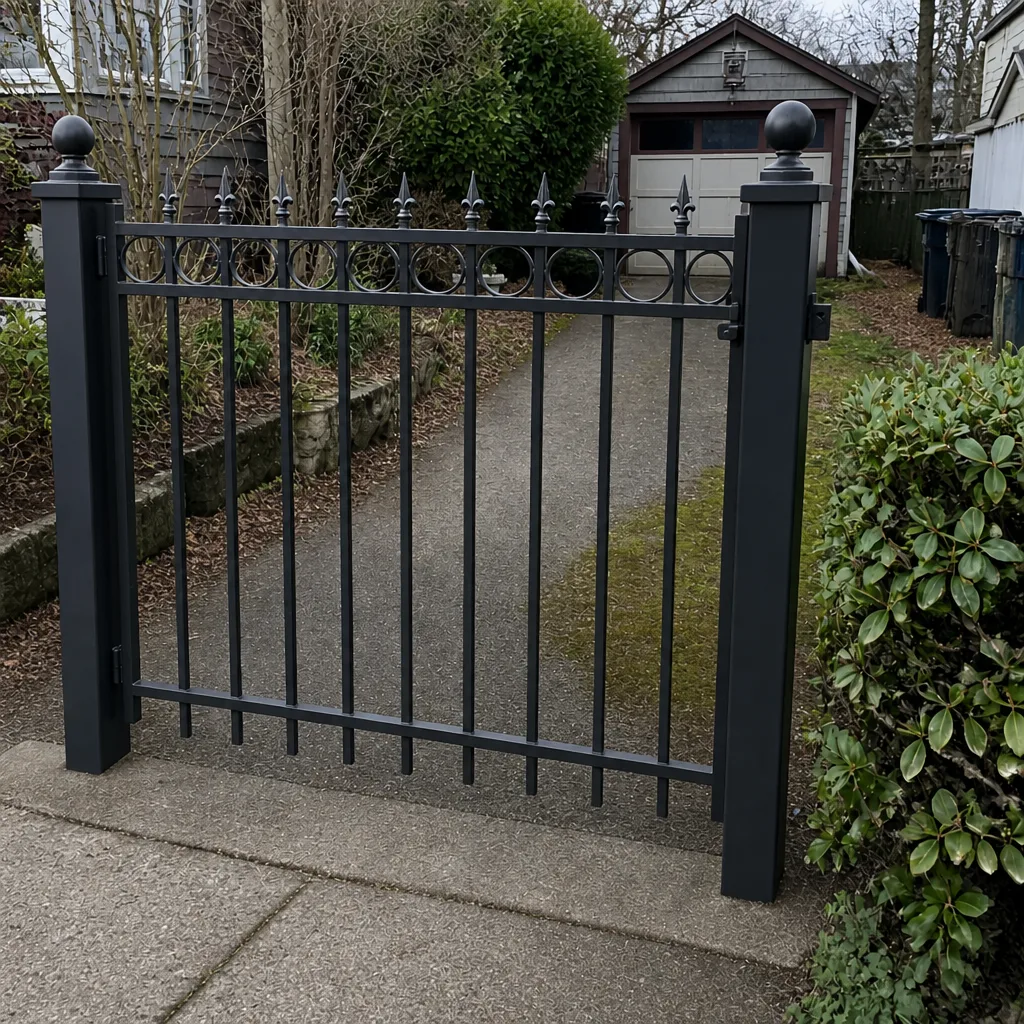 After
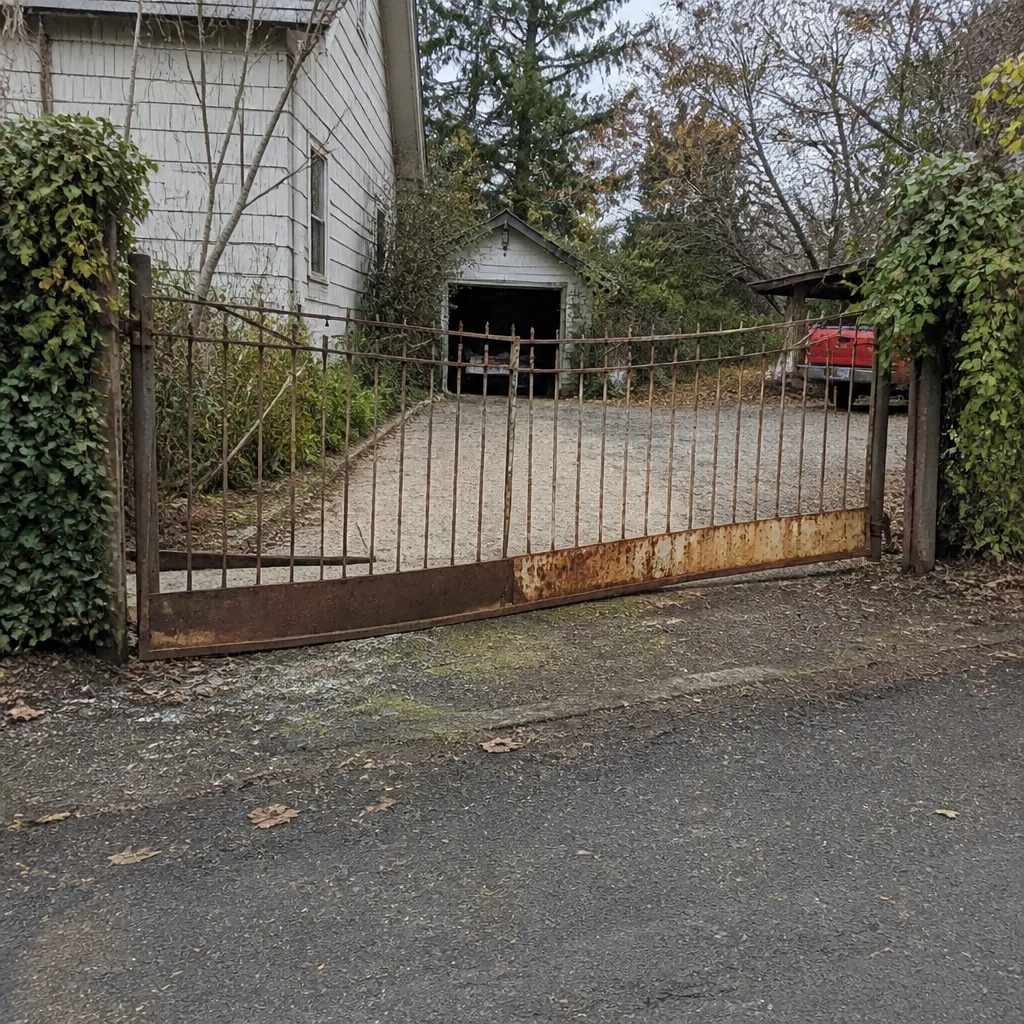 Before
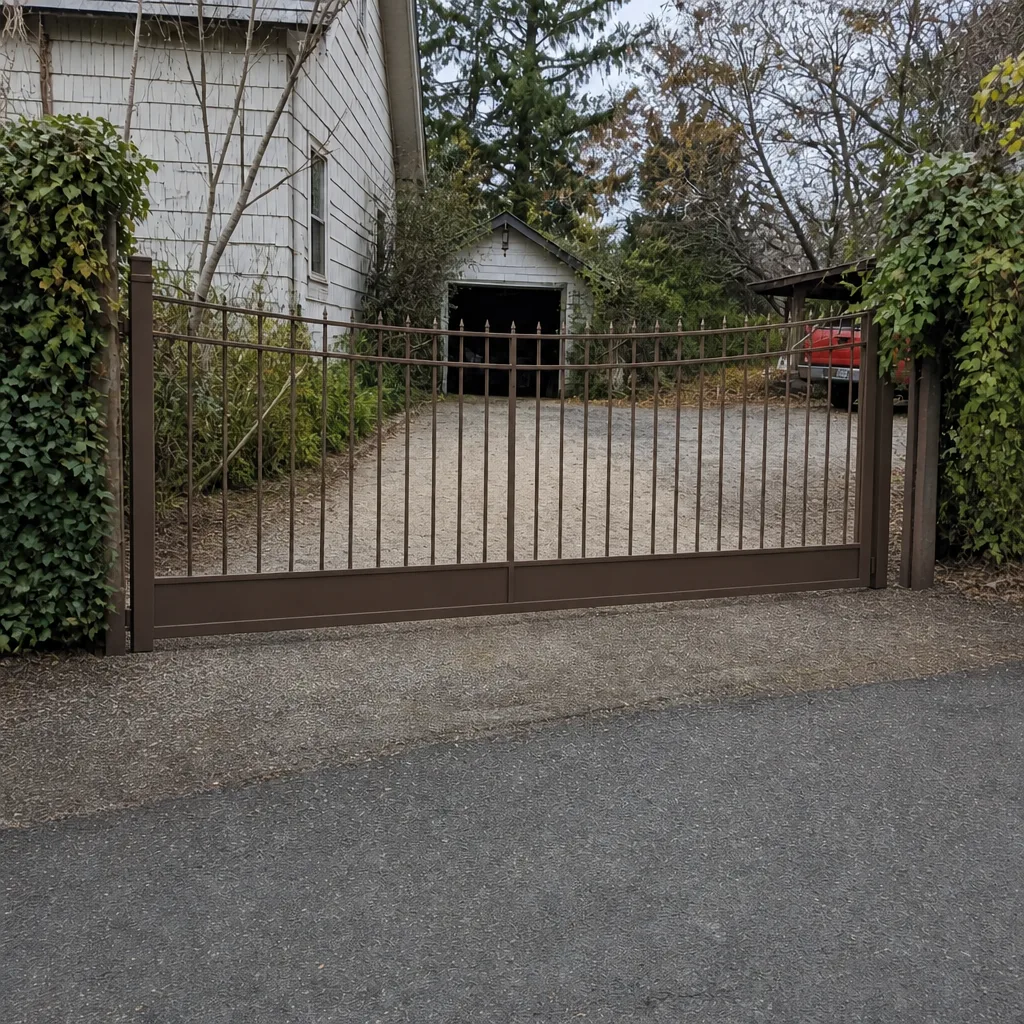 After
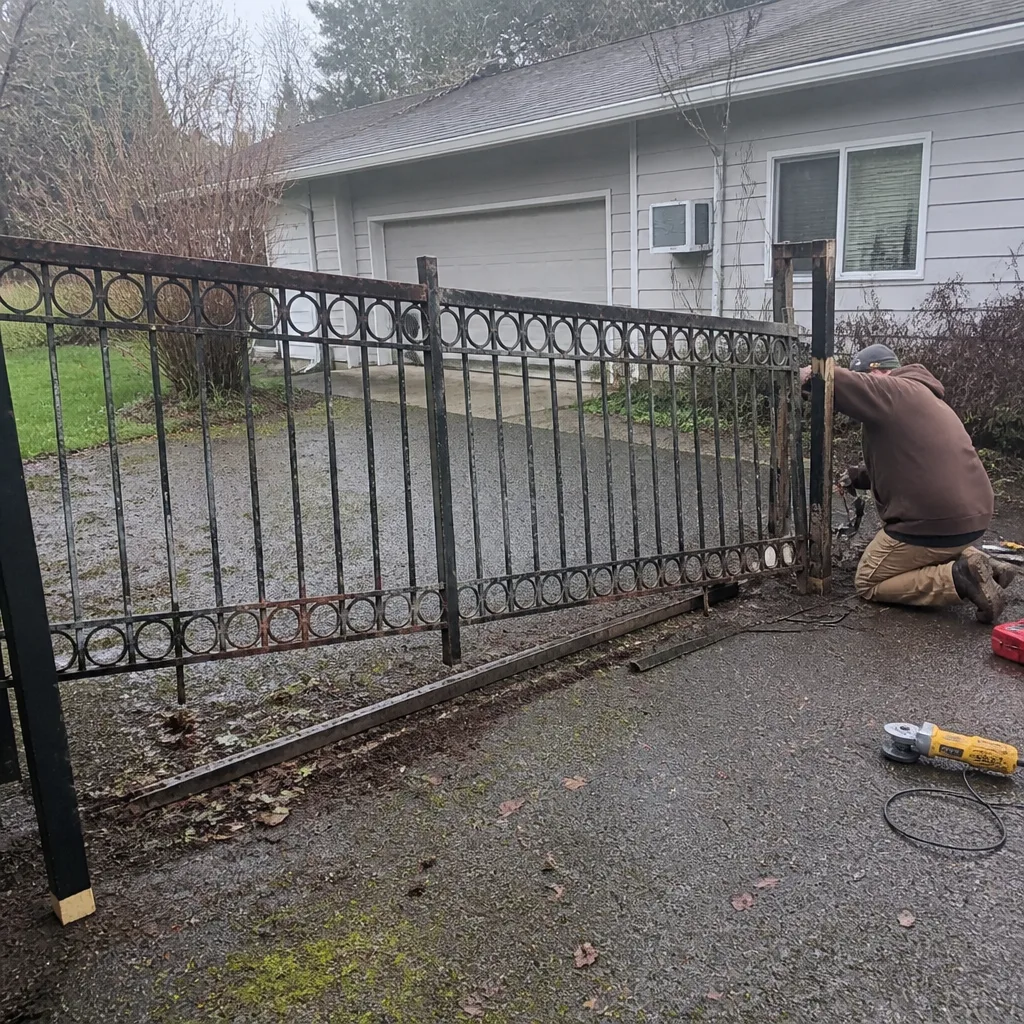 Before
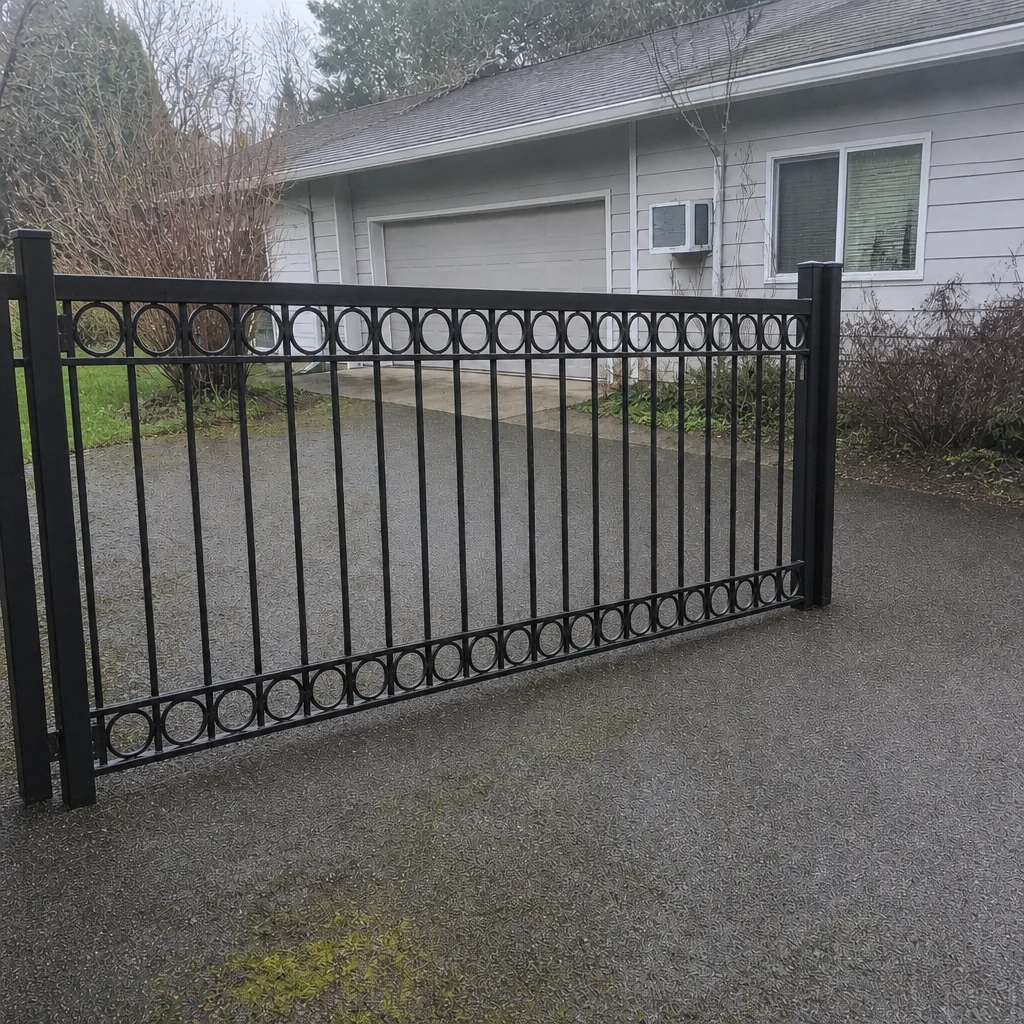 After
When to Call a Professional
Call a technician when the gate fails a hand test (binding, scraping, sudden stiff spots), when sag or drift exceeds the tolerances in this guide, when the operator housing has taken on water, when a new sound appears that you can’t identify, or when the photo-eye test doesn’t produce a reversal. Also call if the gate is on a slope and moves faster than you expect, or if it has come off its track. These are the situations where a trained technician’s diagnosis saves more than it costs.
Gate Repair Irvington offers free estimates in Irvington. Our technicians have up to 12 years of experience, and we work on LiftMaster, FAAC, BFT, Linear, Viking, Ghost Controls, DoorKing, Elite, and Mighty Mule systems. The local pro is licensed and insured as their state requires. Call (855) 658-5296. We answer 24/7. Fast dispatch from 7am to 7pm, Sunday through Friday. The price is quoted and agreed before any work starts, and the written estimate sets the final price.
Frequently Asked Questions
A light inspection every season and a deeper one before the wet season is the right rhythm for most Irvington properties. Gates on slopes, slide gates, and gates under heavy tree cover benefit from an extra check after a big storm. The measurements in this guide take fifteen minutes and are the most reliable predictor of a coming repair.
More than about a quarter inch of vertical sag at the latch post is worth scheduling an inspection, and more than half an inch means a repair is overdue. Any visible horizontal drift at the far post is also a fail. Call (855) 658-5296 for a free estimate on a repair.
Often the board can be replaced on its own, especially when the enclosure has taken on water but the drive and arm are healthy. A technician confirms whether the board alone will fix the fault or whether a new operator is the better call. We service LiftMaster and carry parts for the brands we service.
A maintenance visit covers a hand test of the gate, a full tolerance check, a photo-eye test, a control board and enclosure inspection, lubrication, and a written note of the gate’s baseline. It’s a one-time visit priced per job after we look at the gate, and the estimate is written before any work starts. Call (855) 658-5296 for a free estimate.
Yes. We handle access control integration as part of our full-cycle gate service: keypads, intercoms, and app-based entry work all fall under what we service. That means a single call covers the motor, the mechanicals, and the entry system together rather than coordinating multiple contractors.
Yes. We service both residential and commercial gate systems, from a Mighty Mule residential swing kit to a commercial-grade DoorKing operator. A free estimate and a written price come before any work is scheduled. Call (855) 658-5296. We answer 24/7. Fast dispatch from 7am to 7pm, Sunday through Friday.
The Bottom Line
A gate maintenance checklist is only useful if it gives you pass-or-fail criteria you can actually apply. Measure sag and drift every season, listen for the squeal, the grind, and the click, and record what you find with a tape measure and a photo. In Irvington, the checks that matter most address water: drainage at the base, the control board enclosure, and the photo-eye lenses. The two components homeowners skip, the photo-eyes and the control board, cause most emergency calls. Keep a baseline, know your brand, and call a specialist when the gate fails a hand test or the numbers move fast. The point of all this isn’t to turn you into a technician. It’s to give you a short, reliable list that keeps your gate repaired right the first time.
Call (855) 658-5296 for a free estimate in Irvington. We answer 24/7. Fast dispatch from 7am to 7pm, Sunday through Friday. The estimate is free, the price is set per job in a written estimate, and nothing starts until you agree to it.
Written by the team at Gate Repair Irvington.