
Last updated November 24, 2026
 Wrought iron
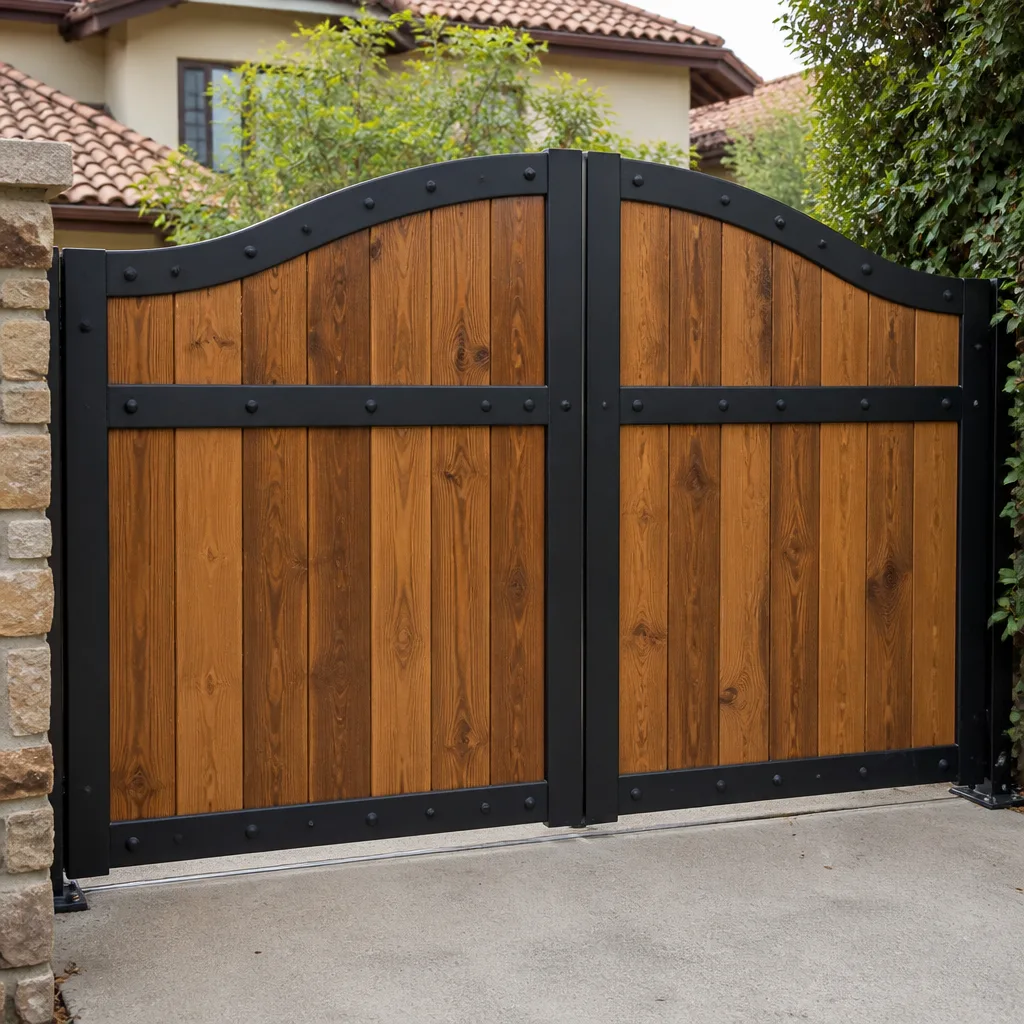 Wood & steel frame
 Farm & ranch
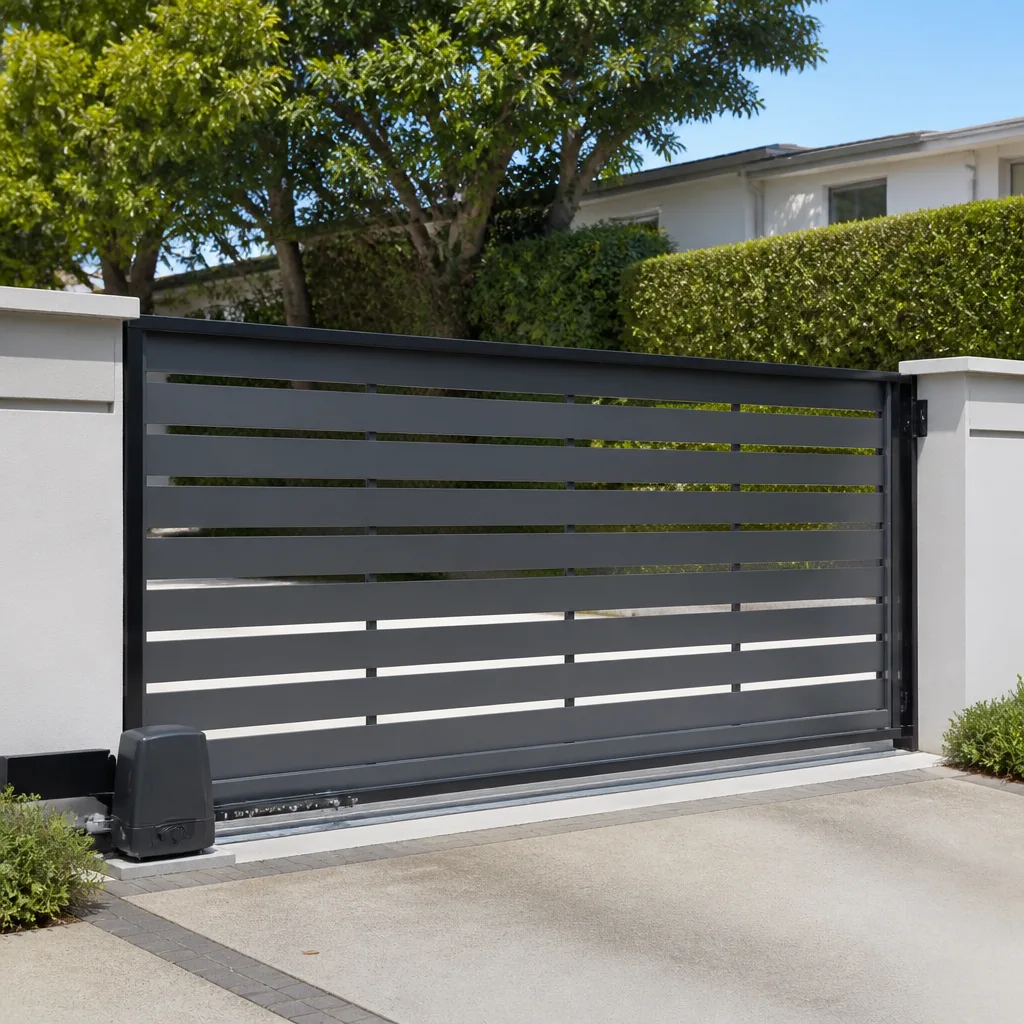 Sliding driveway gates
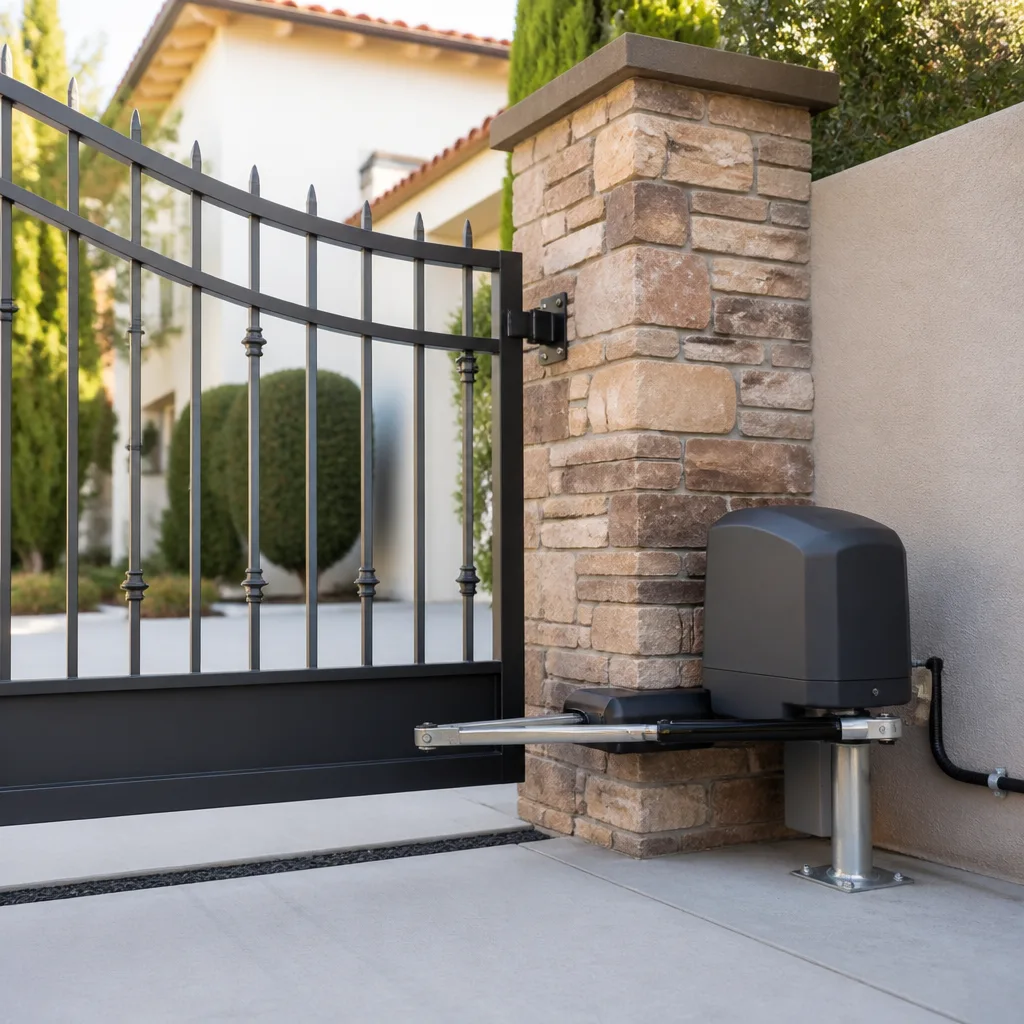 LiftMaster operators
Free on-site gate assessment - hinges, posts, and your LiftMaster or Nice gate operator checked before anything is quoted
The assessment is free and the quote is the invoice.
Get your free estimateSeasonal Gate Repair Care for Irvington: Year-Round Homeowner’s Guide
Lubricating your gate hinges in October is the right move. Doing it in July with the same heavy product is often the wrong one. Irvington’s climate runs two very different stress cycles through the year, and the grit that a thick lubricant holds onto in the dry months turns every moving joint into an abrasive paste that wears parts faster than no lubricant at all. This guide explains how the wet Willamette Valley winter and the dry, bright summer each treat your gate differently, what to do in every season, and when an automated gate in Irvington needs a technician rather than a spray can.
Quick Answer
Seasonal gate care in Irvington means matching your work to the weather instead of repeating the same checklist all year. Prepare for the wet cycle in October and November, manage wood and metal differently through winter, re-align posts in the early-spring window after frost movement settles, then shift to lighter lubricants, sensor checks and operator cooling through summer. Skipping either cycle is what turns small hardware wear into a stalled automatic gate.
Styles & brands we work with
- Wrought iron
- Wood & steel frame
- Farm & ranch
- Sliding driveway gates
- LiftMaster operators
Table of Contents
- Why Irvington’s Climate Stresses Gates Differently
- The October and November Pre-Rain Prep That Prevents Winter Failures
- Wood Gates and Metal Gates Need Opposite Approaches to Winter Moisture
- The Early-Spring Window for Post Re-Alignment
- Summer Heat, UV and What It Does to Your Gate Operator
- What “Winterizing” an Automatic Gate Actually Means
- A Year-Round Seasonal Calendar for Your Gate
- When a Seasonal Check Isn’t Enough
Why Irvington’s Climate Stresses Gates Differently
A gate in Irvington lives through two opposite cycles every year. In the wet months, moisture swells wood, works into every fastener, and sits on steel and aluminum long enough to start corrosion in scratch marks and weld seams. In the dry months, the same materials contract, wood dries and checks, and the sun heats metal panels and operator housings through long bright days. The two cycles ask completely different things of your gate, which is why one all-purpose care routine falls short.
The seasonal swings are wide enough to matter mechanically. Soil that stays wet through winter shifts under gate posts as water moves through it, then dries and re-compacts in late spring. That movement is small, but it’s enough to throw a latch off its strike or make a swing gate drag a corner. Meanwhile the summer push of thermal expansion changes clearances that were set in cooler weather.
We see the pattern constantly in our gate work around Irvington. Gates that get a single spring tune-up and then nothing tend to fail in the wet season, because the October prep that would have protected them never happened. Gates that get an October service but no summer attention fail differently: the operator overheats, sensors drift, and hardware that was greased for winter collects dry-season grit.
The fix isn’t a bigger maintenance routine. It’s a smarter one that treats the two cycles as separate jobs. The rest of this guide walks through each season, the parts of the gate that matter most in it, and what a technician checks that a homeowner typically can’t.
The October and November Pre-Rain Prep That Prevents Winter Failures
Most winter gate failures in Irvington are preventable with a focused set of tasks done in October and November, before the wet weeks settle in. If you do the work now while everything is still dry, you’re sealing out the moisture that would otherwise get into wood grain, fastener threads and operator housings and stay there for months. Do the same tasks in December and you’re working in the wet, with less time for sealant or wood treatment to cure.
Here’s the pre-rain checklist we go through on a residential gate, in order:
- Clear the drainage path. Look at where water runs off the gate area. If the ground slopes toward the gate, water pools under the posts and accelerates rust on metal hinges and swelling on wood. Re-grade the soil around the base if it’s low.
- Seal wood surfaces. Apply a penetrating sealer or exterior wood finish to bare grain, especially on end cuts and joints. Sealer on end grain is the single highest-value task in the wet cycle, because that’s where water wicks in fastest.
- Check and torque hardware. Hinges, latch plates, brackets and post bolts loosen with seasonal movement. Snug them now while you can reach them easily, before the wet months make outdoor work harder.
- Inspect for existing rust. On steel gates especially, find rust before rain finds it. Sand and touch up bare spots with rust-inhibiting paint.
- Lubricate with a wet-cycle product. Use a heavier grease on hinges and pivot points as the wet season starts. The heavier product will stay put through rain and won’t wash away.
- Check the operator housing and receiver. Confirm seals are intact, no cracks in the housing, and the receiver box (usually mounted on or near the operator or the pillar) is closed tight. Any gap lets water in.
- Test the battery backup. On an automated gate, do a controlled power-loss test now. If the battery doesn’t hold the gate cycle, replace it before a winter storm knocks the power out.
Each of these tasks is small. Together they’re the difference between a gate that coasts through winter and one that leaves a homeowner hunting for a repair in the middle of the wet cycle. Our gate repair Irvington service handles this kind of tune-up along with the mechanical fixes that come up.
Wood Gates and Metal Gates Need Opposite Approaches to Winter Moisture
The single biggest seasonal mistake we see on Irvington gates is treating wood and metal the same way. Wood wants to breathe and move; metal wants to stay put and stay sealed. Apply a metal mindset to a wood gate and you’ll trap moisture in the grain. Apply a wood mindset to a metal gate and you’ll leave the seams open to the rain.
Wood: allow for expansion, don’t trap it
Wood absorbs moisture and expands in the wet cycle. A wood gate needs room to move. When you seal, use a penetrating sealer that lets the wood breathe, not a film-forming finish that locks moisture in. If you’ve painted a wood gate with a hard finish and it starts peeling or bubbling, that’s a sign moisture is trapped behind it.
Check clearances at the latch and hinge side. A wood gate that fit perfectly in August can bind in December once the stile swells. If the gate drags, don’t force it – back off the latch or adjust the hinge spacing so the wood has room. This is why the frost-and-wet cycle around Irvington is hard on wood gates that were installed with zero clearance.
Metal: seal every seam, keep it dry
Steel and aluminum gates don’t expand much with moisture, but they’re vulnerable to water finding a bare scratch or a weld seam and starting corrosion. In the wet cycle, the job on metal is defense: touch up paint, check welds for cracks, keep hardware coated with a proper grease, and make sure the operator housing and post caps are sealed. Water that sits inside a hollow post or behind a bracket is the problem you want to prevent before it starts.
Aluminum gates with a factory powder coat hold up well, but any chip in the coating becomes a pitting site. Inspect the coating at the corners and the bottom rail, which get the most splash from the ground.
If you’re not sure which side of the wood/metal divide your gate falls on (composite materials, mixed-material gates, gates with a wood insert in a metal frame), the safe answer is to treat each component for its own material rather than applying one product to the whole gate.
The Early-Spring Window for Post Re-Alignment
There’s a two-to-three-week window in early spring when post re-alignment on an Irvington gate is most effective, and it’s easy to miss. The window is right after the ground thaws and dries enough to be workable, and before the soil re-compacts and firms up for the dry season. Miss it and you’re either working on soil that’s still moving or on soil that’s already set, and either way the correction doesn’t hold as well.
Why does this matter? Frost movement over winter shifts the soil around gate posts slightly but reliably. A swing gate that was perfectly plumb in October can drag or catch in March. A slide gate’s track can shift just enough to make the gate bind or jump. The post itself is usually fine; it’s the ground around it that’s moved.
The right response is to check the post footing and re-set anything that moved, then re-plumb the gate and adjust the hinges, latch plate or track to match. If the footing is set properly and the gate is heavy, that re-alignment can be the difference between a gate that runs smoothly for years and one that wears out its hinges every season.
What to look for before spring:
- Does the gate drag or bind at any point in its swing or slide?
- Is the latch still lining up cleanly with the strike, or is it hitting high or low?
- Is the gate still level, or has one corner dropped?
- Does a slide gate run smoothly along its track, or does it wobble or catch?
- Are the hinges loose or showing visible play when you push the gate?
Any yes is a sign the post has shifted and the gate needs re-alignment. Doing that work in the early-spring window, before the soil firms up, is how you get the correction to hold through the summer. For heavier automated gates, a technician should check the operator’s limit switch and sensor alignment after the mechanical work, because the operator was calibrated to the previous gate position.
Summer Heat, UV and What It Does to Your Gate Operator
The dry summer cycle is easier on hardware than winter, but it’s harder on the operator. Long bright days and heat push metal panels and operator housings into thermal expansion, and that expansion changes the clearances the operator was set up for. Sensors drift. Limit switches that stopped the gate at a precise point in April stop it a hair short or a hair long in July. A gate that closes fine at 9 in the morning can miss the latch at 3 in the afternoon – not because anything is broken, but because the panel expanded several millimeters and the limit switch setting didn’t.
The damage from summer isn’t dramatic. It’s cumulative. A gate that’s missing its latch point gets forced or hand-pushed, which strains the operator. A sensor that drifts out of alignment gets knocked a bit more out of alignment with each bump. The UV side of the cycle is quieter still: finishes fade, seals dry out and crack, and rubber bumpers on the close side get brittle. Ordinary household lubricants thin out in the heat and run off the moving parts they were meant to protect.
What to check in summer:
- Limit switches and travel. Does the gate open fully and close fully, or is it short-stroking as the day heats up? A tech can re-set the limit switches so they hold through the range of daily expansion.
- Safety sensors. Photo-eyes and safety edges are the parts that drift most with heat. Test them every month or so during the summer by blocking them; if they don’t reverse the gate, they need service.
- Lighter lubricant on moving parts. Change to a dry or lighter-grade lubricant in the summer so it doesn’t attract grit. This is the flip side of the October recommendation – heavy grease in summer is a mistake.
- Operator housing and cooling. Make sure vents on the operator are clear of debris and that the housing isn’t in direct sun if it has a vent (some operators call for shade mounting). Heat shortens motor life faster than hours of use.
- UV damage on finishes. Check wood finish and paint on metal for fading or checking. A touch-up now costs less than refinishing later.
If your operator is a LiftMaster or a FAAC with a control board that logs faults, the technician can read the codes and see whether the fault is heat-related (opening/closing limits) or mechanical. Brand-specific diagnosis saves time and avoids guessing. Our gate motor & opener page covers the full spread of operator service we handle.
What “Winterizing” an Automatic Gate Actually Means
Winterizing an automatic gate in Irvington isn’t just a visual check. It’s a mechanical and electrical job that gets the gate through the wet cycle without a mid-winter failure. Aesthetics matter less than the internals, and the internals are what most homeowners overlook.
Here’s the mechanical and electrical side of a proper winterize:
- Battery backup. On a Mighty Mule, Linear, Ghost Controls or any operator with a battery, test the battery under load. A battery that held last winter may not hold this one. Cold and short days put more strain on the battery, and a dead battery means the gate won’t run when the power goes out.
- Receiver and control board housing. Confirm the housing is sealed and dry. Moisture inside a receiver or control board causes intermittent faults that look like random gate failures but are actually corrosion on the board. Seal or replace gaskets before the wet cycle starts.
- Low-voltage wiring. Check every exposed connection for fraying, water intrusion or loose terminals. This is the part general handyman service often skips because it needs an understanding of the low-voltage side of the operator.
- Limit switch and sensor alignment. Cold contracts the metal, hot expands it, and the limit switches that were set in summer will need a reset for winter. Photo-eyes and safety edges should be verified working with the gate under load.
- Mechanical cleanup. Remove summer grit from tracks and pivot points, then re-lubricate with a heavier product. Old grit plus new grease is the abrasive paste that shortens hardware life.
- Operator housing seals and vents. Check the seals around the housing, clean any debris from vents, and confirm nothing has been knocked loose over summer.
If your gate is a commercial installation or handles a lot of traffic, winterizing should also include a full cycle test with the operator under the expected load, and a review of the access control (keypad, intercom, or app-based entry) that the gate runs with. Access control wiring and receiver boards are vulnerable to moisture in ways that mechanical parts aren’t.
A Year-Round Seasonal Calendar for Your Gate
Bringing the year together, here’s how we’d map a full year of gate care in Irvington. The order matters because each season’s work sets up the next.
- October – November (pre-rain): Wet-cycle lubricant on hinges, seal wood, torque hardware, check for rust, seal operator housing, test battery backup, clean drainage under the posts.
- December – February (wet cycle): Monitor for binding wood, check for water intrusion in the operator and receiver, watch for corrosion on metal hardware. This is when a small problem left from October shows up.
- March – April (spring re-alignment window): Check post plumb and gate alignment. Re-set or adjust the footing and hinges while soil is still moving. Re-align the operator limit switches and sensors after the mechanical work. This window is only a couple of weeks wide.
- May – June (pre-summer): Swap to lighter summer lubricant, test sensors and safety edges, inspect the operator for cooling and vent clearance, check UV damage on finishes.
- July – September (dry cycle): Watch limit switches and sensor alignment for heat-related drift, clean grit out of joints, keep the operator clear of sun and debris, monitor for finish fading and cracking. Watch for thermal-related sensor faults.
Each step is small. Together they keep the gate running through both cycles and make sure the autumn push is a refresh rather than a rescue. Our gate installation page notes where seasonal clearance matters on a new gate, and our full gate repair Irvington guide covers the mechanical repair side.
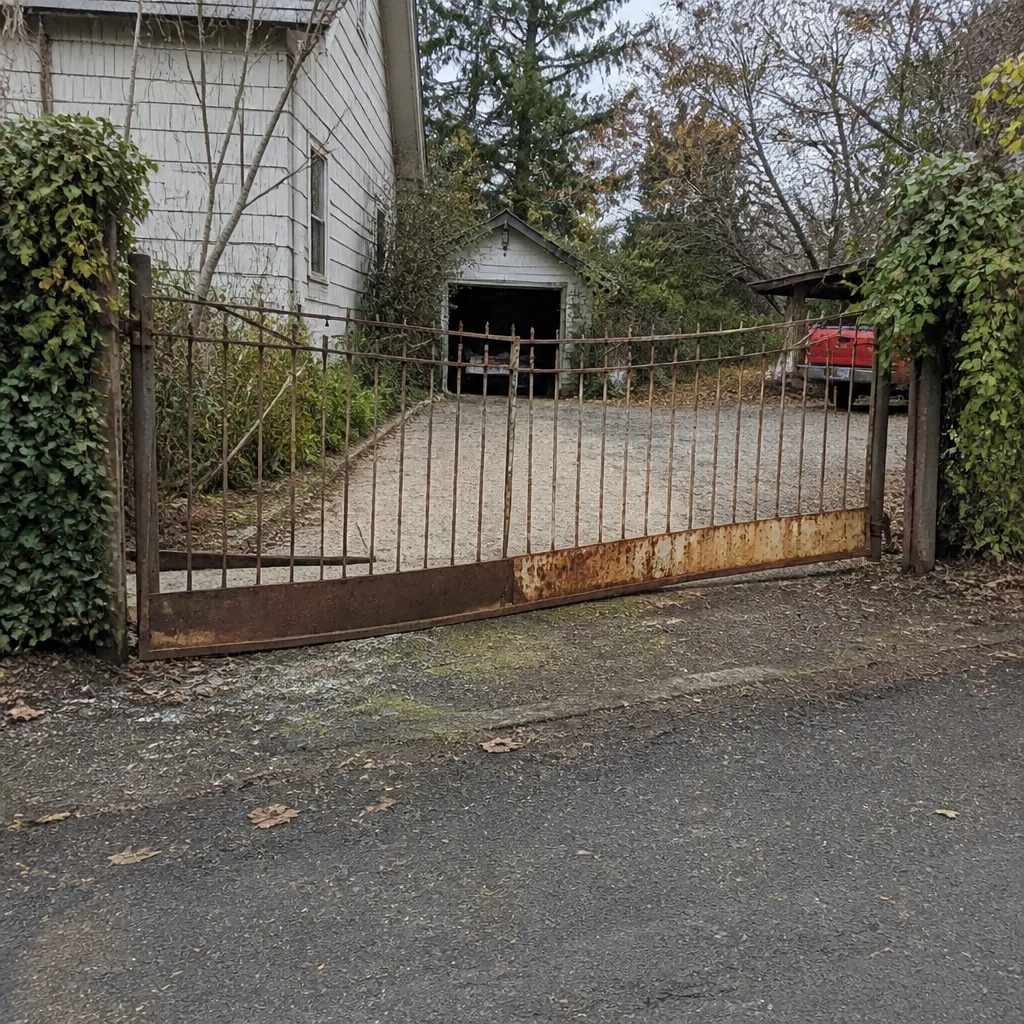
See the difference
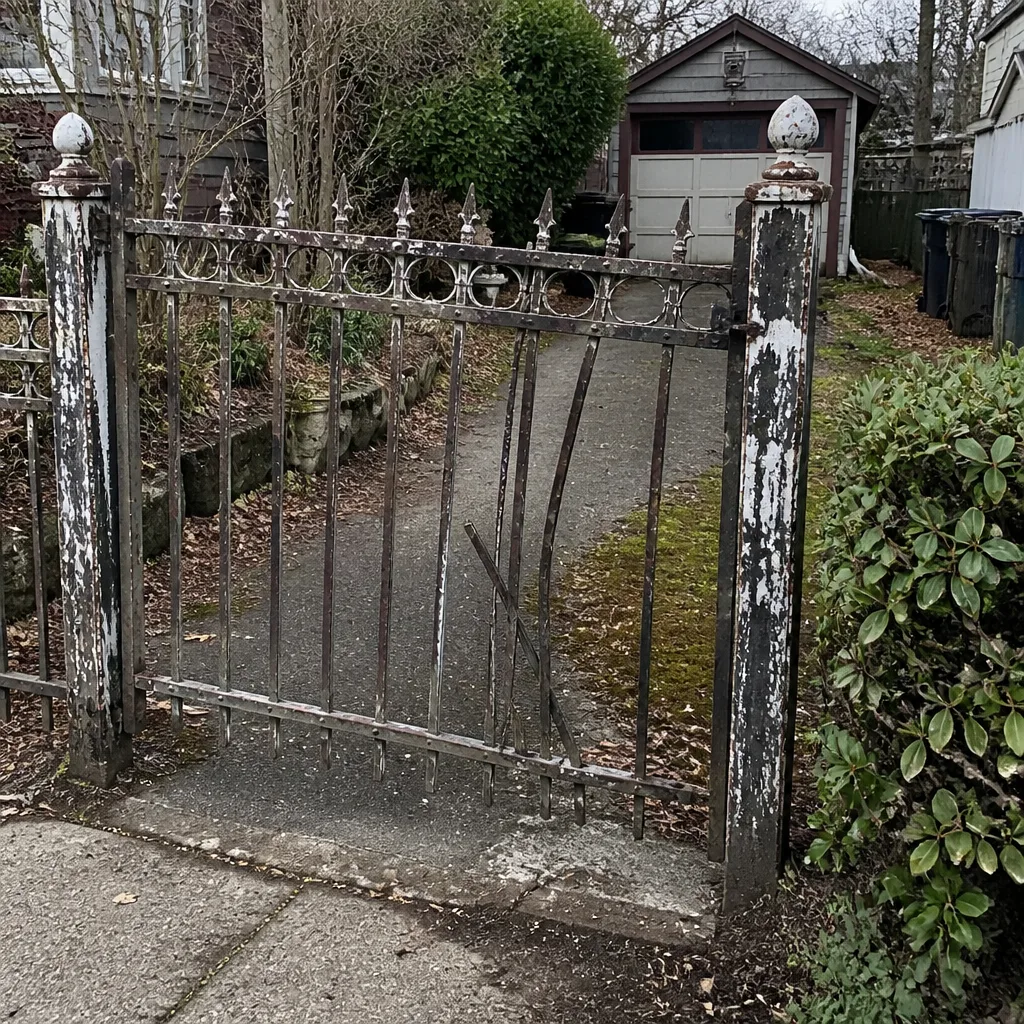 Before
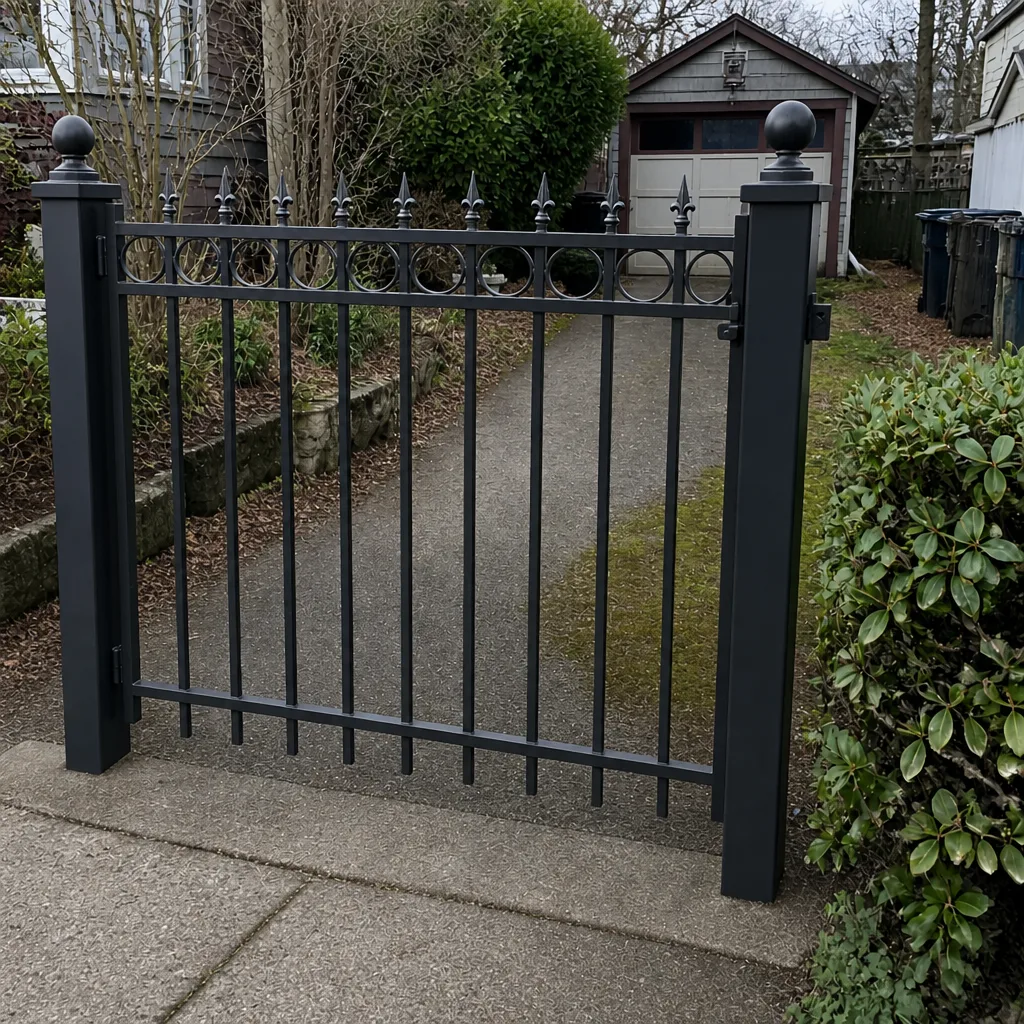 After
 Before
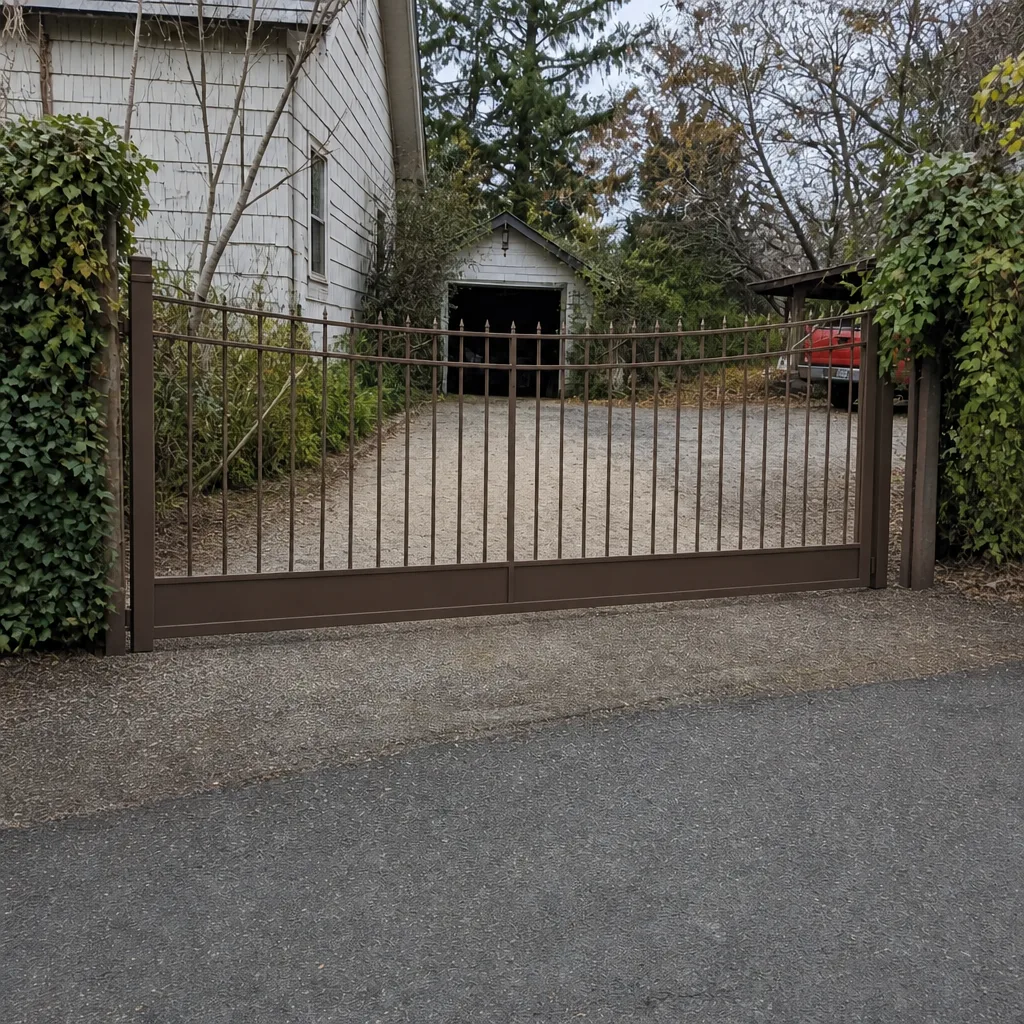 After
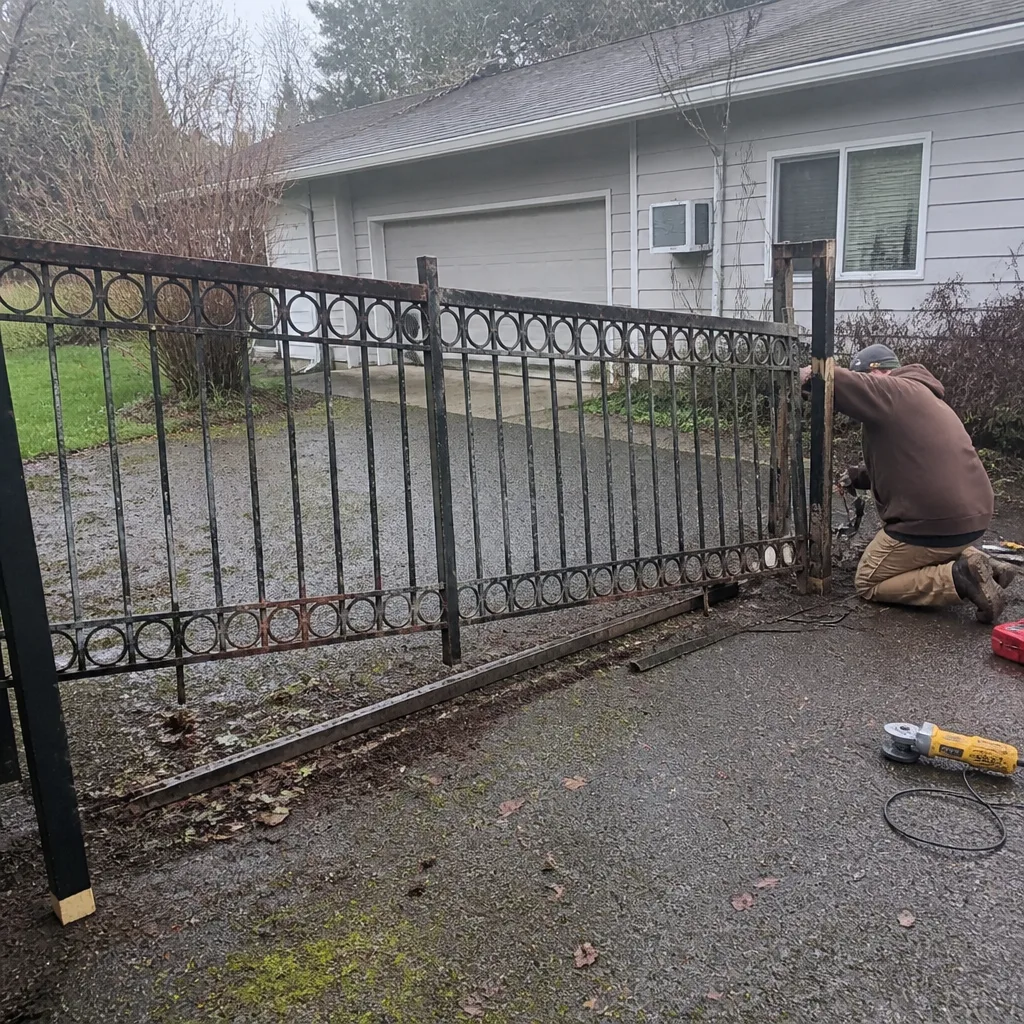 Before
 After
Common Mistakes to Avoid
- Using heavy grease in summer. A wet-cycle grease that held all winter becomes a grit magnet in the dry months, grinding joints and wearing hinges faster. Match the lubricant to the season.
- Sealing a wood gate with a hard film finish. Trapping moisture inside the grain is worse than leaving it bare. Use a penetrating sealer that lets the wood breathe through the wet cycle.
- Missing the spring re-alignment window. Waiting until mid-summer to fix a gate that went out of alignment over winter means the correction doesn’t hold. The soil has already set.
- Skipping the battery test on the operator. A battery that held last winter may not hold this one. Test under load before the wet cycle really starts.
- Not re-checking limit switches after heat expansion. A gate that stops short in July is usually a limit-switch setting, not a broken operator. Ignore it and the operator gets strained.
- Forcing a wood gate that swells. A gate that binds in December needs clearance, not more pressure. Forcing it cracks the stiles and strains the hinges.
- Treating a brand-specific operator fault like a general one. A LiftMaster, FAAC, BFT or Mighty Mule fault code tells you what’s happening if you know the brand. A generalist will guess and order the wrong part.
When to Call a Professional
Most seasonal care is homeowner work: applying wood sealer, swapping lubricant, cleaning debris from the operator. But some seasons bring issues that need a technician. Call a gate professional when any of these appear in Irvington:
- A gate that won’t open or close fully, or that intermittently reverses on its own.
- A gate that binds at the track or hinge point no matter how you adjust it – post may have shifted.
- An operator that logs fault codes, or a control board that shows moisture or corrosion.
- A keypad, intercom or app-based access system that drops the gate’s open/close response.
- Safety sensors or safety edges that fail the block test.
- Any visible damage to a heavy gate panel, post or track after a wind event.
Gate Repair Irvington offers free estimates in Irvington. Call (855) 658-5296. We answer 24/7. Fast dispatch from 7am to 7pm, Sunday through Friday.
We focus entirely on gates – not general fencing, not handyman work – so when we arrive, the diagnostic time is spent on your gate, and we’re already familiar with the brands we service: LiftMaster, FAAC, BFT, Linear, Viking, Ghost Controls, DoorKing, Elite and Mighty Mule. Our technicians have up to 12 years of experience, and we work on the low-voltage and access-control side that most general repair shops won’t touch.
Frequently Asked Questions
The October – November pre-rain prep is the highest-value task of the year. That window is when you seal wood, torque hardware and test the battery backup before the wet cycle. Miss it and the small problems you’d have caught become repairs in the middle of winter.
Heavy grease protects hardware through the wet cycle, but in the dry summer it attracts grit and creates an abrasive paste inside moving joints. In summer, switch to a lighter or dry lubricant so joints stay clean and smooth.
That’s almost always thermal expansion. Metal panels and hinge clearances change as the day heats up, and limit switches or latch plates set in cooler weather drift out of position. A technician can re-set the limit switches so the gate runs correctly across the day’s temperature range.
Before. Apply a penetrating sealer in October, while the wood is still dry, so the wet cycle doesn’t wick into bare grain. A film-forming finish is the wrong choice; use a sealer that lets the wood move.
It’s the two-to-three weeks in early spring, after the ground has warmed enough to work and before it re-compacts for the summer. That’s when post re-alignment is most effective. Outside the window, the correction is less likely to hold.
Many tasks are homeowner-friendly: sealing wood, cleaning debris, swapping lubricants. But post re-alignment, limit-switch and sensor work on an automated operator, access control, and any operator fault diagnosis need a technician. That’s the point where speed and accuracy matter, and that’s the work Gate Repair Irvington takes on.
The Bottom Line
The two-cycle idea is the whole guide in one sentence: Irvington’s wet and dry seasons stress gates in opposite ways, so they need opposite care. The wet cycle wants sealing, heavy lubrication, hardware torque and battery backup tests. The dry cycle wants lighter lubricants, sensor and limit-switch checks, and operator cooling. The spring re-alignment window is the narrow bridge between the two. Do the seasonal work in the right order, and your gate runs smoothly through both cycles for years. Let it slide, and the wear compounds in the direction of the season you ignored. Call (855) 658-5296 for a free estimate.
Contact Gate Repair Irvington. Free estimates. We answer 24/7, with fast dispatch from 7am to 7pm, Sunday through Friday. Call (855) 658-5296 for help with your gate today.
Written by the team at Gate Repair Irvington.