
Last updated November 24, 2026
 Wrought iron
 Wood & steel frame
 Farm & ranch
 Sliding driveway gates
 LiftMaster operators
Free on-site gate assessment - hinges, posts, and your LiftMaster or Nice gate operator checked before anything is quoted
The assessment is free and the quote is the invoice.
Get your free estimateDIY vs Professional Gate Repair: The Irvington Homeowner’s Decision Guide
The most expensive gate mistake we see isn’t a failed DIY fix. It’s the second trip to the hardware store. By the time a homeowner has guessed wrong twice, replaced a part that wasn’t broken, and cycled a struggling motor another hundred times, a simple adjustment has turned into an operator problem. Whether you should tackle a gate fix yourself depends entirely on which category of repair you’re facing. A sticky latch and a misaligned safety-reverse setting are two very different animals. This guide gives Irvington homeowners a clear framework for deciding what to handle and what to hand off.
Quick Answer
Mechanical gate repairs like tightening hinges, adjusting a latch, and treating surface rust are genuinely DIY-safe for most homeowners. Anything involving the automatic operator’s wiring, control board, limit switches, or safety-reverse system should go to a professional. The dividing line isn’t your confidence level. It’s whether the repair affects the gate’s safety compliance and the electronics that control it.
Styles & brands we work with
- Wrought iron
- Wood & steel frame
- Farm & ranch
- Sliding driveway gates
- LiftMaster operators
Table of Contents
- The Three-Category Repair Framework
- The Real Tool Cost of DIY vs. the Professional Rate
- How to Fix a Sagging Manual Gate the Right Way
- Why Operator Work in Oregon Carries Liability
- Brand-Specific Systems Most Homeowners Shouldn’t Touch
- The One Scenario Where DIY Makes Unambiguous Sense
- The One Scenario Where DIY Almost Never Makes Sense
- What Makes Gate Repair in Irvington Different
The Three-Category Repair Framework
Not every gate repair carries the same risk. We sort them into three buckets, and that sorting is the single most useful thing in this guide. Once you know which bucket your problem falls into, the DIY-or-call decision becomes obvious.
Category 1: DIY-Safe Repairs
These are mechanical, low-risk, and reversible. If you get it wrong, the gate still works, just not as smoothly.
- Tightening loose hinge bolts with a socket wrench
- Adjusting a manual latch so it catches cleanly
- Sanding and treating surface rust on a steel frame
- Clearing debris from a track on a sliding gate
- Lubricating hinges and rollers with a dry lubricant
Category 2: Needs Specific Tools, No License
These require a tool most homeowners don’t own, but they’re still mechanical. A patient homeowner with the right equipment can manage them.
- Replacing a worn roller on a sliding gate
- Shimming a hinge to correct a small sag
- Replacing a manual latch assembly
- Adjusting a gate stop so the panel closes flush
Category 3: Never DIY
These involve the operator’s low-voltage wiring, the control board, safety-reverse settings, or heavy panels that can crush. This is where we draw a hard line.
- Resetting limit switches on an automatic operator
- Rewiring or replacing a control board
- Adjusting safety-reverse sensitivity or photo-eye alignment
- Replacing a swing-arm or slide operator
- Any work on a gate whose panel weighs enough to injure someone
- Access control wiring, keypads, intercoms, or app-based entry modules
For anything in that third bucket, call a trained technician. The panel is heavy, the operator carries live low-voltage current, and a gate that fails to reverse on contact is a genuine hazard to anyone standing in its path.
The Real Tool Cost of DIY vs. the Professional Rate
Homeowners often assume DIY saves money. Sometimes it does. But the tool list for a proper gate repair runs longer than most people expect, and several of the specialized items aren’t available to rent in the Irvington area.
| Tool or Item | Typical Cost | Rentable Locally? |
|---|---|---|
| Socket wrench set | $30-$80 | Already owned by most |
| Torque wrench | $40-$120 | Yes, at auto parts stores |
| Multimeter (for low-voltage testing) | $25-$75 | Rarely |
| Brand-specific diagnostic scanner | $80-$250 | No |
| Replacement hinge or roller set | $15-$60 | Purchase only |
| Operator-specific replacement board | $90-$300 | Purchase only |
Add up the diagnostic scanner and the multimeter alone, and you’re already near or past the cost of a single professional visit for a Category 2 or Category 3 repair. And that’s before you factor in the possibility of buying the wrong part. We’ve seen homeowners buy two incompatible control boards for the same Mighty Mule operator because the model number didn’t match the revision. Specialist technicians diagnose brand-specific fault codes and part quirks that a generalist would have to look up. That knowledge is part of what a professional rate pays for. Call (855) 658-5296 for a free estimate and an honest read on whether your repair is worth the tool investment.
How to Fix a Sagging Manual Gate the Right Way
A sagging manual gate is one of the most common repair calls we get in Irvington. It’s also one of the repairs a homeowner can genuinely handle, if they follow the right sequence. The common approach fails because it treats the symptom instead of the cause.
The Common Approach (Lasts About Six Months)
Most homeowners tighten the hinge that looks loose, lift the gate back to level, and call it done. The gate sags again within a season because the actual problem is usually the post, the hinge alignment, or a worn hinge pin, not a loose bolt. Tightening the visible hinge puts uneven stress on the other hinges and accelerates wear across the whole assembly.
The Sequence That Actually Holds
- Check the post first. Push the gate post side to side. If the post moves, the gate will keep sagging no matter what you do to the hinges. A loose post needs resetting in proper footing, which is a professional job.
- Test each hinge. Open the gate halfway and let it rest. The hinge carrying the most load will show play. Mark it.
- Replace, don’t tighten, worn hinge pins. A worn pin won’t hold an adjustment. New pins restore the geometry.
- Shim rather than force. If the gate sits low, shim the bottom hinge outward slightly rather than torquing the top hinge inward. Forcing a hinge bends the gate frame.
- Check the diagonal brace. On a braced gate, a loose brace allows the panel to rack. Tighten brace bolts before you touch the hinges.
- Test the swing across the full arc. The gate should close flush without dragging and shouldn’t swing open on its own.
If the post is sound and the hinges are in good shape, that sequence will hold. If the post moves, stop. That’s a footing problem, and it’s where the DIY roadmap ends.
Why Operator Work in Oregon Carries Liability
Automatic gate operators are governed by safety standards that require the gate to reverse when it meets an obstruction. Those standards exist because a closing gate can injure a person or damage a vehicle. When you adjust a limit switch or change the safety-reverse sensitivity on your own operator, you’re changing how the gate behaves in a collision scenario. If the gate then fails to reverse and someone is hurt, the homeowner who made the adjustment owns that decision.
Oregon doesn’t require a state license for gate repair itself, but that doesn’t mean the work is risk-free. The liability question is separate from the licensing question. A homeowner who rewires a control board, disables a photo-eye to stop nuisance reversals, or resets limits by trial and error has altered a safety system. If a property manager or HOA reviews the installation after an incident, the last person who touched the operator is the first question asked.
We work on these systems specifically, and the safety-reverse check is the first thing we test on any automated gate in Irvington. It’s also the thing most DIY attempts get wrong, because the only reliable way to verify it is with the operator’s own diagnostic feedback, not by watching the gate and hoping. For anything that touches the operator, hire a trained technician. The stakes are higher than the repair bill.
Brand-Specific Systems Most Homeowners Shouldn’t Touch
Every operator brand has its own fault codes, its own board layout, and its own quirks. That’s why brand fluency matters more than general handyman skill on these systems. A few examples from the brands we service:
- LiftMaster operators use a learn-and-confirm routine for limit travel. Get the sequence wrong and the operator stores a false limit, which then reads as a mechanical failure.
- FAAC swing arms have encoder-based positioning that needs a specific relearn procedure after any arm adjustment. Skip it and the arm stalls mid-swing.
- BFT control boards report faults through a coded LED sequence that maps to very different causes depending on the board revision.
- Mighty Mule residential kits are the most DIY-attempted operators we see, and the most common failure is a limit switch set by ear instead of by the board’s feedback.
We service nine major automation brands across residential and commercial gates, and the reason brand fluency saves money is simple: a specialist reads the fault code, knows the part, and fixes it once. A generalist guesses, orders the wrong part, and comes back. That second visit is where the misdiagnosis cost adds up. If your gate is on a LiftMaster, FAAC, BFT, or any other automated system, let a gate specialist look at it before you spend on parts.
The One Scenario Where DIY Makes Unambiguous Sense
DIY is the right call for one specific situation: a mechanical, cosmetic, or adjustment issue on a manual gate that doesn’t involve the operator, doesn’t involve the post, and doesn’t involve a panel heavy enough to injure someone.
Examples: the latch won’t catch cleanly, a hinge squeaks, surface rust is starting on the frame, or a roller on a light sliding gate is worn and needs replacing. These repairs are cheap, reversible, and don’t touch safety systems. If you get it wrong, the gate still operates and you can try again.
The reasoning is simple. These repairs carry no liability exposure and no diagnostic complexity. The part is visible, the failure is obvious, and the fix is mechanical. A homeowner with basic tools and patience will save the cost of a service visit and learn their gate in the process. That’s a good trade. Just stay out of the operator and away from the post footing, and you’re on safe ground.
The One Scenario Where DIY Almost Never Makes Sense
DIY almost never makes sense when the repair involves the automatic operator: the control board, the limit switches, the safety-reverse system, the low-voltage wiring, or the access control module. This is the scenario where a homeowner attempt most often converts a modest repair into a larger one.
Three reasons. First, the diagnostic tools aren’t available to rent locally, so you’re buying them or guessing. Second, the safety-reverse system is a life-safety feature, and a misadjustment isn’t something you can reliably verify by eye. Third, brand-specific procedures (limit relearn, encoder reset, fault-code interpretation) are where a generalist stalls and a specialist moves fast.
For access control specifically, the wiring usually ties into a keypad, intercom, or app module that a homeowner has no way to test in isolation. We handle access control as a named service because it’s a different skill set from mechanical repair. If your repair touches the operator or the access system, call a professional. That’s the line.
What Makes Gate Repair in Irvington Different
Irvington is a historic neighborhood, and that shapes the gates we work on. Many properties here have older manual gates, custom ironwork, and narrow driveways where a swing gate needs precise alignment to clear a parked car. Older ironwork is heavier than modern aluminum, which raises the stakes on hinge and post repairs, and drives home why Category 3 repairs should go to a professional.
Portland’s wet winters also matter. Rain and freeze-thaw cycles work on hinge pins and footing, and a gate that sat fine all summer can sag by mid-winter. That’s a big reason sagging-gate calls spike in Irvington. A footing that’s been slowly loosening will show up fast once the ground saturates.
Automated gates are common on the larger lots here, and so is the access control wiring that goes with them. When a gate in Irvington fails, the repair is often on a brand we know well, which is why we lean on brand fluency rather than general repair skill. Your gate repaired right the first time matters more here than a lowest-bid quote, because a return visit for a misdiagnosed operator costs more than the original repair. If you’d rather hand it to a specialist, Gate Repair Irvington handles the full cycle, from the motor to the keypad. For mechanical work you’re comfortable handling, our gate repair guide covers what to expect from a professional visit. Free estimates are available in Irvington. Call (855) 658-5296.
Common Mistakes to Avoid
- Adjusting the safety-reverse by guesswork. Watching the gate reverse once doesn’t confirm it will reverse on contact. That’s a life-safety setting, and it needs proper diagnostic verification.
- Tightening the top hinge to fix a sag. This bends the gate frame. Shim the bottom hinge instead, or fix the footing.
- Buying a control board before confirming the revision. Operator boards change across revisions, and the model number on the housing doesn’t always match the board inside.
- Ignoring the post because the hinges look loose. A moving post will keep the gate sagging no matter how many hinges you replace. Check the post first.
- Disabling a photo-eye to stop nuisance reversals. The photo-eye protects anyone in the gate’s path. A nuisance reversal is a symptom, not a setting to turn off.
- Letting winter rust go. Portland’s wet weather accelerates rust on hinge pins and frames. Surface rust treated early stays cosmetic.
- Attempting operator wiring without a multimeter. Low-voltage faults look identical to mechanical failures until you test the circuit. Guessing at wiring costs more than diagnosing it.
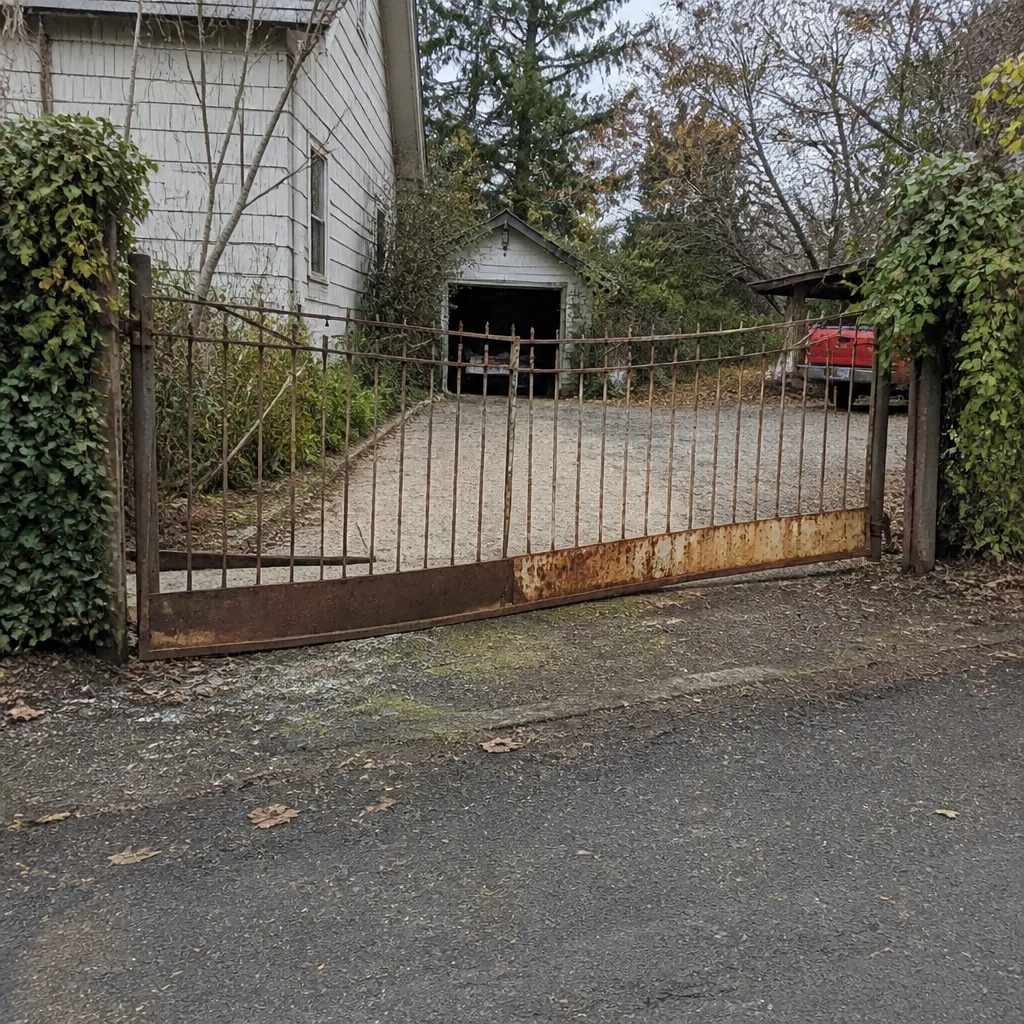
See the difference
 Before
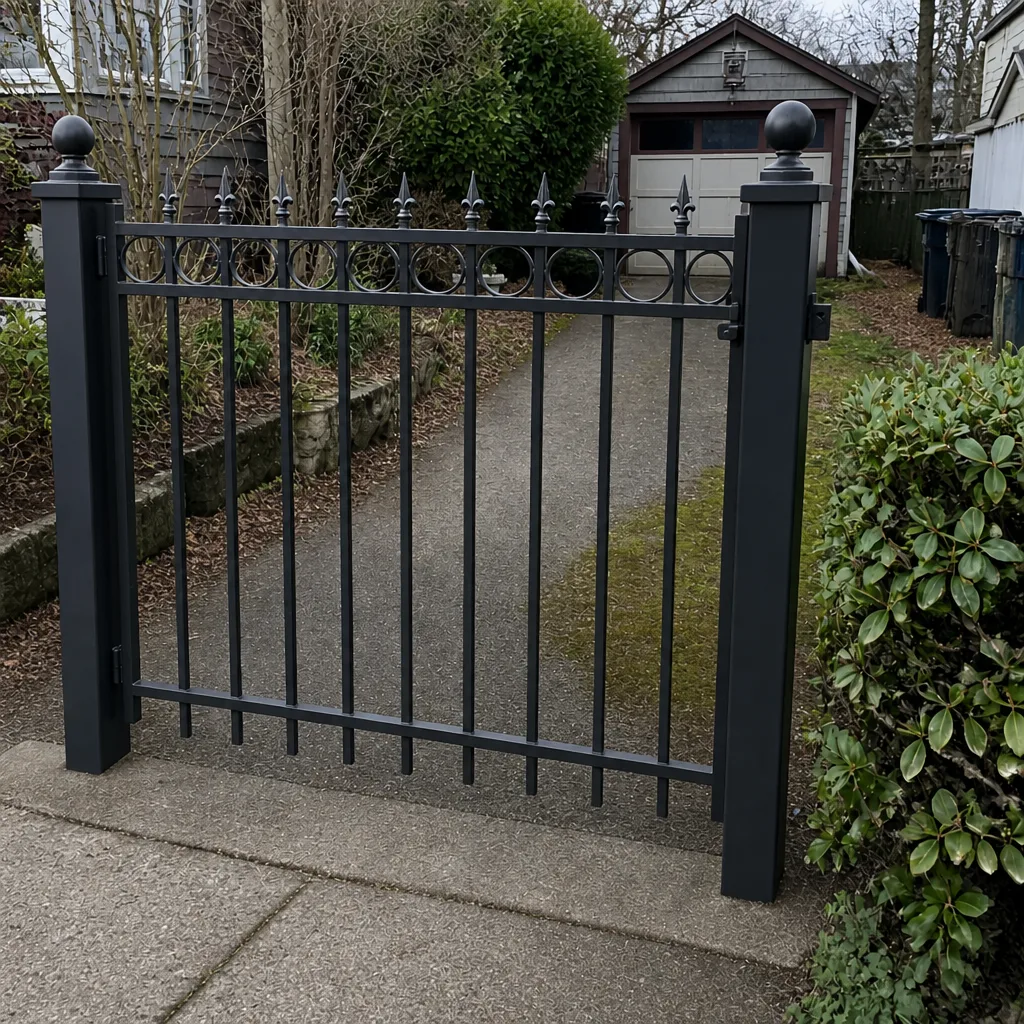 After
 Before
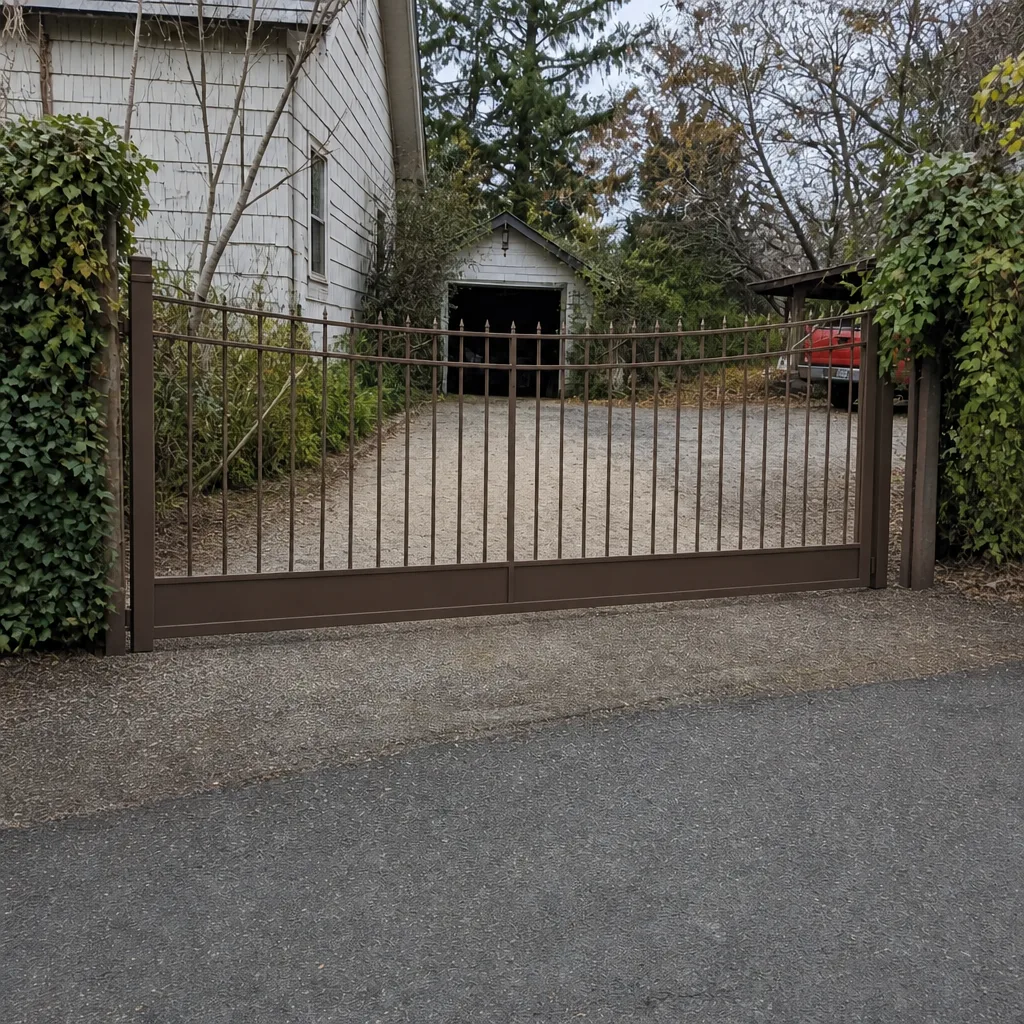 After
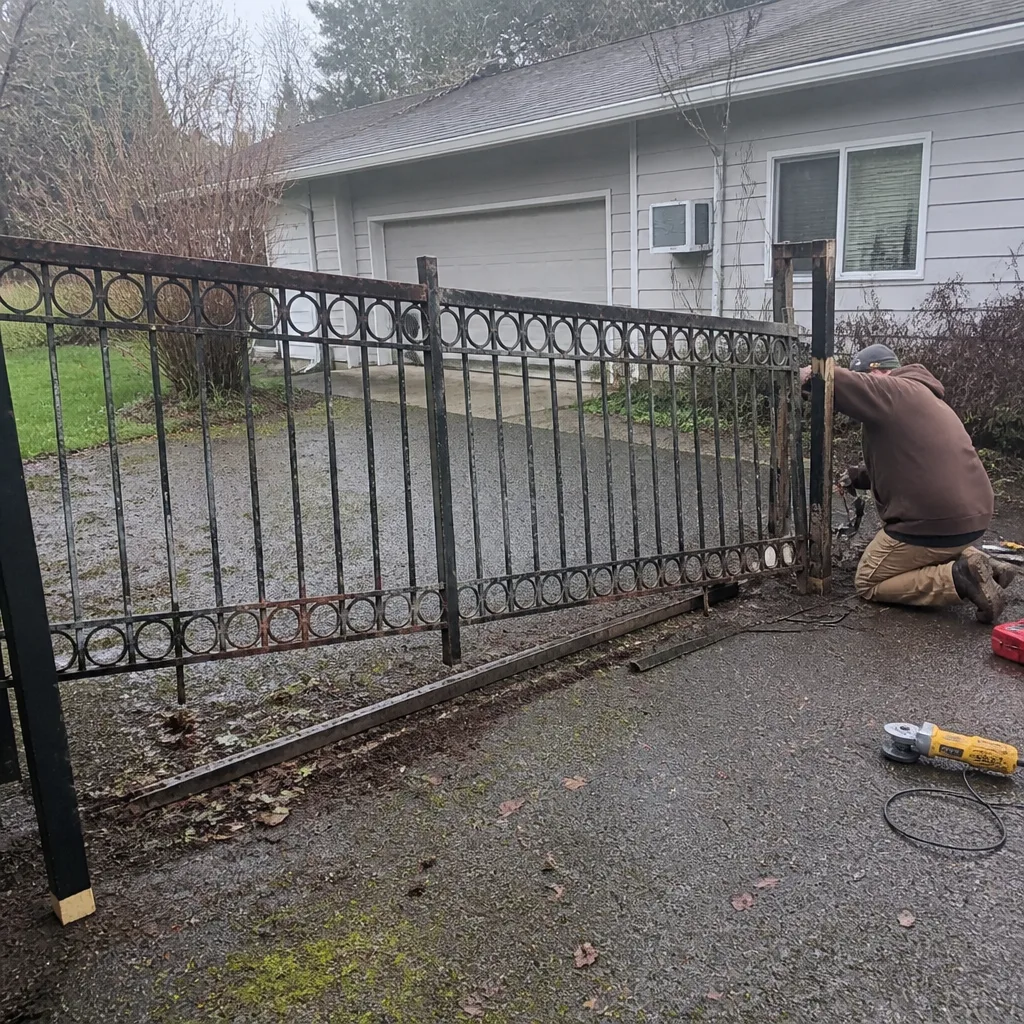 Before
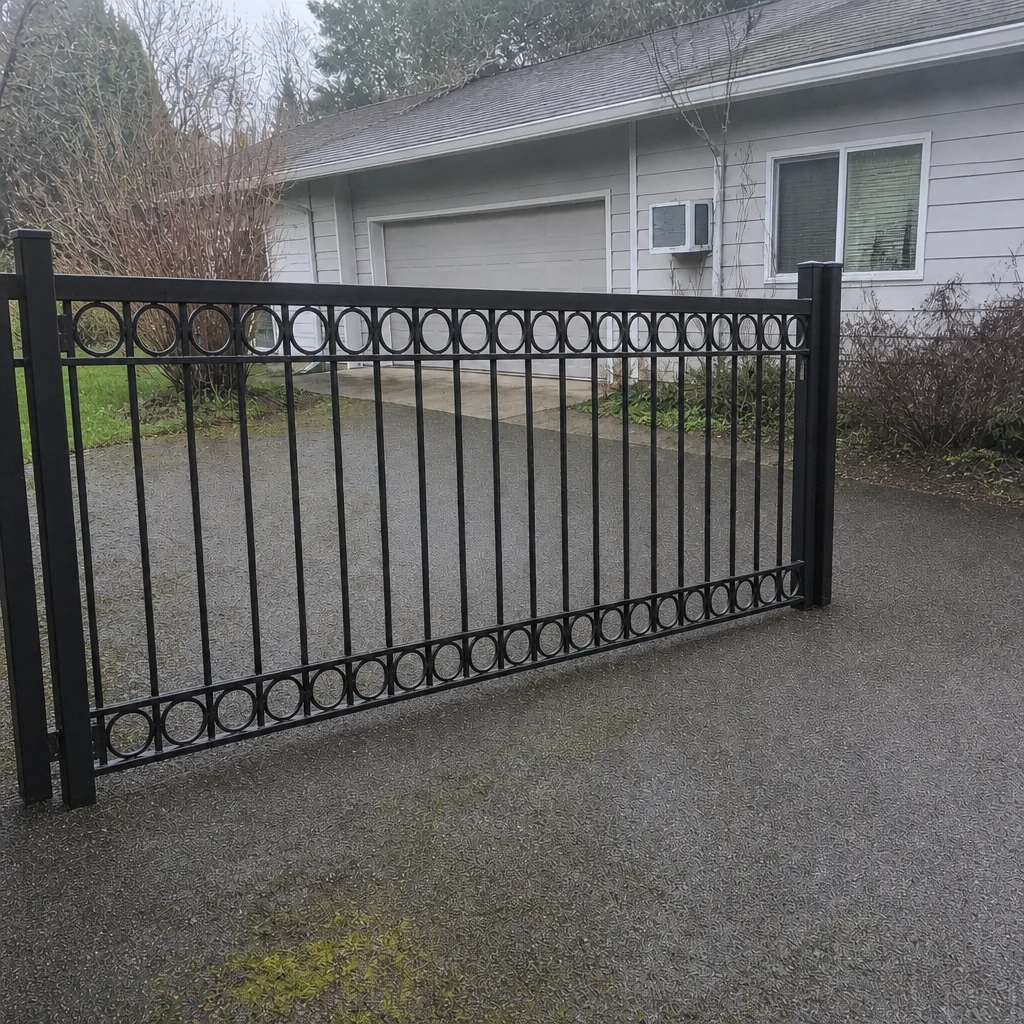 After
When to Call a Professional
Call a professional when the repair touches the operator, the control board, the limit switches, the safety-reverse system, any low-voltage wiring, or an access control module. Call when the post is moving or the footing is loose. Call when the gate panel is heavy enough to injure someone, when the gate has come off its track, or when you’ve already tried one fix and the problem came back. Call when the gate is on a brand you don’t recognize and the fault code doesn’t match anything in the manual. Those are the scenarios where a specialist saves money by diagnosing correctly the first time. Gate Repair Irvington offers free estimates in Irvington – call (855) 658-5296. We answer 24/7. Fast dispatch from 7am to 7pm, Sunday through Friday.
Frequently Asked Questions
No, in most cases you shouldn’t. Automatic gate operators involve low-voltage wiring, control boards, and safety-reverse systems that require diagnostic tools and brand-specific procedures. Mechanical repairs on a manual gate, like tightening hinges or adjusting a latch, are the DIY-safe category. Anything involving the operator should go to a trained technician. Call (855) 658-5296 for a free estimate.
Misdiagnosis is the most common mistake. A homeowner replaces the part that seems broken, the gate still fails, and the second attempt stresses adjacent components. By then a simple adjustment has become a larger repair. A specialist reads the fault and fixes it once. Call (855) 658-5296 for a free estimate.
No. The safety-reverse system is a life-safety feature, and a misadjustment can’t be reliably verified by watching the gate once or twice. It needs proper diagnostic testing to confirm the gate reverses on contact. Leave it to a technician. Call (855) 658-5296 for a free estimate.
Portland’s wet winters and freeze-thaw cycles work on hinge pins and footing. A footing that’s been slowly loosening shows up fast once the ground saturates, and a gate that sat level all summer can sag by mid-winter. If the post is moving, that’s a footing repair for a professional. Call (855) 658-5296 for a free estimate.
Usually not to the standard an automated gate needs. Operators are brand-specific, and every brand has its own fault codes, board layouts, and relearn procedures. A generalist has to look those up, which slows diagnosis and raises the odds of a wrong part. Gate specialists work on these systems every day. Call (855) 658-5296 for a free estimate.
Often, yes, for repairs where the diagnosis is straightforward and the parts are on hand. We answer 24/7 and offer fast dispatch from 7am to 7pm, Sunday through Friday. Call (855) 658-5296 and we’ll confirm the timing for your gate. For more on what a visit covers, see our gate motor & opener page or read about gate installation if you’re weighing a replacement instead.
The Bottom Line
The DIY vs. professional question comes down to category, not confidence. Tighten a latch, treat rust, replace a light roller: those are safe to handle. Anything touching the operator, the control board, the safety-reverse system, the low-voltage wiring, or the post footing should go to a specialist. The tool cost of DIY on electronics often exceeds the professional rate, and the liability of altering a safety system isn’t worth it. In Irvington, wet winters and older ironwork make these calls sharper. Know your category before you pick up a wrench.
If your repair falls into the professional column, we’d be glad to look at it. Gate Repair Irvington services nine major automation brands across residential and commercial gates, and we handle the full cycle from motor to keypad. Our technicians have up to 12 years of experience. Call (855) 658-5296 for a free estimate. We answer 24/7. Fast dispatch from 7am to 7pm, Sunday through Friday.
Written by the team at Gate Repair Irvington.